Shaped Jackets Trend 2026: Why Sculptural Waists Are Dominating Winter

The shaped jackets trend of 2026 is bringing definition back to winter tailoring, replacing the familiar oversized blazer with sculptural waists, curved seams, and deliberately constructed silhouettes. Think sharply nipped-in wool jackets, modern peplums, and hourglass blazers that create shape without relying on excessive embellishment. From Jonathan Anderson's reinterpretation of Dior's iconic Bar jacket to Sarah Burton's architectural tailoring at Givenchy, the Autumn/Winter 2026 runways have made one thing clear: the waist is becoming fashion's most interesting design detail. This isn't simply a return to fitted clothing. It's a renewed appreciation for proportion, craftsmanship, and the ability of a beautifully constructed jacket to transform an entire outfit.
What shaped jacket silhouettes dominate winter 2026?
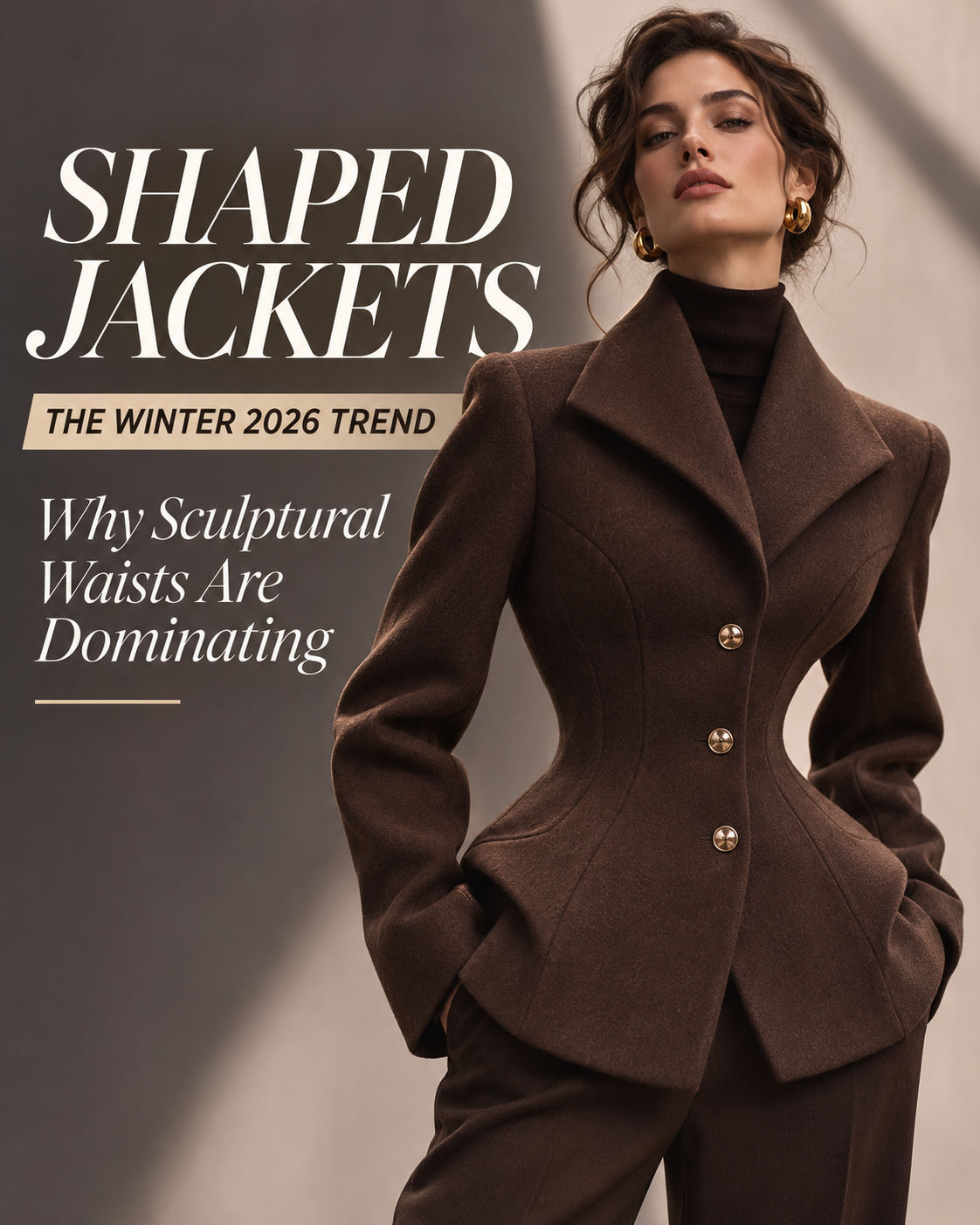
The most important shaped jackets of 2026 don't simply follow the body's outline. They use construction to create a distinctive silhouette, balancing shoulder width, waist definition, and controlled volume.
The Hourglass Blazer: A structured jacket with a sharply defined waist and slightly exaggerated shoulders. The contrast creates an architectural silhouette that feels polished without requiring elaborate accessories.
The Modern Peplum: A fitted jacket that gently flares below the waist, introducing movement and dimension. Unlike the more decorative peplums of the early 2010s, contemporary versions often integrate the flare directly into the garment's construction.
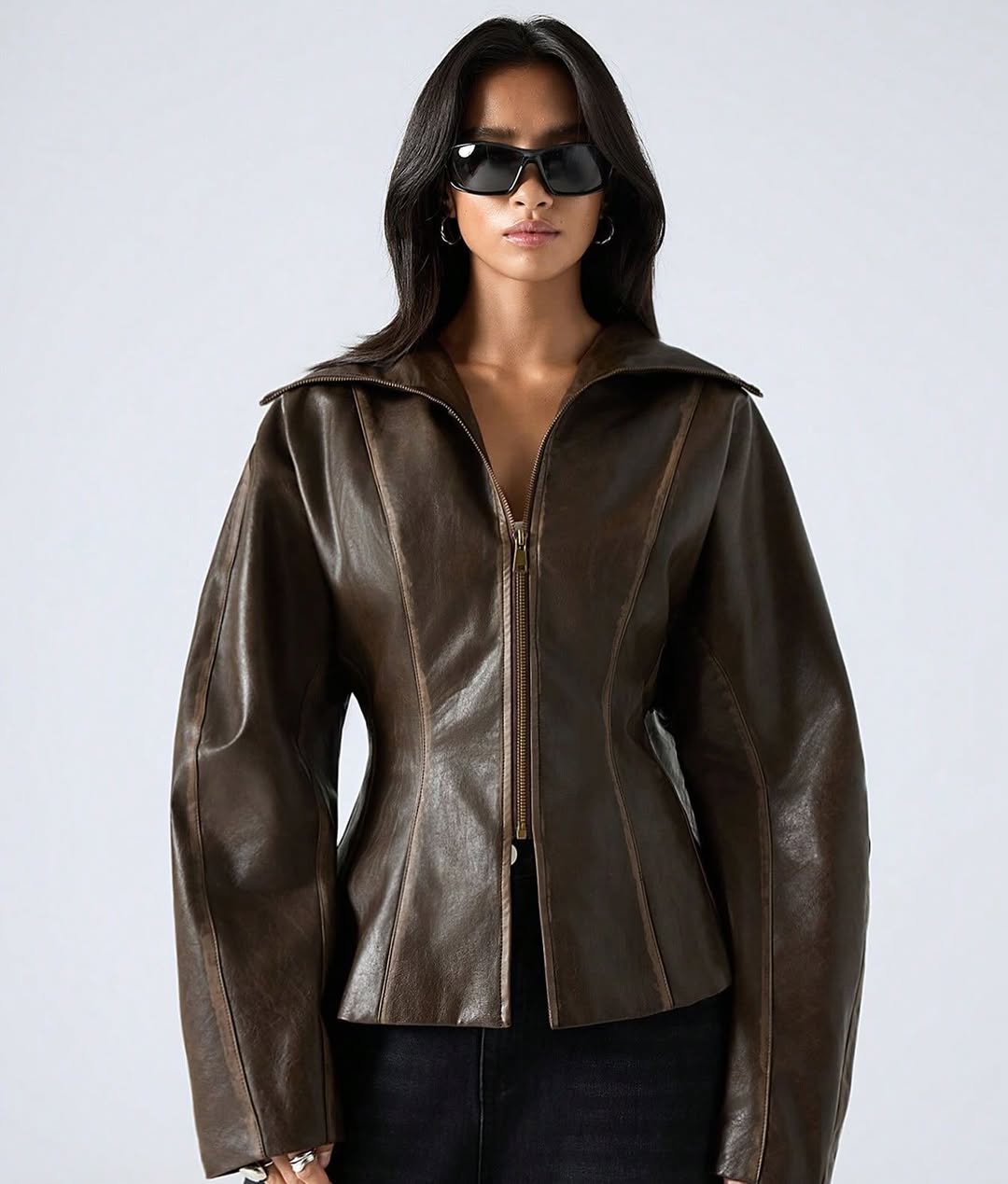
The Curved Leather Jacket: A sculptural alternative to the conventional biker jacket, featuring curved panels, shaped seams, and a narrowing waist. Smooth leather emphasizes the silhouette, while suede creates a softer interpretation.
The Belted Wool Jacket: A more relaxed approach to waist definition, using a belt or adjustable fastening to shape the middle of the garment. It combines the warmth of winter outerwear with the precision of tailored dressing.
The Sculpted Double-Breasted Blazer: Traditional suiting reworked through stronger shoulders, a defined waist, and carefully placed buttons. The silhouette draws on classic power dressing while maintaining a contemporary sense of ease.
What connects these variations is their emphasis on form. A shaped jacket can be minimal in color and decoration yet still feel visually expressive because the silhouette itself becomes the focal point.
Pro Tip: The most versatile shaped jackets define the waist without pulling tightly across the torso. Look for curved seams, controlled volume, and a hem that sits naturally over the hips rather than relying on an excessively narrow fit.

Why are Dior, Givenchy, and Stella McCartney revisiting sculptural waists?
The renewed interest in shaped jackets has strong foundations in fashion history, particularly the relationship between tailored construction and the hourglass silhouette. Few garments demonstrate that connection as clearly as Christian Dior's Bar jacket, introduced with the designer's revolutionary New Look collection in 1947. Its rounded shoulders, narrow waist, and sculpted hips established a distinctive vision of feminine tailoring that continues to influence contemporary design.
For Autumn/Winter 2026, Jonathan Anderson revisited the Bar jacket through lighter materials and unexpected proportions. Rather than reproducing its original construction, he explored softer interpretations, including a gray knitted version with a scrolling peplum. Other variations introduced unexpected fabrics and decorative contrasts, allowing the historic silhouette to exist within a more experimental wardrobe.
The significance lies in how Anderson approached the original design. The waist remained central to the jacket's identity, but the construction no longer depended on the same rigid formality associated with mid-century couture. The result demonstrated how a recognizable silhouette could retain its character while becoming more adaptable to contemporary dressing.
At Givenchy, Sarah Burton explored a sharper interpretation of sculptural tailoring. Her Autumn/Winter 2026 collection featured jackets with pronounced waists, carefully structured shoulders, and flared lower sections. A double-breasted houndstooth jacket with a contrasting dark collar demonstrated how traditional tailoring details could acquire a more expressive character through carefully controlled proportions.
Burton's approach emphasized the relationship between structure and individuality. The jackets possessed a strong visual identity, but their impact came from construction rather than excessive decoration. Curved seams and sculptural details gave familiar tailoring pieces a more deliberate sense of presence.
Stella McCartney offered another perspective through a collection informed by Savile Row tailoring and 1980s sportswear. Defined waists and strong shoulders appeared across single- and double-breasted jackets, often balanced by softer fabrics and relaxed styling. Her interpretation brought the confidence of traditional power dressing into a wardrobe that felt more adaptable to everyday life.
Together, these collections reveal why the shaped jackets trend feels relevant beyond one season. Dior explores the relationship between couture heritage and modern softness, Givenchy emphasizes architectural precision, and Stella McCartney brings definition into practical contemporary tailoring.
The common thread is not a return to restrictive clothing. It is a renewed interest in the expressive possibilities of silhouette.

Step-by-step: how to style shaped jackets without overwhelming an outfit
The most successful shaped jacket outfits allow the construction to remain visible. Because the silhouette already introduces visual interest, styling becomes an exercise in balance rather than adding more statement pieces.
Let the jacket establish the silhouette. Begin with a shaped blazer in charcoal, chocolate brown, black, or cream. Keep the clothing underneath relatively simple so the waist detailing and shoulder construction remain the most noticeable elements. A fine-knit top or lightweight shirt provides a clean foundation without introducing unnecessary volume.
Balance a defined waist with straighter trousers. Straight-leg jeans and tailored trousers create a natural contrast against an hourglass jacket. The jacket introduces curves through the upper body, while the trousers maintain a relatively uninterrupted line. This combination is particularly effective for bringing sculptural tailoring into everyday dressing.
Use wide-leg trousers for a more expressive proportion. A shorter, sharply waisted jacket can work beautifully with fluid wide-leg trousers. The contrast between a structured upper half and a relaxed lower silhouette introduces movement while maintaining a clear sense of shape. Keeping the colors within a similar family can make the proportions feel especially cohesive.
Layer carefully during colder weather. Fine-gauge turtlenecks, lightweight cashmere, and fitted knitwear complement the construction of shaped jackets without creating bulk around the waist. Heavier sweaters can alter the intended silhouette, particularly when the jacket relies on precise seams or a closely structured bodice.
Keep accessories in conversation with the tailoring. Pointed ankle boots, streamlined loafers, and knee-high boots can each complement a shaped jacket depending on the occasion. Structured handbags reinforce the architectural quality of the outfit, while softer shoulder bags introduce contrast. The objective is cohesion rather than matching every element perfectly.
The most interesting styling often comes from placing a sculptural jacket alongside familiar wardrobe pieces. A sharply defined blazer worn with dark denim can feel more contemporary than the same jacket paired with an entirely formal ensemble.
Pro Tip: When wearing a pronounced peplum or hourglass jacket, pay attention to where the hem falls. A shorter jacket creates a clearer transition into wide-leg trousers, while a longer, gently waisted silhouette can look especially elegant with straight trousers or a narrow midi skirt.

What makes a sculptural jacket different from an ordinary fitted blazer?
The distinction between a fitted blazer and a shaped jacket is more significant than it initially appears. A conventional slim-fit blazer follows the body's natural outline, removing excess fabric to create a clean, polished appearance. Its construction generally aims to refine the fit without dramatically changing the garment's proportions.
Sculptural tailoring takes that idea further. Instead of merely following the body, the jacket actively creates a silhouette through the placement of seams, darts, panels, and structured fabric. The shoulders may appear wider, the waist more pronounced, or the lower section deliberately curved outward.
This approach allows designers to manipulate proportion without necessarily making the garment tighter. A jacket can possess a defined hourglass outline while retaining ease through the body, particularly when the shape is established through carefully constructed panels rather than restrictive fitting.
The shoulder line is especially important. Strong shoulders can exaggerate the contrast with a narrowed waist, producing a more dramatic silhouette. Softer shoulders create a gentler interpretation, allowing the waist to remain defined without making the jacket feel overtly theatrical.
The hem also contributes to the overall character. A straight hem creates a restrained, elongated outline, while a peplum introduces movement below the waist. Asymmetric hems and curved lower panels can create similar effects without reproducing a traditional peplum.
Fabric changes the result again. Dense wool maintains an architectural line, while softer suiting materials allow the silhouette to move more naturally. Leather can emphasize curved construction, whereas suede introduces a more relaxed and tactile quality.
Ultimately, the difference lies in intention. A fitted blazer is designed to sit neatly on the body. A sculptural jacket uses construction to establish a more distinctive shape.

How do you avoid making shaped jackets look dated or overly formal?
The challenge with waist-defining tailoring is balancing its historical references with contemporary styling. Hourglass jackets, pronounced shoulders, and peplums have appeared throughout fashion history, particularly during the 1940s, 1980s, and early 2010s. Their return in 2026 becomes most interesting when those references are interpreted rather than reproduced too literally.
First, avoid making every element equally structured. A jacket with pronounced shoulders, a tightly defined waist, and a flared peplum already contains several strong design features. Pairing it with excessively formal accessories or equally elaborate clothing can make the entire outfit feel rigid. Relaxed denim, fluid trousers, or a simple knit create contrast and give the silhouette room to breathe.
Second, consider the fabric as carefully as the shape. A heavily structured jacket in a stiff material creates a distinctly formal impression, while a similar silhouette in softer wool or suede can feel more relaxed. Neither approach is inherently better, but the material determines how naturally the jacket fits into the rest of the wardrobe. For everyday winter dressing, fabrics with enough structure to hold their shape while allowing movement often offer the most flexibility.
Third, avoid treating the defined waist as a requirement for every outfit. The appeal of sculptural tailoring lies in its distinctive construction, not in the idea that every garment must emphasize the same body proportions. A subtly shaped blazer can be just as compelling as a dramatic hourglass design. The silhouette should work with the wearer's preferred proportions and comfort rather than dictate them.
This is particularly important when approaching the peplum revival. Contemporary versions tend to feel strongest when their flared sections emerge naturally from the garment's construction. The result appears more architectural and less decorative than the exaggerated peplum styling associated with earlier fashion cycles.
Pro Tip: A sculptural jacket looks especially modern when contrasted with one relaxed element. Straight-leg denim, fluid trousers, or a simple open-collar shirt can prevent a sharply tailored silhouette from feeling overly ceremonial.

Why do shaped jackets work so well for winter 2026?
Winter dressing naturally introduces more volume. Heavy wool, leather, shearling, and multiple layers can create substantial silhouettes, particularly when outerwear is designed to accommodate thick knitwear underneath. The shaped jacket offers a way to introduce definition within that visual weight.
Rather than allowing fabric to fall continuously from the shoulders, sculptural tailoring uses construction to establish a waistline and create contrast between different parts of the garment. A narrower middle section can balance fuller sleeves, while a curved hem creates movement beneath a structured upper body.
The effect becomes particularly compelling in heavier materials. Dense wool can maintain the precise outline of an hourglass blazer, allowing the silhouette to remain visible even when the design is relatively simple. Leather emphasizes curved surfaces and panel construction, while suede creates a softer interpretation that feels naturally suited to colder months.
Texture also contributes to the appeal. Matte wool draws attention to proportion rather than surface decoration, while smooth leather reflects light across the jacket's curves. Velvet and brushed fabrics introduce depth, allowing even monochromatic designs to feel visually complex.
Color provides another opportunity to emphasize the silhouette. Charcoal gray creates a sharp, architectural impression, particularly when paired with black trousers or dark denim. Chocolate brown introduces warmth and a less severe mood, while cream and ivory highlight the jacket's seams and construction.
Deep burgundy offers a richer alternative, particularly in leather or wool. Black remains one of the most effective choices for emphasizing an exaggerated outline, allowing the silhouette to become the defining feature without distraction.
These colors also connect sculptural tailoring with the broader winter wardrobe. A shaped jacket does not need to introduce an unfamiliar palette to feel distinctive. Its construction can transform familiar neutrals into something visually compelling.
The practical appeal depends on the design. A softly shaped wool jacket may accommodate several layers, while a tightly structured blazer may work better over lightweight knitwear and beneath a roomier coat. The most successful winter outfits respect the intended fit rather than forcing excessive layers into a precisely constructed garment.
The most important lesson: sculptural tailoring is about shape, not tightness
The strongest interpretation of the shaped jackets trend is not necessarily the most dramatically fitted one. The distinction between shape and restriction is central to understanding why contemporary hourglass tailoring feels different from some earlier versions.
A beautifully constructed jacket creates definition through its cut. Curved seams, carefully placed darts, and controlled volume establish proportion without requiring the fabric to cling tightly to every part of the body.
This is what makes the return of sculptural waists especially interesting. The emphasis shifts from simply achieving a smaller-looking waist to appreciating the relationship between different elements of the garment.
A broad shoulder can create contrast with a gently curved middle section. A peplum can introduce movement through the hem. A softly shaped jacket can establish definition while maintaining an otherwise relaxed silhouette.
Each choice changes the visual character of the garment, demonstrating that tailoring is as much about composition as fit.
The most compelling shaped jackets also reveal the importance of craftsmanship. Small adjustments in a seam or the placement of a fastening can transform the way a jacket sits and moves. These details are rarely as immediately noticeable as an unusual print or vibrant color, yet they often determine whether a design feels considered.
That attention to construction is what gives the trend an appeal beyond the runway. The shaped jacket is not simply another variation of a fitted blazer. It represents a renewed appreciation for clothing that communicates through proportion.
When the silhouette works, the effect feels natural rather than restrictive. The jacket establishes a strong visual identity without requiring the wearer to adopt an entirely formal wardrobe.
That balance between precision and ease is perhaps the clearest expression of modern sculptural tailoring.

BestStyle's guide to sculptural waist tailoring
The shaped jackets trend reflects a broader shift in contemporary fashion, where the oversized silhouettes of recent years are making room for more deliberately constructed alternatives. This does not signal the disappearance of relaxed tailoring. Instead, it introduces another way of approaching the relationship between clothing, proportion, and personal style.
For BestStyle, the most compelling aspect of the trend is its emphasis on design intelligence. A jacket with a carefully shaped waist can transform a simple combination of trousers and knitwear without relying on elaborate accessories or conspicuous embellishment. The interest comes from the construction, allowing the garment to communicate confidence through its outline.
The Autumn/Winter 2026 collections demonstrate how versatile this approach can be. Dior revisits the architectural history of the Bar jacket, Givenchy explores strong tailoring through sculptural details, and Stella McCartney introduces defined waists into a wardrobe shaped by modern suiting traditions.
These interpretations are not identical, but they share an understanding that tailoring can be expressive without becoming excessive.
The silhouette also connects with a wider appreciation for garments distinguished by craftsmanship rather than novelty alone. The careful placement of seams, the relationship between shoulder and waist, and the way fabric holds its shape are details that can remain relevant long after a particular fashion cycle has passed.
The lasting appeal of shaped jackets lies in that combination of history and modernity. They draw on familiar tailoring traditions while allowing designers to explore new proportions, softer construction, and more flexible styling.
For winter 2026, the most interesting outerwear is not necessarily the largest, the boldest, or the most heavily decorated. Sometimes, the strongest statement comes from the precision of a single curve.

FAQ
Are shaped jackets in style for winter 2026?
Yes. Shaped jackets are a visible direction within Autumn/Winter 2026 tailoring, with designers including Dior, Givenchy, and Stella McCartney exploring defined waists, sculptural construction, and modern hourglass silhouettes. The trend includes everything from subtle waist shaping to more dramatic peplum and architectural designs.
What is the difference between an hourglass blazer and a peplum jacket?
An hourglass blazer uses construction to create a defined waist, often balancing narrower proportions through the middle with broader shoulders or shaped hips. A peplum jacket specifically incorporates a flared section below the waist. Some peplum jackets create an hourglass effect, but not every hourglass blazer includes a peplum.
Can shaped jackets work with wide-leg trousers?
Yes. Wide-leg trousers can balance a sharply defined jacket, creating contrast between a structured upper silhouette and a more fluid lower half. Cropped hourglass blazers and shorter peplum jackets can be particularly effective because they preserve a clear transition between the waist and trousers.
Are sculptural jackets only suitable for hourglass body shapes?
No. Sculptural jackets create their silhouette through garment construction rather than requiring the wearer to have a particular body shape. Different shoulder widths, waist placements, jacket lengths, and degrees of structure allow the style to be interpreted in a variety of ways. Comfort, proportion, and the intended fit are more important than following one silhouette formula.
What fabrics are best for shaped jackets in winter?
Wool and structured suiting fabrics are particularly effective because they can maintain a defined silhouette. Leather emphasizes curved panels and architectural seams, while suede offers a softer interpretation. The ideal material depends on whether the jacket is intended to look sharply sculptural or more relaxed.
How do you layer a sculptural jacket over winter knitwear?
Fine-gauge turtlenecks, lightweight cashmere, and fitted sweaters generally preserve the jacket's intended waist definition more effectively than bulky knits. For colder conditions, a roomier outer coat can provide additional warmth without distorting the shaped jacket underneath.
Is the peplum jacket trend different from the 2010s version?
The contemporary peplum often feels more integrated into the garment's structure. Rather than relying on an obvious decorative flare, many current interpretations use curved panels, precise cutting, and controlled volume to create a sculptural hem. The effect can be subtler and more architectural than earlier peplum styles.
Which shaped jacket colors are most versatile?
Black, charcoal gray, chocolate brown, and cream are versatile choices because they allow the silhouette to remain the focus while working with familiar wardrobe colors. Deep burgundy and olive can also complement the sculptural character of the trend, particularly in wool, suede, and leather.