Cummerbund with Jeans Trend 2026: How to Wear Evening Belts for Daytime
Julianne Moore Governors Awards 2026 style combined a leopard-print Bottega Veneta gown with Messika diamonds. Explore the look and its styling.
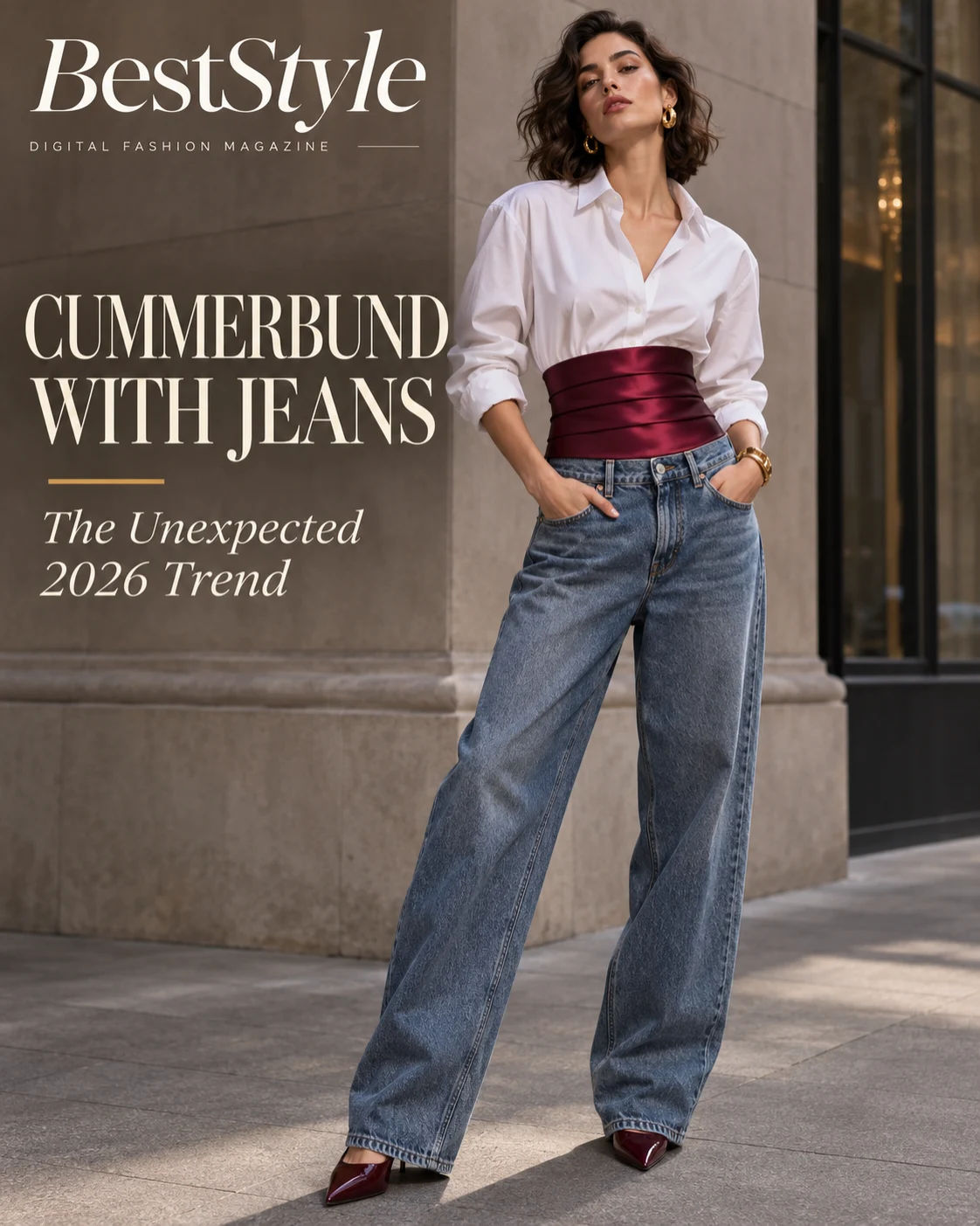
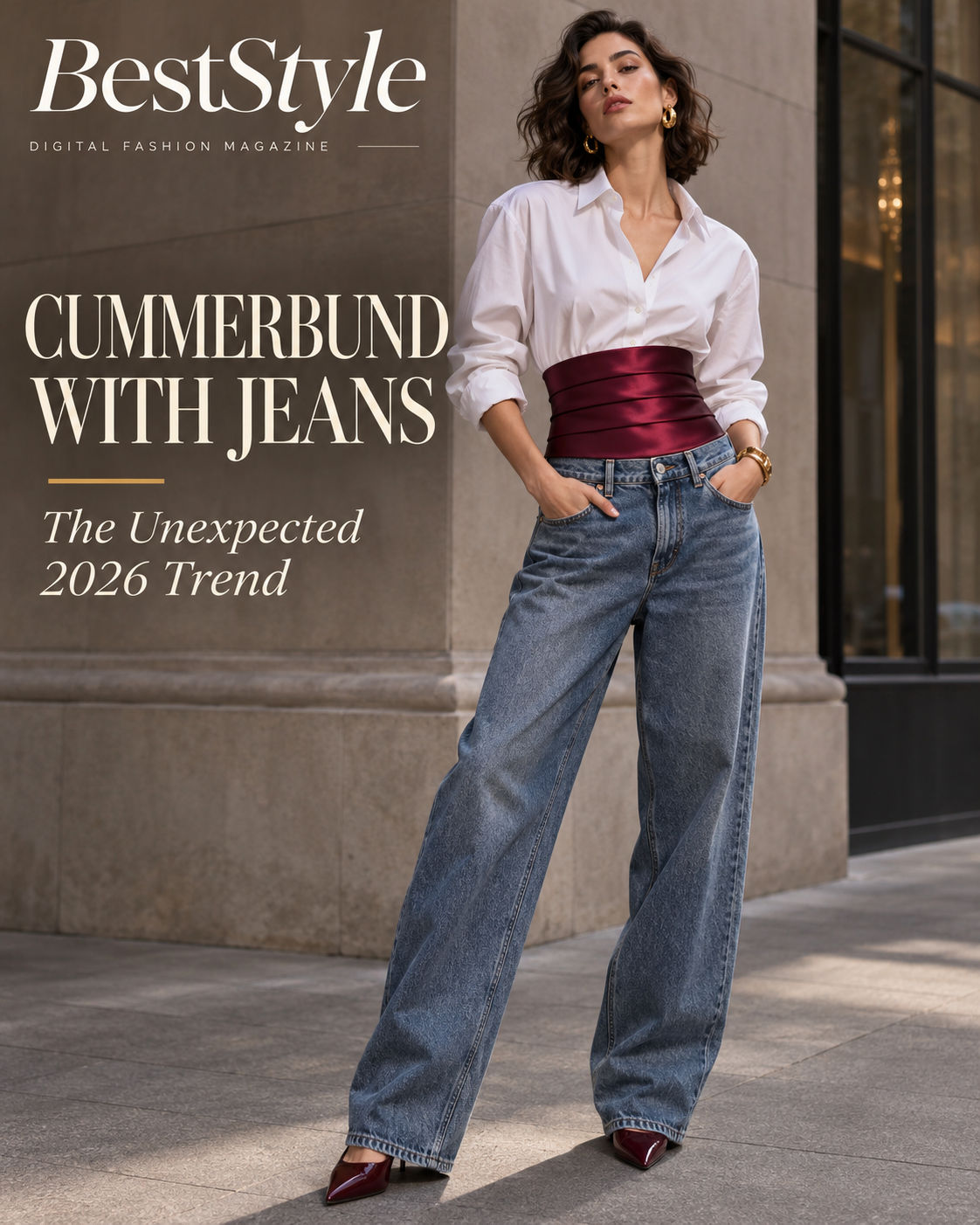
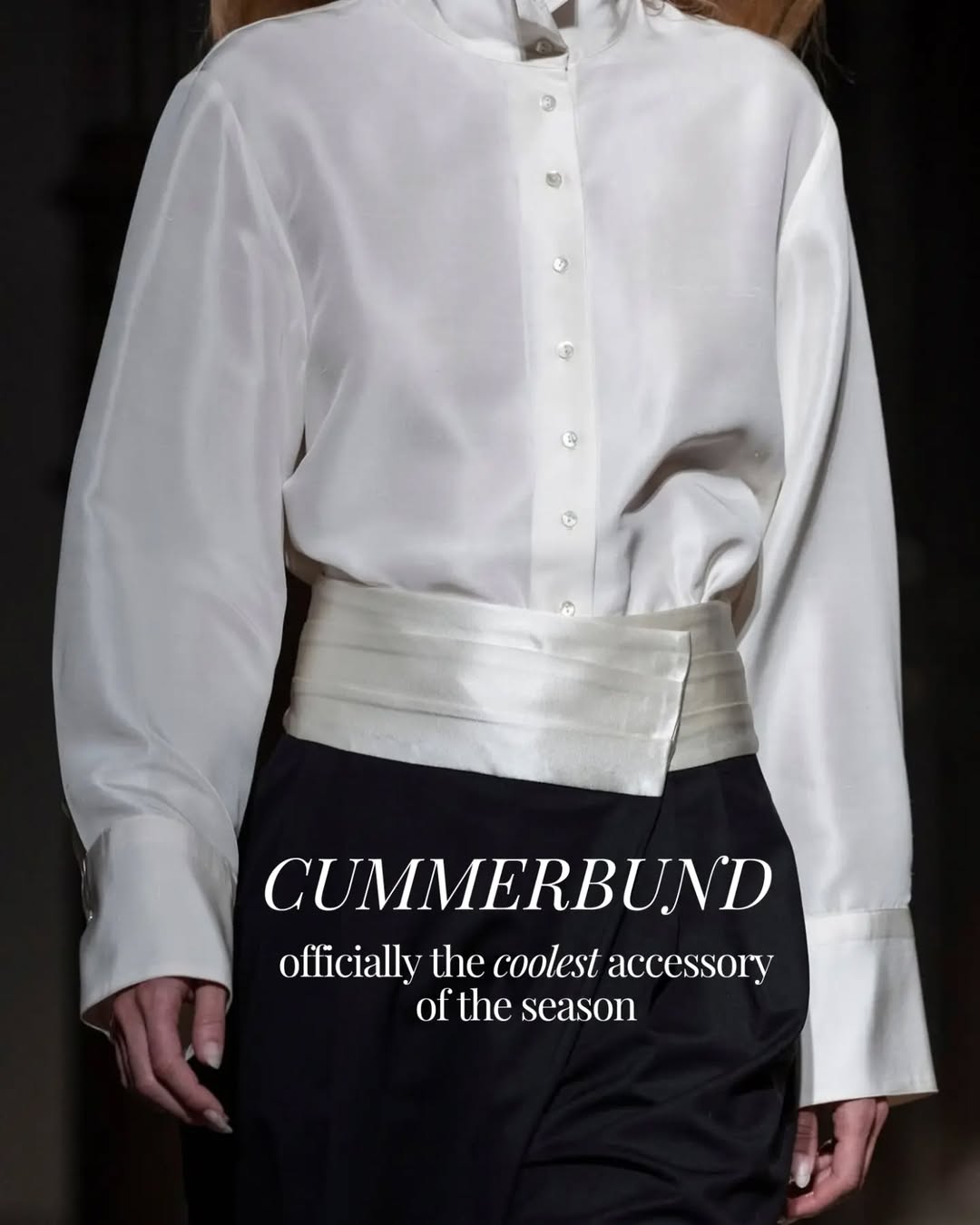
The cummerbund with jeans trend of 2026 is turning one of menswear's most traditional evening accessories into an unexpectedly modern street-style statement. Think a crisp white button-down tucked into relaxed blue denim, finished with a wide satin waistband that looks as though it belongs beneath a tuxedo jacket. Or a simple fitted T-shirt and vintage jeans transformed by a pleated cummerbund in burgundy, black, or soft pink. What once occupied a strictly formal corner of the wardrobe has become an intriguing styling detail, moving from the Autumn/Winter 2026 runways of Valentino and Celine into the fashion-week streets of New York, London, and Paris. Designers are exploring the contrast between ceremonial clothing and everyday basics, while fashion insiders are discovering how a single wide belt can change the proportions of an otherwise familiar outfit. With sculptural waists, statement belts, and expressive layering gaining momentum throughout 2026, the cummerbund's return feels less like an isolated novelty and more like part of a wider reconsideration of how clothing should fit, move, and communicate personal style.
What cummerbund belt styles are defining the 2026 trend?
The most interesting cummerbund belts of 2026 retain the visual character of traditional eveningwear while introducing softer colors, unconventional materials, and more relaxed styling. Rather than disappearing beneath a tuxedo jacket, the accessory becomes an important part of the outfit's silhouette, creating a defined horizontal shape around the waist.
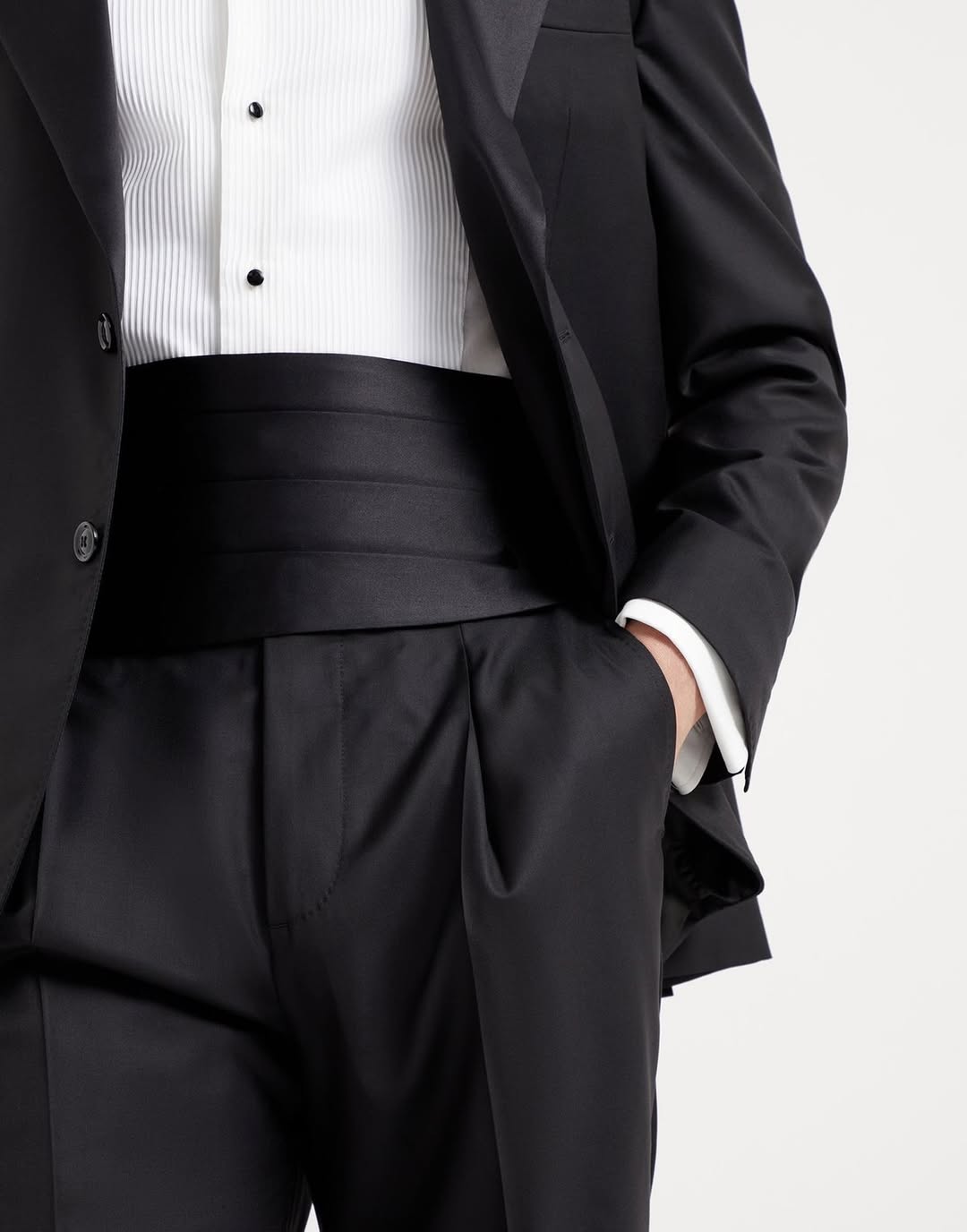
The Classic Black Satin Cummerbund: A wide, often pleated waistband traditionally associated with formal eveningwear. When paired with blue jeans and a white shirt, its glossy surface creates an immediate contrast against casual denim.
The Colored Satin Sash: A softer interpretation in burgundy, plum, pink, cream, or other expressive shades. These versions introduce color around the waist and can make a relatively simple outfit feel more deliberate.
The Wide Pleated Evening Belt: A broad waistband featuring structured folds or horizontal pleating. Its visual appeal comes from the relationship between the fabric's texture and the shape it creates around the middle of the outfit.
The Matte Fabric Cummerbund: A more understated alternative using cotton, wool-blend, or other less reflective materials. It preserves the characteristic width of a cummerbund while feeling more compatible with everyday dressing.
The Draped Sash Belt: A softer accessory that wraps around the waist and may extend into longer fabric ends. It draws on the cummerbund's formal associations but introduces more movement and an almost scarf-like quality.
The Built-In Cummerbund Waistband: Trousers, skirts, or coordinated separates designed with a broad, contrasting waistband that resembles a traditional cummerbund. The detail becomes part of the garment's construction rather than a removable accessory.
The distinction between these variations matters because the revival is not simply about fastening an old tuxedo accessory over jeans. Contemporary designers are experimenting with color, fabric, proportion, and placement, allowing the wide waistband to function as either a subtle styling detail or the defining element of an outfit.
For daytime dressing, the simplest interpretations are often the most convincing. A black satin cummerbund worn with mid-blue jeans and a relaxed cotton shirt introduces enough contrast to feel distinctive without requiring an elaborate combination of accessories.
Pro Tip: A cummerbund works particularly well when its full width remains visible. A neatly tucked shirt, fitted knit, or slightly cropped top can establish a clean foundation, allowing the accessory's shape and texture to remain the focal point.

Why are cummerbunds suddenly appearing with jeans in 2026?
The most compelling aspect of the cummerbund revival is the unexpected relationship between the accessory and the clothing surrounding it. For decades, the cummerbund has been associated with black-tie dressing, traditionally worn with a tuxedo, formal shirt, and carefully coordinated evening accessories. Blue jeans belong to an almost opposite visual tradition, carrying references to workwear, casual dressing, and everyday practicality. Bringing the two together creates an immediate contrast between formality and ease, allowing both garments to acquire a different character.
That tension is central to the 2026 trend. The cummerbund does not need to lose its connection to eveningwear to feel contemporary. Its formal associations are precisely what make the combination interesting when worn with denim, cotton shirting, or relaxed knitwear. The effect comes from placing a recognizable accessory somewhere it would not traditionally belong, creating an outfit that feels considered without requiring every element to be polished.
This approach has been particularly visible within fashion-week street style. In its September 2026 report on the cummerbund revival, British Vogue highlighted how fashion insiders were incorporating the accessory into everyday outfits rather than reserving it for evening occasions. British GQ senior style editor Mahalia Chang was among those photographed wearing cummerbunds with jeans and camouflage trousers, demonstrating how the traditional waistband could operate within a more relaxed wardrobe.
Chang's styling offers an important lesson about the trend's appeal. The cummerbund does not need to be accompanied by a formal shirt, tailored trousers, and dress shoes. In fact, pairing it with less formal clothing often makes its unusual character more noticeable. Denim softens the ceremonial associations of satin, while a simple T-shirt introduces an everyday element that prevents the outfit from appearing overly theatrical.
The revival also reflects fashion's continuing interest in unexpected combinations. A formal accessory worn with casual clothing creates visual tension without requiring an entirely unfamiliar silhouette. The garments remain recognizable, but their relationship changes, allowing the complete outfit to feel more expressive than its individual pieces might suggest.

Valentino and Celine: How the runway brought the cummerbund back
The cummerbund's return became increasingly visible across the Autumn/Winter 2026 collections, where designers began reconsidering the accessory's place within contemporary dressing. Rather than treating it as an exclusively masculine black-tie detail, several fashion houses incorporated its familiar shape into womenswear, casual separates, and more experimental silhouettes. The contrast between traditional evening construction and relaxed styling helped establish the accessory as one of the season's more unexpected fashion references.
At Valentino, Alessandro Michele explored the possibilities of the cummerbund through satin waistbands worn with a variety of garments. The accessory appeared alongside decorative tops, short dresses, and even blue skinny jeans, introducing a striking contrast between the refinement of eveningwear and the familiarity of denim. Its placement drew attention toward the waist, while the surrounding clothing prevented the look from feeling like a conventional tuxedo-inspired ensemble.
As ELLE reported in July 2026, Michele's approach transformed the cummerbund into a visible styling feature rather than an accessory intended to disappear beneath formal tailoring. The satin waistband became part of the outfit's composition, creating a defined middle section that connected otherwise contrasting pieces.
Celine offered another important interpretation under creative director Michael Rider. During the presentation of the house's Spring/Summer 2027 menswear collection, cummerbunds appeared in expressive colors including plum and pink, paired with relaxed trousers and unconventional footwear. Rather than reproducing traditional evening attire, Rider introduced the accessory into silhouettes that emphasized movement, color, and a more casual approach to proportion.
The styling was particularly interesting because it challenged the cummerbund's established visual identity. A black satin waistband beneath a tuxedo jacket communicates formality, while a colored version paired with fluid trousers suggests something more playful. The accessory remains recognizable, but its meaning changes through the surrounding garments.
Other designers contributed to the wider revival. Issey Miyake incorporated cummerbund-inspired styling into sporty ensembles, while Colleen Allen explored its potential as a fastening element on a shirt. Polo Ralph Lauren retained a closer connection to traditional formal dressing, demonstrating that the accessory could exist comfortably across several different aesthetics.
The Spring/Summer 2027 runway presentations continued exploring similar ideas. Designers including Kallmeyer, Conner Ives, Heirlome, Talia Byre, and Ahluwalia introduced their own interpretations of broad waistbands and eveningwear-inspired accessories, reinforcing the renewed interest in waist-focused styling.
Together, these collections demonstrated that the cummerbund was no longer confined to one formal occasion or a single wardrobe category. It could emphasize a tailored silhouette, introduce contrast within relaxed clothing, or provide a decorative focal point around the waist.

From South Asian waist sashes to black-tie dressing: the history of the cummerbund
The contemporary cummerbund has a history that extends well beyond Western eveningwear. Its name is derived through Hindi and Urdu from the Persian words associated with the waist and a band or fastening. Related waist sashes have long been part of clothing traditions across South Asia and surrounding regions, where fabric wrapped around the middle could serve practical, decorative, and ceremonial purposes.
The accessory became incorporated into British formal menswear during the nineteenth century, following its adoption by British military officers stationed in colonial India. In that context, the lighter fabric waistband offered an alternative to the waistcoat, particularly in warmer climates. It subsequently entered Western black-tie dressing, where the cummerbund developed a more standardized relationship with the dinner jacket, formal trousers, and bow tie.
Over time, the accessory acquired a distinctly ceremonial reputation. Traditionally constructed from silk or satin and often featuring horizontal pleats, it became a familiar component of formal evening ensembles. Its original practical associations became less visible as the garment settled into the conventions of tuxedo dressing.
That history makes the 2026 revival particularly interesting. Fashion is not simply inventing a new waist accessory, but revisiting a garment shaped by a long process of cultural exchange and changing dress codes. The contemporary styling removes the cummerbund from its narrow black-tie context, allowing it to function as a decorative waistband within everyday clothing.
The distinction between the accessory's origins and its modern Western formalwear identity is worth preserving. The historical waist sash existed before the standardized tuxedo cummerbund, and contemporary fashion's revival draws largely on the latter's recognizable appearance. Understanding that evolution adds depth to the trend without requiring every modern outfit to carry an explicit historical reference.
The resulting contrast is visually compelling. An accessory once incorporated into colonial-era formalwear now appears over casual denim, worn as an expressive detail rather than a symbol of strict dress etiquette. Its transformation demonstrates how familiar garments can acquire new meanings when their original styling conventions are reconsidered.

Step-by-step: how to wear a cummerbund with jeans for daytime
The most successful cummerbund outfits begin with relatively familiar wardrobe pieces. Because the accessory already carries a strong formal association, the surrounding garments can remain simple, allowing the contrast between eveningwear and casual dressing to create the visual interest.
Start with straight-leg or relaxed jeans. Mid-blue and dark-wash denim provide a particularly effective foundation because their familiar texture contrasts naturally with satin. Straight-leg jeans create a clean silhouette, while relaxed styles introduce a more casual attitude. Both allow the waistband to remain visible without requiring exaggerated proportions.
Choose a simple top that keeps the waist clear. A fitted white T-shirt, fine-knit sweater, or neatly tucked cotton shirt provides a relatively quiet background for the cummerbund. The accessory works best when it does not have to compete with excessive fabric gathering around the waist.
Position the cummerbund deliberately. A traditional cummerbund is generally worn around the natural waist, but contemporary styling allows some variation in placement. Wearing it slightly higher can create a more defined upper silhouette, while positioning it closer to the waistband of the jeans can produce a more relaxed effect.
Consider the relationship between colors. A black satin cummerbund creates a sharp contrast against blue denim, while burgundy, plum, or chocolate brown introduce a warmer mood. Tonal combinations can feel particularly refined when paired with simple tops and restrained accessories.
Balance the outfit with contemporary footwear. Ballet flats, loafers, pointed ankle boots, and simple sneakers can each change the impression of a cummerbund-and-jeans combination. More casual footwear reinforces the daytime character, while refined flats or low heels introduce a dressier interpretation.
Add outerwear without concealing the waist. A relaxed blazer, cropped jacket, or open cardigan can frame the cummerbund while allowing it to remain visible. Long coats also work, particularly when worn open to preserve the contrast between the formal waistband and the casual garments beneath.
Keep accessories relatively understated. A simple leather bag, minimal jewelry, or classic sunglasses can complete the outfit without creating too many competing points of interest. Since the cummerbund already functions as an unusual styling detail, the rest of the ensemble rarely needs additional statement accessories.
The key is to avoid making the outfit appear overly formal from head to toe. A cummerbund worn with a crisp shirt, sharply tailored trousers, and polished evening footwear can resemble an incomplete tuxedo ensemble. Denim changes that relationship immediately, providing enough casual contrast to make the waistband feel intentional rather than misplaced.
Pro Tip: When wearing a satin cummerbund with jeans, try leaving the shirt slightly relaxed above the waistband rather than pulling every fold completely flat. A small amount of softness can make the contrast between structured eveningwear and everyday clothing feel more natural.
Why the white shirt, jeans, and cummerbund combination works so well
Few wardrobe combinations are as familiar as a white shirt and blue jeans. The pairing has remained relevant across decades because it balances clean lines with relaxed practicality, allowing small adjustments in fit, fabric, and accessories to change the overall mood. Adding a cummerbund introduces a new point of interest without disrupting the simplicity that makes the combination appealing.
The white shirt provides a neutral foundation. Its crisp cotton surface contrasts with the reflective finish of satin, while the blue denim introduces a more textured, informal element. The cummerbund sits between these two familiar garments, visually connecting the upper and lower halves of the outfit while establishing a more defined waistline.
This relationship was explored in a 2026 styling feature by Who What Wear, where senior fashion editor Anna LaPlaca documented several ways of incorporating the accessory into everyday outfits. Among the combinations was a white button-down shirt, satin cummerbund, mid-blue jeans, and refined footwear, demonstrating how the traditionally formal waistband could become part of a practical daytime ensemble.
The appeal comes from the contrast between familiar and unexpected pieces. Without the cummerbund, the shirt-and-jeans combination would remain relatively minimal. With it, the waist becomes a deliberate focal point, introducing proportion and texture without requiring an entirely new silhouette.
Different shirt styles can alter the impression considerably. A sharply tailored white shirt creates a more polished effect, particularly when the collar remains open and the sleeves are loosely rolled. A softer cotton or linen-blend shirt introduces movement, making the satin waistband appear less ceremonial.
The position of the shirt also matters. Tucking it fully into the jeans creates a cleaner line beneath the cummerbund, while a slightly bloused effect introduces relaxed volume above the waistband. Both approaches can work, provided the fabric does not gather excessively or obscure the accessory's shape.
The result reflects a central principle of contemporary styling: the most effective outfits do not always require unusual clothing. Sometimes, one unexpected accessory is enough to make familiar pieces feel newly relevant.

Why fashion's renewed obsession with the waist matters in 2026
The cummerbund revival belongs to a wider fashion movement centered on the waist. After several seasons dominated by oversized blazers, relaxed trousers, and loosely constructed silhouettes, designers are reconsidering how clothing can create definition through accessories, seams, belts, and carefully manipulated proportions. The change does not necessarily signal a complete return to fitted garments, but it introduces new ways of shaping familiar clothing.
Across the Autumn/Winter 2026 and Spring/Summer 2027 collections, waist-focused styling appeared in several forms. Sculptural jackets narrowed through the middle, wide leather belts sat over dresses and tailoring, and layered accessories created unexpected horizontal details. The cummerbund became one of the more unusual expressions of that broader interest because its formal history provided an additional layer of visual contrast.
In its November 10, 2026 feature on "waist-maxxing", Harper's Bazaar India explored how designers were treating the waist as an important styling element rather than simply a fixed point within a garment's construction. The report connected the revival of wide belts and cummerbunds with sculptural jackets, layered accessories, and changing approaches to proportion.
That context helps explain why the cummerbund feels particularly timely. It allows the waist to become a point of design interest without requiring a completely fitted outfit. A pair of relaxed jeans can retain its volume, while the broad waistband establishes definition through contrast.
The effect is different from a conventional narrow leather belt. A slim belt generally follows the existing waistband of trousers, providing a relatively discreet finishing detail. A cummerbund occupies a larger area, creating a stronger visual transition between the top and bottom of an outfit.
This increased presence makes it particularly effective when paired with simple clothing. A plain T-shirt and jeans become more architectural through the addition of a wide satin band. A relaxed shirt takes on a more deliberate shape, while a monochromatic outfit gains visual complexity through differences in texture.
What makes the movement interesting is its flexibility. The waist can be emphasized through a sharply defined belt, a softer fabric sash, or a more sculptural garment. There is no single required silhouette, and the most compelling interpretations allow proportion to reflect individual style rather than one prescribed body shape.

What is the difference between a cummerbund, corset belt, and obi belt?
Although cummerbunds, corset belts, and obi-inspired belts can all create a wide band around the waist, they belong to different design traditions and produce different visual effects.
A traditional cummerbund is a relatively broad fabric waistband, commonly made from silk or satin and often featuring horizontal pleats. Its familiar Western formalwear identity comes from black-tie dressing, where it is worn around the waist with a tuxedo. Contemporary fashion versions may simplify the pleating, introduce unusual colors, or adapt the fastening, but they generally preserve the soft, sash-like character.
A corset belt approaches the waist through a more structured construction. It may incorporate firmer materials, boning, eyelets, lacing, or shaped panels intended to establish a pronounced silhouette. While a cummerbund creates definition primarily through a broad fabric band, a corset belt often uses its construction to produce a more rigid architectural effect.
An obi belt draws inspiration from the broad sashes associated with Japanese kimono dressing. Traditional obi are part of a highly developed clothing practice with specific forms and methods of tying, while contemporary fashion belts inspired by them often simplify those references into soft wrapping accessories. They may feature long fabric ends, knots, or overlapping panels that create a more draped appearance.
The distinctions matter because these accessories are not interchangeable in either construction or cultural history. A pleated satin cummerbund communicates a recognizable reference to formal eveningwear, while a structured corset belt introduces stronger shaping and an obi-inspired belt may emphasize wrapping and decorative fabric placement.
For the 2026 trend, the classic cummerbund's appeal lies precisely in its association with traditional menswear. Its appearance against denim creates an intentional mismatch between formal and casual dress. A corset belt can also transform jeans, but it produces a different visual conversation, emphasizing structured shaping rather than the unexpected presence of a black-tie accessory.
This is also why the material matters. Satin reinforces the cummerbund's eveningwear character, while matte cotton or wool softens that association. A highly structured leather belt may create a similar width around the waist, but it does not necessarily communicate the same fashion reference.

How do you style a cummerbund without looking like you're wearing a tuxedo?
The most important challenge with the cummerbund trend is avoiding an outfit that appears overly literal. Because the accessory has such a recognizable connection to formal eveningwear, pairing it with too many traditional tuxedo elements can make the styling feel incomplete rather than intentionally unconventional.
First, introduce a clear casual contrast. Denim provides one of the easiest ways to change the cummerbund's visual identity. A pair of relaxed jeans makes it immediately apparent that the accessory has been borrowed from formal dressing and placed within an everyday outfit. A simple T-shirt, fine-knit top, or softly worn shirt reinforces that contrast.
Second, keep the proportions considered. A wide waistband naturally draws attention toward the middle of an outfit, so excessive fabric gathering can make the silhouette feel visually crowded. A fitted or neatly tucked top generally creates a clearer relationship with the accessory, while more relaxed shirts work when their volume is controlled.
Third, avoid making every accessory equally formal. A satin cummerbund, tuxedo shirt, bow tie, polished dress shoes, and structured evening bag can create a look that remains too closely connected to conventional black-tie dressing. Introducing relaxed footwear, a simple shoulder bag, or familiar denim can shift the outfit toward contemporary street style.
The same principle applies to jewelry. A relatively simple necklace, small earrings, or a sculptural ring can provide enough detail without competing with the broad waistband. The cummerbund already makes an unusual statement, so the rest of the outfit can remain comparatively restrained.
Color also influences how formal the accessory appears. Black satin has the strongest relationship with conventional tuxedo dressing, while plum, burgundy, pale pink, or chocolate brown may feel more playful. These variations can make the contrast less severe, particularly when paired with blue denim and softer fabrics.
The objective is not to erase the accessory's history. Its formal character is part of what makes the combination interesting. The strongest outfits preserve that association while placing it in a setting that feels unmistakably contemporary.
Pro Tip: A cummerbund worn over a simple white T-shirt and straight-leg jeans creates a more relaxed effect than one paired with a fully buttoned formal shirt. The contrast between casual cotton, denim, and satin allows the accessory to remain expressive without making the outfit feel ceremonial.

Can a cummerbund work with wide-leg, straight-leg, and low-rise jeans?
One of the most interesting qualities of the cummerbund is its ability to change the proportions of different denim silhouettes. However, the effect varies considerably depending on the jeans' rise, leg shape, and the placement of the accessory.
Straight-leg jeans provide one of the most balanced foundations. Their relatively uninterrupted line creates a clear contrast against the horizontal shape of the cummerbund, allowing the waistband to remain the central feature without introducing too much additional volume. The combination feels particularly effective with a tucked shirt or fitted top.
Wide-leg jeans create a more expressive silhouette. The broad waistband introduces definition above the relaxed volume of the trousers, establishing a relationship between a structured middle section and a fluid lower half. This can feel especially contemporary when the cummerbund sits at the natural waist and the top remains relatively simple.
Slim and skinny jeans offer another interpretation, one already explored by Valentino during the Autumn/Winter 2026 season. The narrower denim silhouette creates a stronger contrast with the width of the cummerbund, making the accessory appear more pronounced. The effect can feel graphic and deliberate, particularly when paired with an uncomplicated upper layer.
Low-rise jeans require a different approach. Because their waistband sits below the natural waist, a cummerbund positioned higher on the torso may create a visible space between the accessory and the denim. That can become a deliberate styling choice, but it changes the silhouette considerably.
Positioning the accessory closer to the jeans' waistband creates a lower, more relaxed effect, although traditional cummerbunds may not be designed to sit comfortably around the hips. The shape and fastening should determine whether this placement is practical.
High-waisted jeans offer the most straightforward relationship with a conventional cummerbund. The broad band can sit naturally around the waist, creating a continuous silhouette from the top through the denim. This is particularly effective when the accessory has enough structure to remain flat without folding or shifting.
The strongest approach depends on comfort and the intended visual mood. The cummerbund should define the outfit without restricting movement or distorting the underlying garments.

From fashion week to everyday wardrobes: why the cummerbund trend feels culturally relevant
The cummerbund's revival reflects a broader change in the way fashion accessories are being understood. Rather than functioning exclusively as practical objects, belts, sashes, and waist details are increasingly being used to alter the character of familiar clothing. A simple outfit can acquire a different silhouette through the addition of one carefully chosen accessory.
This emphasis on styling rather than complete wardrobe replacement has become especially visible across fashion-week street style. A broad waistband placed over jeans can create an impression comparable to a newly tailored garment, even when the underlying pieces remain unchanged. The interest lies in how the elements are combined rather than in the novelty of each individual garment.
In its October 2026 street-style coverage, Who What Wear identified cummerbunds among the accessories appearing repeatedly during fashion month. The report also cited Lyst data indicating that demand for cummerbunds increased by 65% between August and September, alongside renewed designer attention from labels including Dries Van Noten, Giorgio Armani, and Valentino.
That reported increase offers a concrete indication of interest, although it should not be interpreted as evidence that cummerbunds have become a universally adopted wardrobe essential. The trend remains distinctive, particularly outside fashion-focused environments, and its visual character is considerably more experimental than a conventional leather belt.
Its cultural appeal also connects with the broader reconsideration of gendered clothing traditions. The cummerbund's familiar Western identity is closely associated with men's formalwear, yet contemporary designers are incorporating it into women's tailoring, casual separates, and more fluid silhouettes. The accessory moves between established categories without necessarily losing its original character.
There is something particularly interesting about this kind of fashion transformation. A garment does not always need to be redesigned completely to acquire a new meaning. Sometimes, placing it alongside unexpected clothing is enough to change how it is perceived.
That is what makes the cummerbund with jeans combination so compelling. The accessory retains its formal history, denim retains its casual character, and the outfit becomes interesting through the contrast between them.
BestStyle's guide to the cummerbund with jeans trend in 2026
The return of the cummerbund offers an unusually clear example of how contemporary fashion can transform familiar clothing through unexpected styling. A traditional evening accessory, once closely associated with tuxedos and black-tie ceremonies, has become a point of experimentation across luxury runways and fashion-week street style.
For BestStyle's HEAT section, the most compelling aspect of the trend is its relationship with visual culture. The combination is immediately recognizable because the garments appear to belong to different settings. Denim suggests everyday ease, while a pleated satin waistband carries the refinement of formal eveningwear. Their contrast creates a distinctive silhouette that can be understood at a glance without depending on elaborate decoration.
The Autumn/Winter 2026 collections established the accessory's renewed relevance through designers including Valentino, while Celine and other fashion houses explored softer colors and less conventional styling. The Spring/Summer 2027 presentations continued that conversation, introducing cummerbund-inspired details into a wider range of silhouettes.
Street style provided another perspective. Fashion insiders wore the accessory with jeans, shirts, relaxed trousers, and familiar wardrobe basics, demonstrating that its appeal did not depend entirely on runway experimentation.
The revival also connects with the season's broader interest in waist-focused styling. Sculptural jackets, wide leather belts, draped sashes, and layered accessories all reflect a renewed appreciation for the way proportion can change an outfit's identity.
Yet the cummerbund remains distinctive because of its history.
Its transformation from a traditional sash with South Asian and Persian roots into a familiar component of Western black-tie dressing gives the contemporary accessory a layered identity. The modern revival draws on that formalwear association, introducing it into a wardrobe shaped by denim, knitwear, and casual clothing.
The most successful interpretations preserve a sense of ease. A wide satin waistband worn with a white shirt and jeans can feel expressive without becoming theatrical, particularly when the surrounding accessories remain understated.
The trend's lasting relevance will depend on how naturally it continues to fit into everyday wardrobes. Its runway visibility and fashion-week adoption demonstrate current interest, but its broader appeal comes from a more enduring styling principle: familiar garments can feel newly compelling when their established associations are challenged.
For autumn and winter 2026, the cummerbund represents that idea particularly well.
It brings an element of evening glamour into the everyday wardrobe without requiring an elaborate outfit. The satin provides refinement, the denim introduces familiarity, and the contrast creates a visual identity that neither piece could establish in quite the same way alone.
The most interesting accessory of the season may not be a newly invented belt or an extravagant piece of jewelry.
It may simply be an old formalwear detail, worn somewhere it was never traditionally expected.

FAQ
What is the cummerbund with jeans trend in 2026?
The trend involves wearing a traditional cummerbund or cummerbund-inspired wide belt with everyday denim rather than formal eveningwear. It creates contrast between the accessory's black-tie associations and the casual character of jeans, often using satin, pleating, or distinctive color to emphasize the waist.
Are cummerbund belts fashionable in 2026?
Yes. Cummerbunds appeared across Autumn/Winter 2026 collections and continued into the Spring/Summer 2027 runway presentations. Designers including Valentino, Celine, Kallmeyer, and Polo Ralph Lauren explored the accessory, while fashion-week street style demonstrated more casual interpretations.
How do you wear a cummerbund with blue jeans?
A simple combination includes straight-leg blue jeans, a tucked white shirt or fitted top, and a black or colored cummerbund around the waist. Relaxed footwear and restrained accessories help balance the waistband's formal character.
Can you wear a cummerbund during the day?
Yes. Although traditionally associated with eveningwear, contemporary styling incorporates cummerbunds into daytime outfits with denim, cotton shirts, T-shirts, knitwear, and relaxed trousers. The surrounding garments determine how formal the final look appears.
What is the difference between a cummerbund and a normal belt?
A cummerbund is generally a broad fabric waistband traditionally worn with formal evening attire, often featuring satin and horizontal pleats. A conventional belt is usually narrower and may have a more practical function, such as securing trousers through belt loops.
Who started the cummerbund trend in 2026?
The revival cannot be attributed to one individual designer. Valentino, Celine, and several other fashion houses explored cummerbund-inspired styling during the 2026 fashion calendar, while fashion insiders helped bring the accessory into street-style dressing.
Can a cummerbund be worn with wide-leg jeans?
Yes. A wide waistband can create definition above the relaxed volume of wide-leg denim. The combination is particularly effective when the top remains relatively simple and the cummerbund is positioned comfortably around the waist.
What colors of cummerbund are easiest to style?
Black, burgundy, chocolate brown, cream, and deep plum offer versatile options. Black emphasizes the contrast with blue denim, while richer colors introduce warmth and allow the accessory to feel less closely connected to traditional formalwear.
Is a cummerbund the same as a corset belt?
No. A cummerbund is generally a soft fabric waistband associated with eveningwear, while a corset belt often features firmer construction, shaped panels, lacing, or boning. Both can emphasize the waist, but their structures and visual references differ.
Can you wear a cummerbund over a blazer?
Yes, although the effect is more experimental than wearing it beneath an open blazer. A relatively lightweight jacket allows the cummerbund to create definition without producing excessive fabric bunching, while a thicker tailored jacket may not sit as smoothly beneath a broad waistband.
Does a cummerbund have to be made from satin?
No. Traditional formal cummerbunds are frequently made from silk or satin, but contemporary fashion versions may use matte textiles, wool blends, decorative fabrics, or other materials. The choice changes the accessory's relationship with the rest of the outfit.
Where does the cummerbund originate?
The cummerbund has roots in waist sashes associated with South Asia and neighboring regions. The term derives through Hindi and Urdu from Persian, and the accessory became incorporated into Western black-tie dressing after being adopted by British military officers in colonial India.
Is the cummerbund trend connected to waist-maxxing?
Yes. The renewed interest in cummerbunds overlaps with the broader 2026 focus on waist definition, statement belts, and sculptural proportions. Both trends explore how accessories and garment construction can change an outfit's silhouette.
Will cummerbunds remain fashionable beyond 2026?
Their presence in Spring/Summer 2027 runway collections suggests continued designer interest beyond the initial Autumn/Winter 2026 revival. However, the extent to which the accessory becomes a lasting everyday staple remains uncertain.