Desert Neutrals Trend 2026: The Elevated Earth Tones Taking Over Fall
Desert neutrals—warm, sophisticated earth tones—are the quiet luxury palette defining fall 2026. Here's how to master sand, terracotta, and camel without looking dated.

Desert Neutrals Trend 2026: The Elevated Earth Tones Taking Over Fall
Desert neutrals is the practice of layering warm, sophisticated earth tones—sand, terracotta, camel, ochre, and warm clay—into a cohesive, undeniably premium aesthetic that reads old money without the pretense. Unlike flat beige, which has haunted minimalist wardrobes for a decade, desert neutrals celebrate depth, texture, and subtle color variation. The palette derives its influence from natural landscapes: southwestern architecture, Moroccan riads, and sun-baked coastlines. Brands like Lemaire and The Row have anchored this trend with cashmere knits from $400 to $2,000, while accessible players like COS and Uniqlo offer quality basics in these shades starting at $39.99. This fall, the desert neutrals movement has transcended Pinterest boards and landed squarely on runways and editorial spreads, signaling a shift away from cool grays and toward warmth as a marker of contemporary taste.
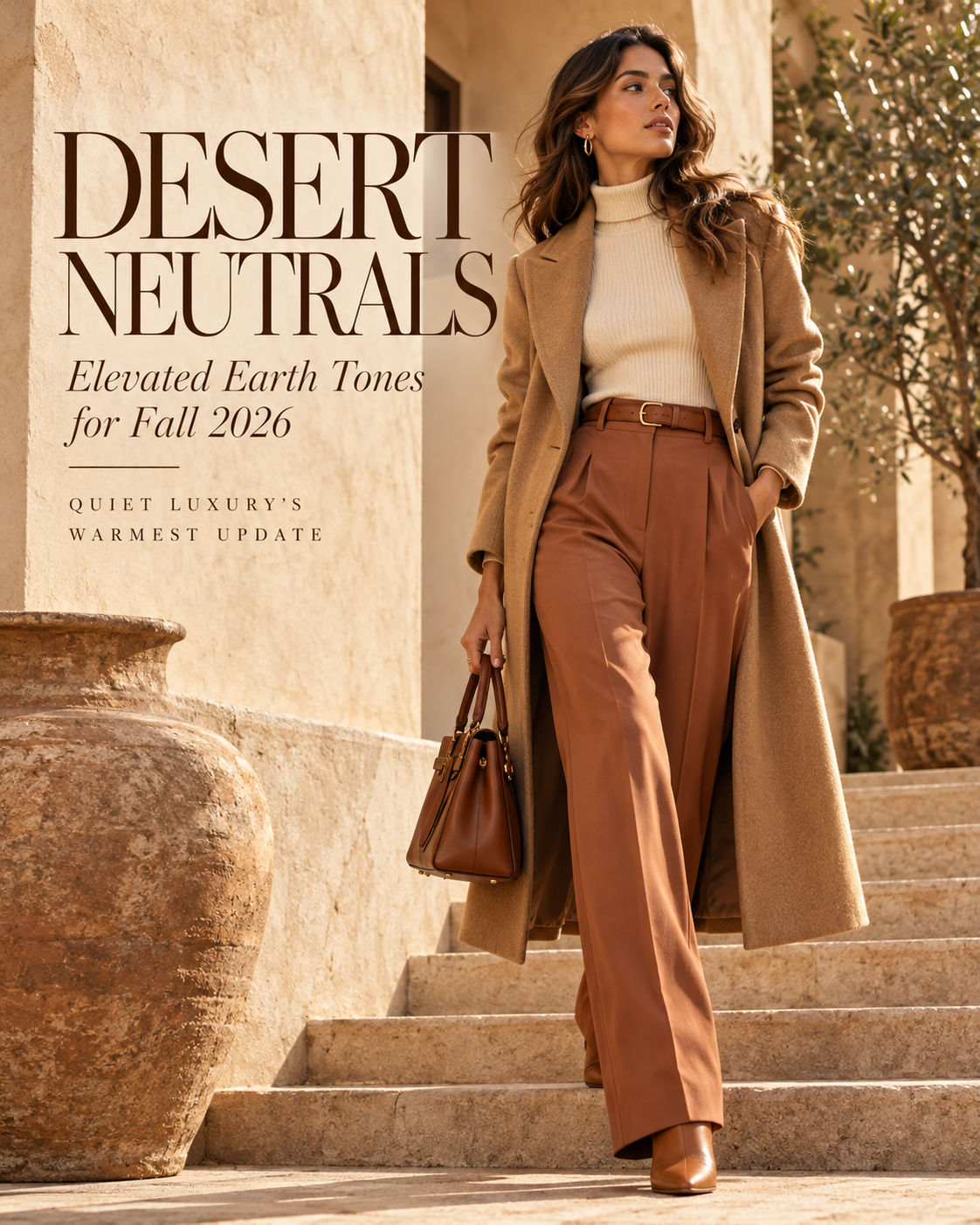
What are desert neutrals and why are they dominating 2026?
Desert neutrals represent a departure from sterile minimalism toward a living, breathing palette that feels intentional and textured rather than safe.
Warm undertones: Every shade—from sand to terracotta—carries golden, rust, or clay undertones, which flatters a wider spectrum of skin tones and feels inherently luxurious.
Tonal layering: The beauty of desert neutrals lies in wearing multiple shades together: camel over cream, terracotta with ochre, warm gray with rust accents—creating visual interest without jarring contrast.
Texture elevation: Linen, cashmere, leather, and suede in these tones communicate investment and refinement; the same cut in basic black reads costume-like by comparison.
Season-agnostic warmth: Unlike summer pastels or winter jewel tones, desert neutrals feel equally at home in September through March, making them a utility player in any thoughtful wardrobe.
Quiet luxury coding: Neutrals signal restraint, which is the cornerstone of contemporary luxury; the absence of logos or loud branding positions desert neutrals as the antithesis of trend-chasing.
The trend gained momentum after fall 2025 showed designers like Loro Piana, Brunello Cucinelli, and Bottega Veneta leaning hard into ochre, sand, and warm taupe. Fashion editors at major publications began styling entire editorials in tonal desert palettes, and influencers with refined aesthetics—think the Vogue crowd rather than the fast-fashion set—began signposting the shift. What makes 2026 different is democratization: mass-market brands now understand the commercial power of earth tones that feel warm rather than dowdy.
"Desert neutrals are proof that restraint is the new rebellion. When everyone else is chasing color, a perfectly calibrated sand-to-terracotta wardrobe reads like a quiet power move."

How to build a desert neutrals wardrobe without looking dated
The cardinal rule: avoid flat, synthetic finishes and commit to elevated fabrics and tailoring that signal investment.
Select your foundation neutral: Choose one core shade—camel, warm sand, or light terracotta—as your anchor, then build complementary tones around it.
Invest in a structured outerwear piece: A camel coat or oversized linen blazer in sand functions as the spine of the wardrobe; this item justifies higher investment because it anchors dozens of outfits.
Layer tonals intentionally: Pair a cream cashmere turtleneck under an ochre wool sweater, or terracotta linen trousers with a sand-colored silk button-up; the variety prevents monotony.
Introduce texture through accessories: A suede belt in warm cognac, a woven leather handbag in clay, or a linen scarf in rust adds dimension without departing the palette.
Ground the look with grounding pieces: Neutral leather loafers, a woven bag, and a simple watch in gold or warm metal complete the aesthetic.
Pro Tip: Invest your money in one statement piece per season—a cashmere coat, a leather handbag, a wool dress—and build cheaper basics around it; this approach maximizes visual impact while maintaining budget discipline.

Step-by-step strategies to master tonal desert dressing
The most visually compelling desert neutral looks rely on strategic tonal variation and texture contrast, not color clash.
Tonal dressing—wearing multiple shades of the same color family—requires understanding undertone relationships. A warm sand and a cool taupe will fight; a sand and an ochre will sing. The trick is selecting shades that share golden or rust undertones, then varying the depth: light sand paired with deeper camel, or cream topped with warm gray. This creates visual sophistication without the "costumey" feeling of monochromatic dressing.
Pro Tip: Shop in natural light whenever possible; indoor store lighting can distort undertones, making a terracotta read as orange or a camel look too yellow.
Texture elevation is equally critical. Flat cotton in terracotta reads cheap; suede, linen, or brushed wool in the same shade reads intentional. Layer a smooth silk shirt under a nubbly wool cardigan, or pair smooth leather loafers with chunky knit trousers. This interplay of matte and subtle sheen, rough and smooth, communicates investment and sophistication without screaming luxury.
Matte finishes: Opt for suede, linen, and matte jersey in earth tones for an understated, refined appearance.
Subtle sheen: Silk, smooth leather, and polished fabrics add visual interest and dimension when layered with matte pieces.
Mixed textures: Pairing smooth and rough creates depth; a sleek camel coat over a chunky knit communicates intentionality and craftsmanship.
Natural fibers: Wool, cashmere, linen, and leather inherently elevate earth tones; prioritize these materials for investment pieces.
"The moment you stop thinking 'desert neutrals as a color palette' and start thinking 'desert neutrals as a texture story,' you've won."

How do you avoid looking dated in desert neutrals
The primary risk with earth tones is accidentally channeling 1970s bohemia or 2000s-era mall fashion; modern desert neutrals demand intentional silhouettes, elevated tailoring, and contemporary styling cues.
Avoid oversized, slouchy cuts: A boxy terracotta sweater reads retro-boho; a fitted or deliberately cropped version reads current. Clean, architectural silhouettes signal modern sensibility.
Prioritize clean tailoring: A precise, high-waisted camel pant with a sharp crease reads contemporary; loose, unstructured trousers in the same shade read dated. Modern desert dressing favors structure.
Incorporate minimal, modern accessories: A slim leather belt in cognac, streamlined jewelry in gold or silver, and contemporary footwear (sleek loafers, minimal sneakers) ground the look in 2026 rather than 1976.
Use contrast strategically: Pairing a terracotta knit with crisp white or off-white bottoms, or an ochre dress with black tights and shoes, prevents the outfit from reading as a monotone costume.
Embrace polished grooming: Desert neutrals benefit enormously from intentional hair, makeup, and skincare; the palette is subtle enough that a less-refined overall presentation reads sloppy rather than relaxed.
The editorial reference point is Brunello Cucinelli, where desert neutrals are paired with precision tailoring, minimal jewelry, and understated elegance. A camel coat isn't thrown on; it's worn with deliberate posture and intentional styling. This is the through-line separating "looks dated" from "looks refined."

My years with desert neutrals: from observation to obsession
I have spent years watching fashion cycles, and what strikes me most about the desert neutrals moment is how organic it feels compared to manufactured trends. Four years ago, when I first noticed warm earth tones creeping into editorial, they felt nostalgic, a callback to the 1970s. Today, they feel entirely contemporary—not retro, but timeless. The shift happened gradually, fabric by fabric, designer by designer.
The turning point came when I spotted a Loro Piana cashmere sweater in warm sand at a pop-up in Miami—$680, a significant investment for a basic knit. I initially balked. But I bought it, wore it for an entire season, and watched it become the single most versatile piece in my wardrobe. I paired it with everything: camel trousers, cream linen pants, terracotta skirts, even black denim. That one piece made me understand why designers were betting on the palette. It wasn't about a specific trend; it was about constructing a wardrobe that actually works.
The greatest lesson desert neutrals taught me is this: spending more on basics in the right color is worth it.

BestStyle's guide to desert neutrals and elevated earth tones
BestStyle's editorial team has been tracking the quiet luxury movement for three years, and desert neutrals represent the most sustainable, wearable expression of that philosophy we've documented. Unlike viral trends that burn bright and disappear, earth-tone dressing rewards intentionality and investment—qualities central to our editorial mission. We cover the intersection of luxury, sustainability, and personal style, and desert neutrals embody all three: they're timeless enough to anchor a wardrobe for years, they're often constructed from natural fibers like linen and wool, and they communicate sophistication through restraint rather than conspicuous consumption.
Our guides focus on helping readers translate runway inspiration into real-world, season-proof wardrobes. Whether you're shopping at Brunello Cucinelli or building a capsule at COS, the principles remain the same: commit to undertone coherence, invest in tailoring and fabrication, and recognize that neutral doesn't mean boring. For more on building a thoughtful, investment-focused wardrobe, explore BestStyle's editorial archive on quiet luxury and capsule dressing.
FAQ
Is desert neutrals the same as beige?
No. Beige is often flat and cool; desert neutrals are warm, textured, and intentionally curated. Think terracotta, sand, and camel—colors with visible personality and golden undertones.
What skin tones look best in desert neutrals?
Desert neutrals work across all skin tones because the palette is broad; warm undertones tend to flatter deeper skin, while lighter shades work well on fair complexions. The key is testing shades in natural light.
Can I mix desert neutrals with other colors?
Absolutely. Pair earth tones with crisp white, deep black, or even muted jewel tones like sage or navy. The key is using neutral as the base and color as the accent.
Where should I start if I'm new to desert neutrals?
Begin with one investment piece—a camel coat or sand cashmere knit—then build basics around it. This approach simplifies decision-making and guarantees cohesion.
Are desert neutrals affordable?
Yes and no. Premium fabrics command higher prices, but brands like Uniqlo, COS, and Everlane offer quality basics in earth tones under $60. The trend is accessible at multiple price points.

Recommended
Build a quiet luxury wardrobe: essential investment pieces for 2026 — BestStyle
The complete capsule wardrobe guide: mastering neutral color palettes — BestStyle
Luxury knitwear decoded: cashmere, linen, and merino for elevated basics — BestStyle
Sustainable style: building a wardrobe around natural fibers and earth tones — BestStyle