Chocolate Brown Tailoring Trend 2026: How to Wear Tonal Brown Like Theo James
Chocolate brown offers a different kind of sophistication
There is something particularly compelling about a man who understands the power of a beautifully tailored suit. Not one that announces itself through extravagant detailing or an unconventional silhouette, but one that commands attention through color, proportion, and the confidence of its wearer. Theo James offered exactly that at Netflix's The Gentlemen FYC event in Los Angeles on November 7, 2026.
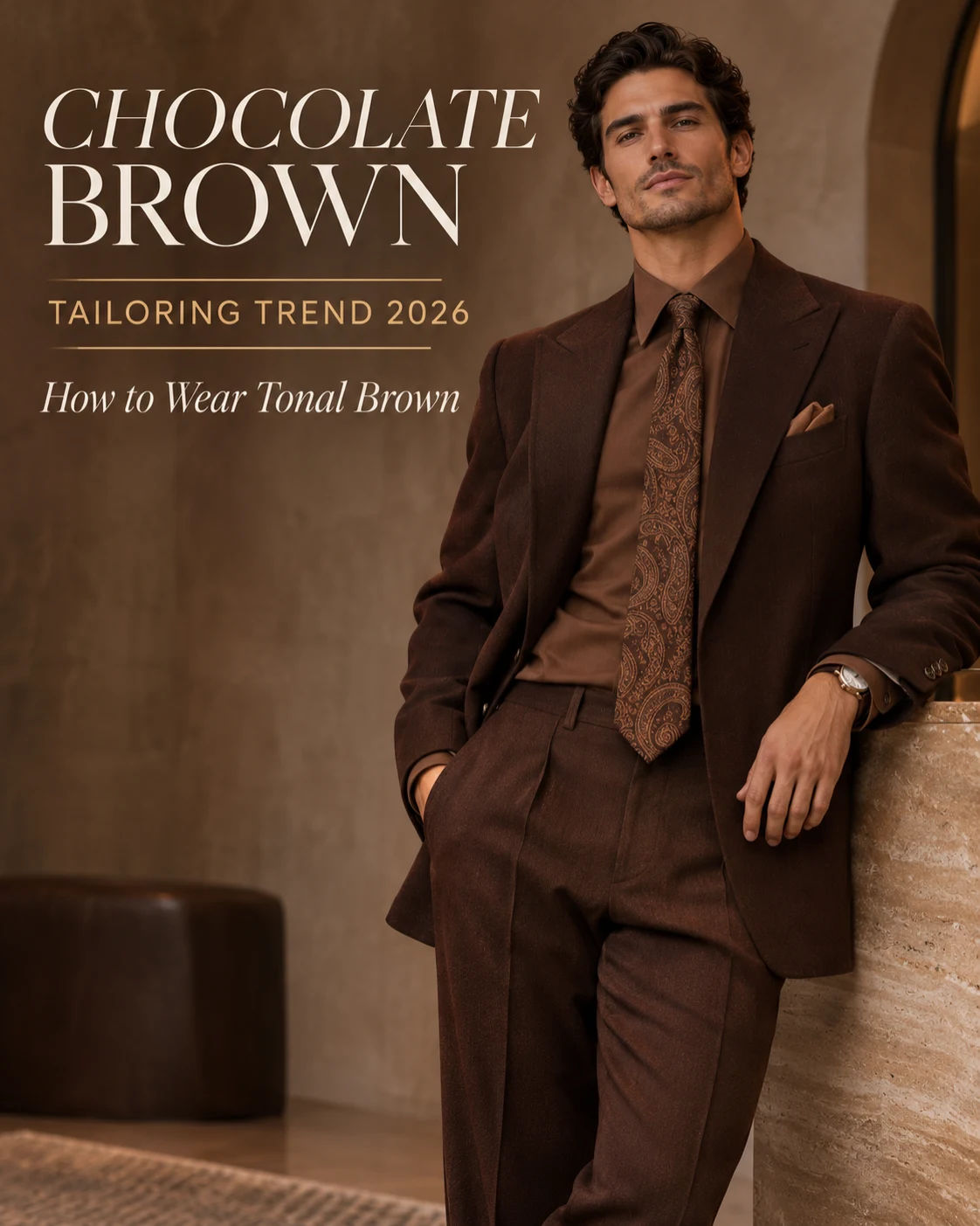
Dressed in three complementary shades of chocolate brown by P. Johnson, the British actor delivered a masterclass in tonal dressing. The richness of the tailoring, the subtle differences between the brown tones, and an unexpected paisley tie created a look that felt sophisticated without becoming overly formal.
It was a striking example of the chocolate brown tailoring trend defining a particular mood in menswear for 2026.
As traditional black, navy, and charcoal suits make room for warmer alternatives, brown has emerged as a sophisticated option for modern tailoring. Its appeal lies in its versatility: equally capable of appearing understated, romantic, intellectual, or quietly rebellious, depending on how it is worn.
James's interpretation captured that flexibility beautifully. The look was rooted in classic menswear traditions, yet its tonal composition gave it a distinctly contemporary character.
More importantly, it demonstrated why dressing in a single color family can be far more interesting than relying on contrast alone.

Theo James Makes a Case for Chocolate Brown Tailoring
Theo James has developed a recognizable approach to red-carpet dressing. His preference for carefully proportioned tailoring, relaxed sophistication, and understated accessories has made his appearances a compelling reference point for contemporary menswear.
At the Netflix event celebrating The Gentlemen, that approach took on a particularly rich color story.
His P. Johnson ensemble explored three variations of chocolate brown, allowing the tonal differences to create dimension without disrupting the overall harmony of the outfit.
Rather than pairing a dark suit with a sharply contrasting shirt, the styling maintained a consistent palette. The result was an almost uninterrupted composition, where subtle changes in shade became the most interesting visual details.
A patterned paisley tie introduced just enough contrast to prevent the ensemble from feeling overly restrained.
Its decorative quality added personality to the otherwise disciplined tailoring, creating a balance between traditional menswear and a more expressive approach to formal dressing.
What made the look effective was the absence of unnecessary complication.
The suit did not depend on exaggerated proportions, conspicuous branding, or an elaborate combination of accessories. Its impact came from the relationship between color, fit, and texture.
That simplicity has become central to James's fashion identity.
Across previous appearances, the actor has demonstrated a preference for suits that feel precise without appearing restrictive. His wardrobe frequently incorporates double-breasted jackets, refined fabrics, and neutral shades, often styled with a relaxed attitude toward conventional formalwear.
At the March 2026 UK premiere of Fuze, he wore chocolate brown tailoring with an open-collar shirt, offering a less formal interpretation of the same color family.
The November appearance presented another possibility.
By introducing tonal variation and a patterned tie, James demonstrated how chocolate brown could move comfortably between relaxed evening elegance and more traditional occasion dressing.
Both looks shared the same essential quality: tailoring that appeared considered without feeling overly controlled.

Why Chocolate Brown Has Become Menswear's Most Interesting Neutral
For decades, black, navy, and charcoal have formed the foundation of traditional men's tailoring.
Their popularity is understandable. Each provides a reliable starting point for formal dressing, allowing subtle variations in fabric, cut, and accessories to shape the final appearance.
Chocolate brown offers a different kind of sophistication.
Where black can feel severe and navy suggests conventional formality, deep brown introduces warmth. Its richness softens the visual impact of structured clothing, allowing a suit to feel elegant without appearing rigid.
That distinction has become particularly relevant in 2026.
As menswear continues to explore relaxed silhouettes, heritage fabrics, and more expressive interpretations of traditional dressing, chocolate brown has established itself as a versatile alternative to the usual formal palette.
Vogue identified brown as an important color for Autumn/Winter 2026 menswear, highlighting its continued presence in men's collections and its connection to a broader interest in earthy, outdoors-inspired luxury.
The appeal extends beyond tailoring.
Chocolate, espresso, tobacco, chestnut, and caramel tones have appeared across outerwear, knitwear, leather, and accessories, creating a wardrobe language built around depth rather than sharp contrast.
Yet the color's renewed visibility does not make it entirely new.
Brown suits have a long history in menswear, particularly within British tailoring, traditional country clothing, and the relaxed elegance associated with 1970s fashion.
Its contemporary revival draws on that heritage without reproducing it too literally.
Modern brown tailoring tends to feel softer in construction and more versatile in styling. A chocolate suit can appear formal with a collared shirt and tie, relaxed with fine knitwear, or distinctly modern when paired with a tonal shirt worn open at the neckline.
There is also something inherently tactile about the color.
Deep brown brings to mind polished wood, aged leather, espresso, and rich wool fabrics. These associations create a visual warmth that feels particularly appropriate for autumn and winter, although lighter constructions can carry the shade into warmer months.
On James, that warmth was balanced by the precision of the tailoring.
The result captured the appeal of contemporary menswear at its most assured: classic enough to feel enduring, but considered enough to appear unmistakably current.

The Art of Tonal Brown Dressing: Why Subtle Contrast Matters
The defining feature of Theo James's chocolate brown outfit was not simply the color itself. It was the decision to explore several variations of brown within one carefully composed ensemble.
This is where tonal dressing becomes particularly interesting.
A completely monochromatic outfit can create an elegant, uninterrupted silhouette. Tonal dressing introduces greater complexity by bringing together neighboring shades from the same color family.
In brown tailoring, those differences can be surprisingly expressive.
A deep espresso jacket worn over a slightly warmer chocolate shirt creates dimension without a dramatic contrast in color. Chestnut trousers can soften the richness of a darker blazer, while tobacco and caramel accents introduce warmth around the edges of the outfit.
The key is allowing the shades to remain distinct.
When every element shares exactly the same depth and finish, the overall look can appear flat. Subtle variations create separation, allowing individual garments to retain their character while contributing to a cohesive composition.
Texture plays an equally important role.
A smooth wool jacket absorbs and reflects light differently from a brushed flannel trouser or a fine-gauge knit. Even when those fabrics are similar in color, their surfaces introduce visual interest.
This makes chocolate brown particularly well suited to layered dressing.
The richness of the shade becomes more apparent when paired with materials that possess different weights and finishes.
James's P. Johnson look demonstrated the effect through tailoring and tonal variation, using the patterned tie as a deliberate point of contrast.
That finishing detail is worth considering.
Although the ensemble remained firmly within the brown family, the paisley pattern interrupted the otherwise quiet composition. It introduced an element of traditional decorative menswear without overwhelming the look.
The contrast was subtle rather than confrontational.
There is a useful distinction here between dressing entirely in one color and building an outfit around a consistent color story.
The former relies on uniformity. The latter creates interest through variation.
For chocolate brown tailoring in 2026, that second approach feels especially relevant.
It allows an outfit to appear coordinated without becoming predictable, polished without becoming stiff.

How to Wear a Chocolate Brown Suit Without Looking Overly Formal
One of the most appealing qualities of chocolate brown tailoring is how naturally it adapts to different levels of formality.
Unlike black, which can immediately suggest eveningwear or conventional business dressing, brown carries a more relaxed visual character.
That flexibility makes it especially effective in contemporary wardrobes, where the distinction between formal and casual clothing has become increasingly fluid.
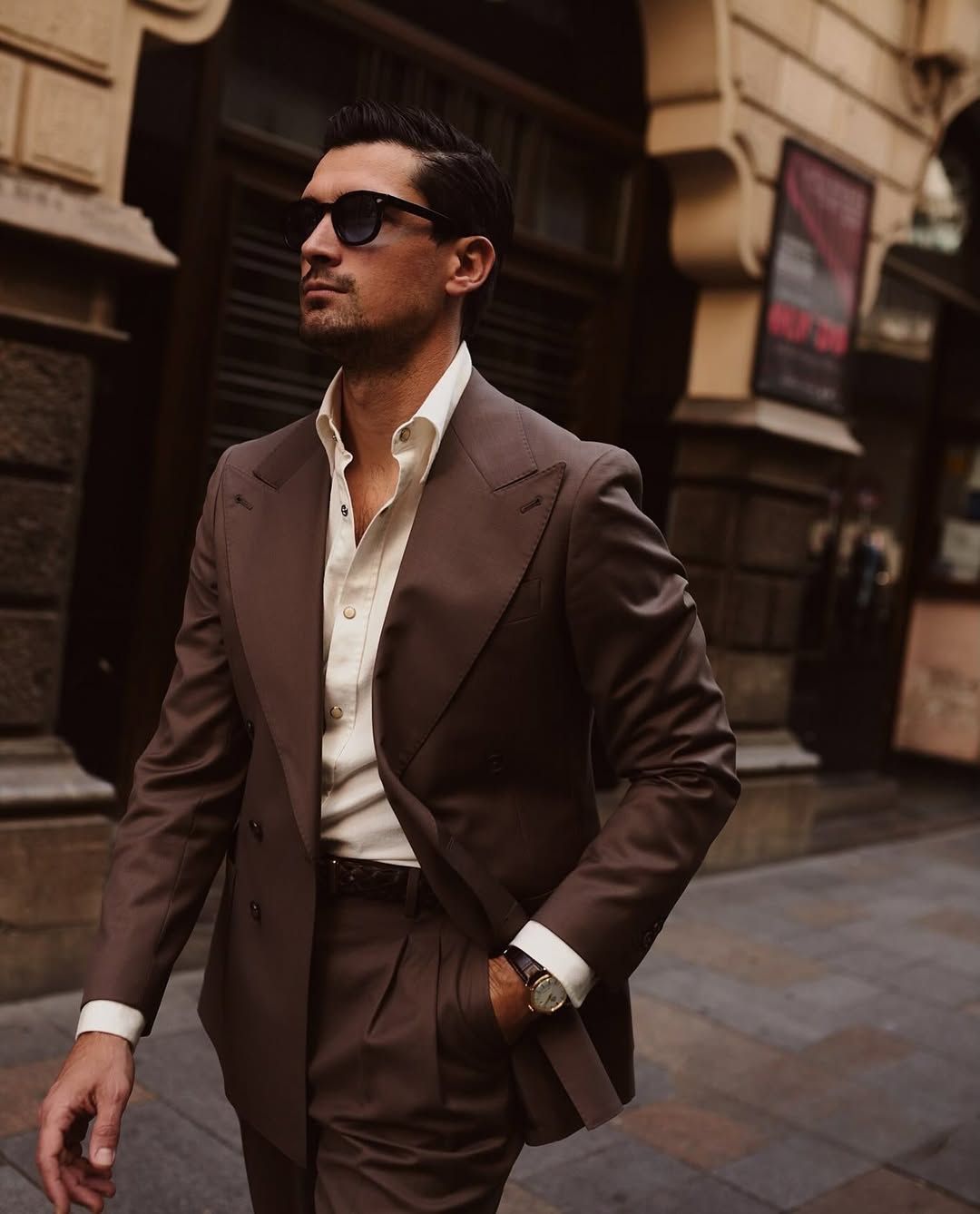
A chocolate brown suit worn with a cream shirt offers a classic interpretation of the palette. The lighter fabric introduces breathing room around the face, while the contrast emphasizes the richness of the tailoring.
Pale blue provides a cooler alternative.
Against dark brown, the softness of blue creates a composed, slightly traditional combination that feels particularly appropriate for daytime occasions.
For a more contemporary interpretation, a tonal brown shirt creates the kind of uninterrupted color story seen in James's recent appearances.
The difference between the jacket and shirt need not be dramatic. Even a small variation in warmth or depth can make the combination feel deliberate.
The neckline also changes the mood.
An open collar introduces ease, allowing the tailoring to feel less ceremonial. A neatly arranged tie gives the same suit a more traditional character, particularly when the pattern introduces another subtle element of visual interest.
This is where the actor's styling provides an effective reference.
James has appeared in brown tailoring with both open-collar and tie-led styling, illustrating how a single color family can accommodate different expressions of elegance.
Footwear contributes to that balance.
Deep brown leather shoes maintain continuity with the overall palette, while suede introduces a softer surface that complements wool and textured tailoring.
Dark burgundy can offer a subtle variation for those interested in introducing another color without disrupting the richness of the outfit.
Black footwear, meanwhile, creates a sharper distinction and can make the look feel more formal.
None of these approaches requires an elaborate collection of accessories.
The strongest combinations tend to give the suit enough space to remain the focus.
A thoughtfully chosen shirt, considered footwear, and one distinctive finishing detail are often sufficient.
The objective is not to make every element match perfectly, but to create a sense of cohesion.
That is the quality that makes tonal brown dressing feel effortless rather than overly coordinated.

Why Fit and Proportion Matter More Than the Color
Even the most beautiful shade of chocolate brown cannot compensate for tailoring that lacks structure or proportion.
This is perhaps the most enduring lesson in Theo James's approach to menswear.
His suits frequently occupy a considered middle ground between traditional structure and contemporary ease. Jackets follow the natural line of the shoulders, while trousers maintain enough room to move without losing their tailored shape.
The effect is polished but never excessively rigid.
In an August 2026 examination of James's signature style, British GQ highlighted his preference for suits that balance precise shoulder construction with relaxed proportions. The publication also noted his recurring interest in double-breasted tailoring and fabrics with natural drape.
Those qualities are especially important when working with dark, tonal outfits.
Because chocolate brown creates a relatively unified visual field, the silhouette becomes more noticeable. The line of the jacket, the placement of the waist, and the fall of the trousers all contribute to the overall impression.
A jacket that sits cleanly across the shoulders establishes the structure of the look.
From there, the fabric should move naturally rather than pulling tightly across the body.
Similarly, trousers with a considered break at the shoe help preserve the continuity of the silhouette.
The result feels intentional without appearing overly precise.
Contemporary tailoring has increasingly embraced that balance.
Rather than returning completely to the narrow silhouettes associated with earlier decades, many modern suits allow greater ease through the body and leg.
For chocolate brown, these softer proportions complement the inherent warmth of the color.
A relaxed double-breasted jacket can feel sophisticated without appearing imposing. Wider trousers introduce movement, while a more streamlined cut offers a sharper interpretation.
The most successful choice depends less on a specific trend than on the relationship between the garments and the person wearing them.
James's red-carpet wardrobe is a reminder that the appeal of tailoring often lies in details that are difficult to identify individually but immediately noticeable together.
The shoulder line feels right. The trousers fall naturally. The fabric has enough weight to create shape without appearing stiff.
Nothing demands attention on its own, yet the complete outfit feels remarkably composed.

The Gentlemen Effect: When Modern Tailoring Becomes Part of a Cultural Identity
There is an interesting connection between Theo James's personal style and the visual world of Netflix's The Gentlemen.
Created by Guy Ritchie, the series places considerable emphasis on clothing as a form of character expression, particularly through traditional British tailoring, heritage outerwear, and carefully chosen accessories.
James plays Eddie Horniman, whose wardrobe reflects the series' distinctive relationship between aristocratic style and contemporary power dressing.
The costumes are not merely decorative.
They help establish character, environment, and social context, using familiar elements of British menswear to create a recognizable visual identity.
In a September 2026 feature published by Netflix's Tudum, James discussed the importance of clothing within the series, explaining how details such as shirt collars, patterns, colors, and buttons formed part of conversations about its styling.
Costume designer Loulou Bontemps also described the evolution of the characters' wardrobes as the series developed.
That attention to detail helps explain why the visual language of The Gentlemen resonates beyond the screen.
Its tailoring draws on familiar associations with heritage, confidence, and ceremony, but introduces enough contemporary styling to prevent the clothing from feeling purely historical.
James's off-screen wardrobe shares some of those qualities, although it remains distinct from his character's costumes.
His P. Johnson ensemble at the Los Angeles event was not an attempt to reproduce Eddie Horniman's wardrobe. Instead, it demonstrated how similar principles of proportion, texture, and considered color could exist within a modern red-carpet setting.
The connection was aesthetic rather than literal.
Both approaches understand the expressive potential of a well-tailored suit.
And both demonstrate how traditional menswear can feel contemporary when its familiar codes are interpreted with confidence.
In a fashion landscape that often celebrates novelty, there is something refreshing about clothing that creates impact through refinement.
Chocolate brown tailoring belongs comfortably within that conversation.
It offers enough heritage to feel recognizable, enough versatility to remain relevant, and enough warmth to create a distinctive visual identity.
James's interpretation showed how these qualities can coexist without becoming theatrical.
Chocolate Brown Tailoring in 2026: The Appeal of Quiet Confidence
Fashion trends often arrive with a sense of urgency. A new color dominates a runway season, an unfamiliar silhouette captures attention, or a particular styling detail suddenly appears everywhere.
Chocolate brown tailoring offers a different kind of appeal.
Its relevance in 2026 is not dependent on novelty. The color has existed within traditional menswear for generations, but its contemporary interpretation reflects a broader interest in softness, texture, and individual expression.
That is what makes Theo James's P. Johnson appearance particularly memorable.
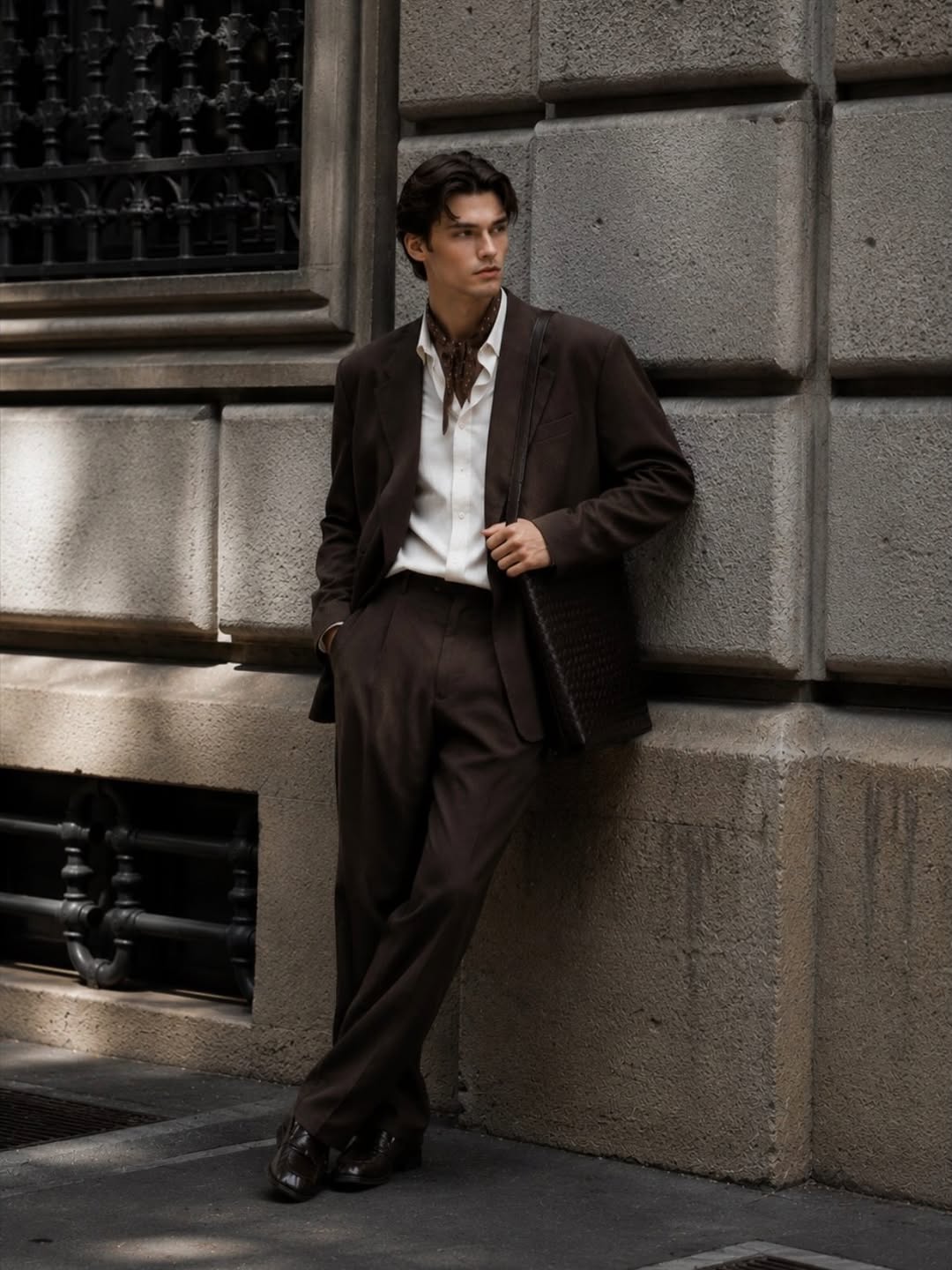
The three shades of chocolate brown created visual depth without unnecessary contrast. The paisley tie offered a touch of personality, while the precise tailoring kept the ensemble grounded in classic elegance.
The look felt confident because it did not appear to be trying too hard.
There was no dramatic reinvention of the suit or attempt to challenge every established convention of formal dressing.
Instead, James demonstrated how familiar pieces could feel entirely fresh through the careful relationship between color, proportion, and detail.
That approach carries an appeal far beyond a single red-carpet appearance.
It suggests a more considered way of understanding contemporary style, where individuality is expressed through subtle choices rather than constant reinvention.
And although chocolate brown may be enjoying renewed prominence in 2026, its richness and versatility give it a place beyond the immediate fashion cycle.
The best tailoring has always possessed that quality.
It evolves with the person wearing it, adapting to changing silhouettes, occasions, and cultural moods without losing its essential character.
In Theo James's hands, chocolate brown became more than an alternative to black or navy.
It became an expression of modern elegance: warm, assured, beautifully measured, and memorable precisely because nothing about it felt excessive.