Harry Collett Just Destroyed the Wimbledon Dress Code in a Youthful Short-Suit
The actor just redefined courtside style by swapping traditional tailoring for a fashion-forward cropped blazer moment. Here's how to shop the bold Wimbledon look.
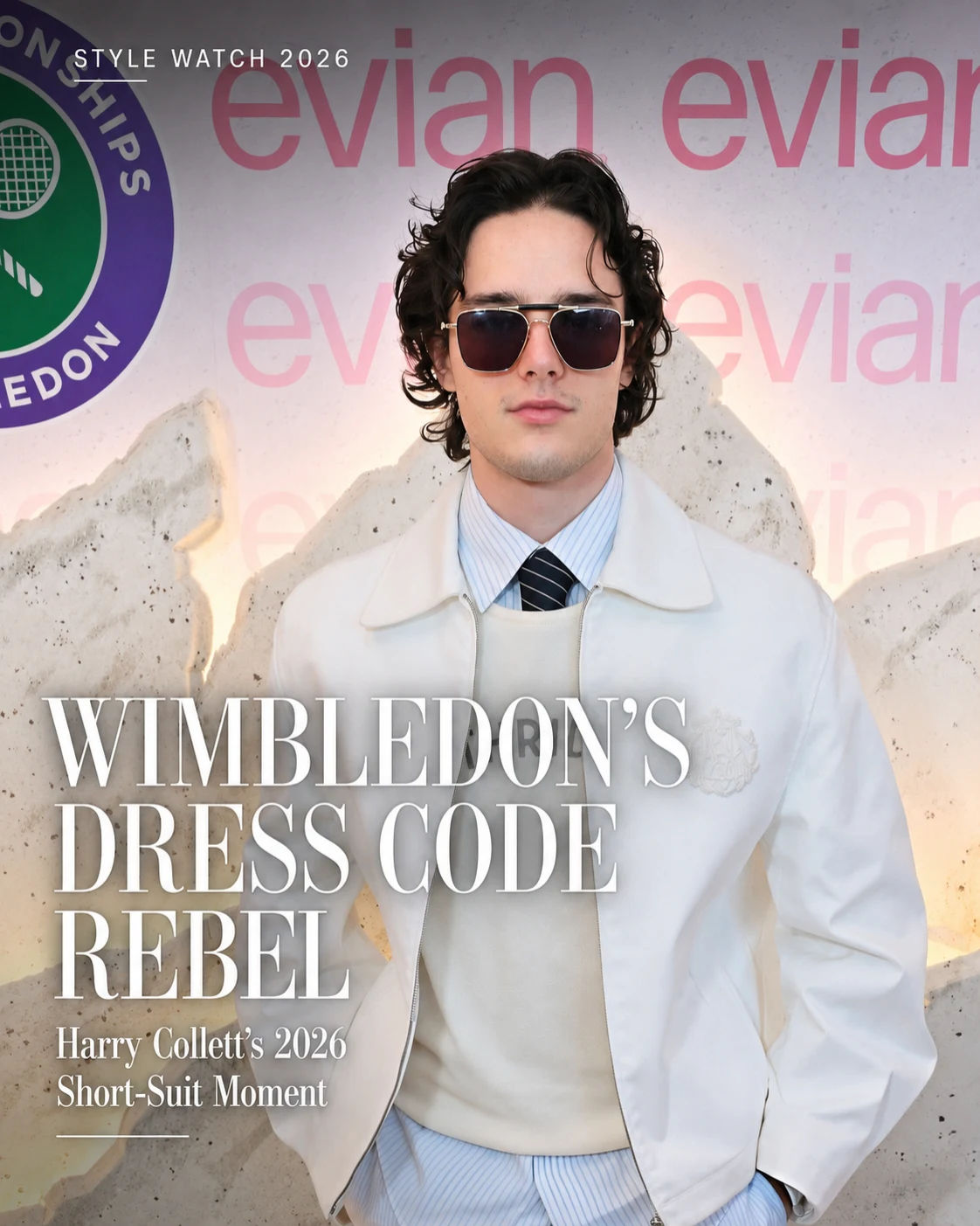
Harry Collett Just Destroyed the Wimbledon Dress Code in a Youthful Short-Suit
The art of breaking a centuries-old dress code with intention is what separates a scandal from a cultural moment, and Harry Collett just delivered the latter. The British actor rolled into the Wimbledon grounds this season in a tailored short-suit that felt less heritage tennis tradition and more editorial fearlessness—a cropped navy blazer paired with matching shorts that hit mid-thigh, paired with pristine white socks and leather loafers. The short-suit trend has been quietly dominating luxury streetwear and high-fashion runways, with brands like Thom Browne leading the charge, and now it's officially penetrating the most conservative sporting events. This isn't the first time Collett has bent the rules of his public wardrobe, but it's certainly the most audacious. Fashion publications from Vogue to GQ are already dissecting the move, signaling that the short-suit isn't a one-off stunt—it's the beginning of a shift in how young actors, musicians, and cultural figures are approaching tailored dressing in 2026.

What makes the short-suit a Wimbledon rebellion in 2026?
The short-suit challenges everything Wimbledon has stood for since 1877: propriety, tradition, and an invisible line between formal and casual that absolutely must not be crossed. Collett's choice wasn't accidental. Here's what made it work:
Proportional silhouette: The cropped blazer sat at the natural waist, creating visual balance with shorts that skimmed the knee rather than sitting at an awkward midpoint. This is the difference between editorial and costume.
Color discipline: Navy on navy created a monochromatic, almost minimalist visual story that felt intentional rather than sloppy. The restraint actually made the statement louder.
Accessory alignment: White socks and leather loafers anchored the look in a prep-coded vocabulary that Wimbledon attendees understand, even if the proportions felt alien.
Confidence in the cut: The shorts were tailored, not casual. The seams were sharp, the fabric held structure. This prevented the look from reading as costume or ironic.
Pro Tip: If you're considering the short-suit for your own off-duty moments, start with monochromatic fabrics in navy, charcoal, or black—the tonal approach gives you permission to experiment with proportion without looking experimental.
"The short-suit is what happens when tailoring meets streetwear intelligence. Collett didn't wear costume; he wore conviction."

How to shop the short-suit trend without looking costume-adjacent?
The difference between a short-suit that reads editorial and one that reads Halloween is construction, fabric weight, and the confidence with which you pair it. Here's your step-by-step approach:
Source tailored separates, not matching sets. Begin by shopping blazers and shorts independently so you can control proportions. A cropped blazer from Ami Alexandre Mattiussi (around $650) paired with tailored shorts from COS (under $90) gives you the editorial effect without the costume rigidity of a pre-matched set.
Prioritize natural fibers with structure. Wool blends and linen-cotton mixes hold their shape better than synthetics. Uniqlo's wool blazers start around $99, and when paired with their smart shorts, you're building an outfit, not buying a costume.
Test the proportions in a mirror from three angles. Sit down. Walk. Check the side profile. The shorts should create a visual break at the thigh without revealing more than you'd show in swim trunks. This is where most people stumble.
Anchor with classic footwear and grooming. White leather loafers, sleek sneakers, or leather slides. The shoes and socks become your permission slip to wear proportions that would otherwise feel risky.
Layer with intention when temperature demands it. A fine-knit sweater or oversized button-up worn open over the blazer adds visual complexity and keeps the look from feeling sparse or overly conceptual.
The brands winning the short-suit moment right now include Thom Browne (the undisputed king, with pieces starting at $395 for shorts alone), Martine Rose (notorious for sharp tailoring and cropped proportions), and emerging British labels like Chopova Lowena. For accessible entry points, COS's tailoring has become a quiet luxury standard, with shorts and blazers that punch above their sub-$150 price points.
Step-by-step: styling the short-suit for different occasions in 2026
The short-suit adapts across contexts—from Wimbledon's courtside tradition to after-hours venues—if you understand the accessory algebra. Here's how to navigate the wardrobe logic:
Pro Tip: White socks in a short-suit aren't an accident; they're a visual marker that says you know the silhouette is intentional and you're not trying to hide it.
For high-stakes events like tennis tournaments or garden parties, lean into the quiet luxury vocabulary. Pair a navy or charcoal short-suit with white socks, leather loafers in cognac or black, and a slim watchband visible at the wrist. The restraint is the statement. A minimal silver necklace or a simple ring adds personality without visual noise. This is the Collett blueprint.
For nightlife or editorial moments, you can shift the temperature slightly. Black short-suit with black turtleneck underneath (sleeves visible beneath the blazer), black socks, and sleek ankle boots. Add a structured clutch or small shoulder bag. The monochromatic approach reads expensive and intentional, not costume. Brands like Bottega Veneta (short-suit separates around $850–$1,200) and The Row (minimalist tailoring, $600–$1,500) own this space.
For daytime off-duty moments, a lighter color palette opens up. A cream or sand linen short-suit with a tucked white t-shirt underneath feels approachable and seaside-adjacent without sacrificing sophistication. Pair with woven loafers, light socks, and a small structured bag. This is where brands like coastal-coded luxury labels shine.

How do you prevent a short-suit from reading as costume?
This is the question every short-suit skeptic asks, and the answer lives in three specific places: fabric weight, personal grooming, and contextual confidence. A short-suit only reads as costume when one of these three pillars breaks down.
Fabric authority: Cheap synthetic blends wrinkle, sag, and lose shape within hours. This is what transforms tailoring into costume. Invest in wool blends, linen-cotton mixes, and structured cottons. The fabric should hold its geometry. A $400 wool blazer from Ami will read differently than a $60 polyester version from a fast-fashion retailer.
Grooming precision: A short-suit demands that your grooming language match its editorial tone. This means clean nails, sharp haircut, intentional skincare. Collett arrived at Wimbledon with visible intention to every element—skin, hair, posture. Costume reads sloppy; style reads sharp.
Context and occasion selection: Wearing a short-suit to a formal black-tie wedding reads costume. Wearing it to a garden event, creative industry function, or high-fashion occasion reads intelligence. Choose your moments strategically.
Sock and shoe elevation: This is where amateurs stumble. Cheap socks pill and bag. Uncomfortable shoes create bad posture, which reads insecure. Invest in quality basics here. Marcoliani or Pantherella socks (under $25 per pair) and leather loafers from Cole Haan, Ferragamo, or Church's create the visual authority that prevents costume-reading.
The short-suit won't work for everyone, and that's the point. It requires a specific visual vocabulary and a willingness to be read as fashion-forward in spaces that might still expect tradition. But if you're willing to own that position, the short-suit becomes one of the most powerful tools in a modern wardrobe. Harry Collett proved it works at Wimbledon. Now the question is: where will you wear it?

In my years as a fashion editor, I have watched the short-suit evolve from conceptual runway piece to wearable confidence
I have spent years tracking the evolution of menswear tailoring, and the short-suit has always existed on the margins—a Thom Browne statement, a fashion-forward outlier, something you'd see on a runway and think "interesting, but not for real life." Then Harry Collett walked into Wimbledon, and that margin became a statement. I've seen this pattern before: a well-known figure wears something with such conviction that the cultural permission slip shifts overnight. Suddenly, what felt risky feels inevitable.
Last summer, I watched a friend—a creative director at a London advertising firm—pair a navy COS short-suit with white socks and leather loafers to a client pitch. The room noticed. More importantly, she felt authoritative. She spent less than $200 on the pieces and looked like she'd just stepped out of a Raf Simons show. That's the real power of the trend: it democratizes editorial confidence. You don't need a $1,200 Thom Browne piece to communicate that you understand proportion, fabric, and intentionality.
The short-suit asks a simple question: are you dressing to blend in or to signal visual intelligence? If it's the latter, you already know where to start.
— ASHOK, Senior Fashion Editor, BestStyle
BestStyle's guide to off-duty tailoring
BestStyle's editorial team covers the intersection of high fashion and everyday dressing—the moments when actors, musicians, and cultural figures step outside formal obligation and reveal their true style vocabulary. Off-duty tailoring has become one of the most reliable indicators of fashion literacy. When Harry Collett arrived at Wimbledon in a short-suit, he wasn't just breaking a dress code; he was communicating something about how a new generation approaches authority and presentation. We track these moments obsessively because they signal where tailoring is heading.
At BestStyle, we understand that the short-suit represents a fundamental shift in how tailored dressing works for those under 40. It's less about propriety and more about proportion. Less about tradition and more about editorial vision. Whether you're exploring the trend for the first time or building a capsule wardrobe around cropped proportions, our coverage spans everything from fabric selection to occasion styling to the psychology of why a silhouette that breaks rules can actually communicate sophistication. Visit BestStyle for deeper dives into tailoring trends, off-duty style moments from cultural icons, and accessible brand recommendations that prove you don't need to spend like Thom Browne to look like you did.

FAQ
What is the short-suit trend?
The short-suit is a tailored silhouette featuring a cropped blazer paired with shorts that hit mid-thigh. It combines tailored structure with a contemporary proportion that challenges traditional formal dressing codes. Luxury brands like Thom Browne pioneered it; now it's entering mainstream fashion consciousness.
Can I wear a short-suit to formal events?
A short-suit works best at garden events, creative industry functions, and high-fashion moments. Traditional black-tie galas and conservative family weddings are riskier choices unless you want to make a deliberate style statement. Context and venue matter enormously.
What brands make affordable short-suits?
COS (under $200), Uniqlo (under $150), and Zara (under $180) offer accessible entry points. If you're willing to invest slightly more, Ami Alexandre Mattiussi (around $650) and Martine Rose (around $800) deliver exceptional tailoring and proportion.
How do I style a short-suit for daytime vs. nighttime?
Daytime calls for lighter colors (cream, sand, navy), tucked t-shirts, and woven loafers. Nighttime shifts to monochromatic black, turtlenecks, structured bags, and sleeker footwear. The accessory and color palette communicate temporal context.
Is the short-suit unisex?
Yes. The short-suit's appeal lives in its androgynous proportions and conceptual challenge to traditional tailoring. It reads as equally powerful on multiple body types and gender presentations when proportioned and styled with intention.


