Harry Lambert and Pandora Are Making Baroque Pearls the Only Accessory You Need
From Copenhagen to Tokyo, the most influential dressers are rejecting loud logos for refined, understated elegance. Here's how to steal their look without the label price tag.
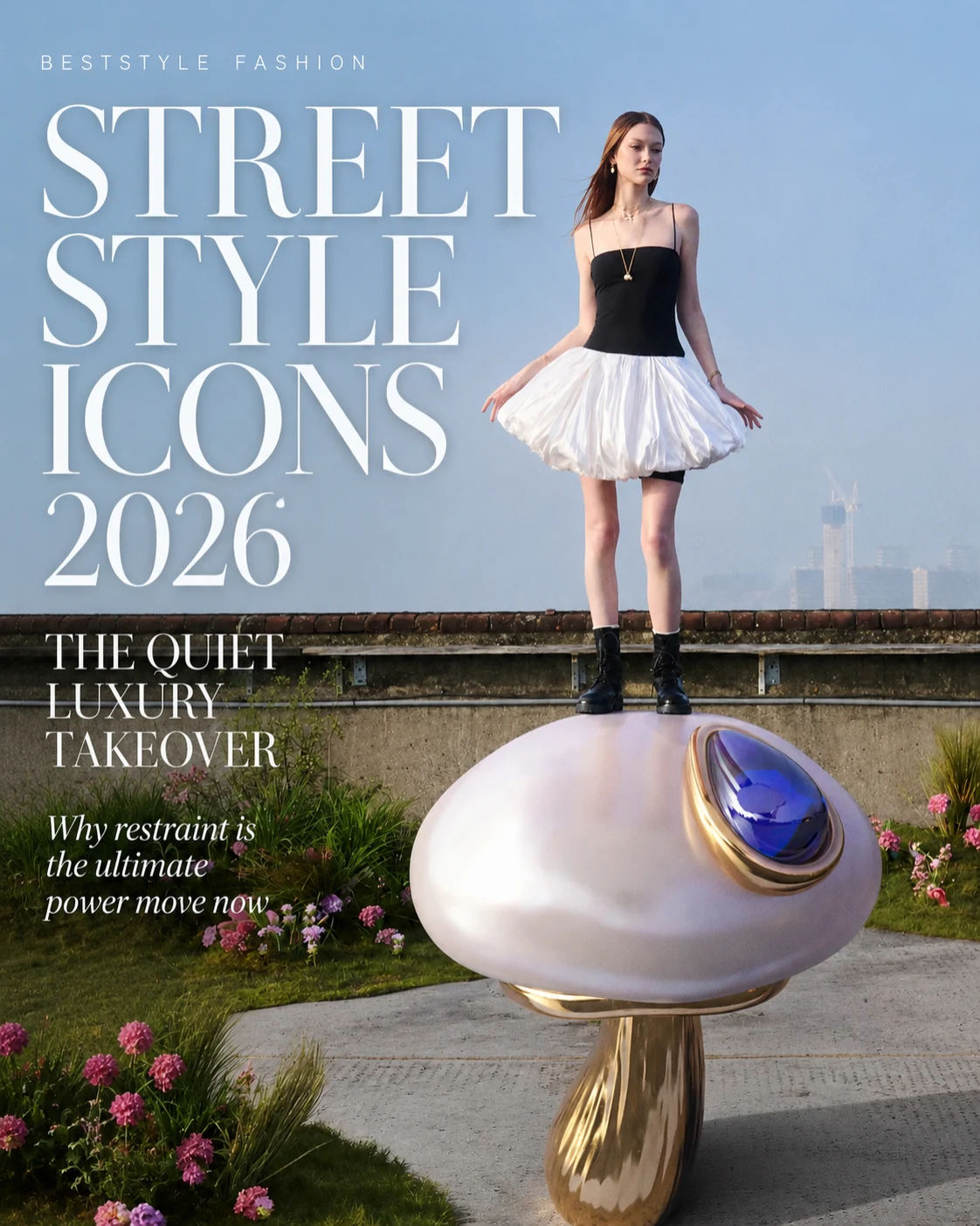
Street Style Icons 2026: The Quiet Luxury Takeover
Street style is the art of translating runway fantasies into real-world uniforms that announce your fashion literacy without saying a word. In 2026, the most photographed dressers globally have abandoned the logo-forward maximalism that dominated the last decade, pivoting instead toward what insiders call quiet luxury—a philosophy built on impeccable fabric, precise tailoring, and the kind of restraint that costs more than it shows. This shift isn't about budget constraint; it's about cultural confidence. From the Hermès leather-clad editors of Paris to the oversized linen devotees of Copenhagen, the aesthetic has become one of deliberate simplicity. Brands like The Row (cashmere sweaters starting at $890) and Khaite (tailored trousers around $795) have become the currency of street style prestige, but the good news for the rest of us: the philosophy scales down beautifully. COS basics, Everlane tailoring, and Uniqlo's premium linen have become the accessibility points for this elevated sensibility—confirmed by both Vogue and a surge in Gen Z influencers pivoting away from fast-fashion hauls toward timeless wardrobe staples.

What defines street style icons in 2026?
Today's most influential street style stars are defined not by label visibility but by an almost obsessive commitment to the fundamentals of proportion, color harmony, and the quiet confidence of knowing what works for your body.
Monochromatic dressing: Tonal outfits in camel, cream, sage, and charcoal eliminate visual noise and create an illusion of effortless luxury, whether you're wearing Loro Piana or a $35 Uniqlo tank layered with a thrifted wool jacket.
Intentional layering: The 2026 icon builds depth through texture—fine cashmere over crisp cotton, linen over silk, leather over wool—rather than clashing patterns or relying on accessories to do the heavy lifting.
Oversized proportions with precision tailoring: Wide-leg trousers paired with fitted turtlenecks; boyfriend blazers with a cropped tank. The magic is in the contrast, not in drowning in fabric.
Investment in basics: The 2026 street style uniform is built on repeatable essentials: the white Oxford shirt, the perfect-fitting jean, the butter-soft leather ballet flat, the oversized camel coat.
Minimal jewelry and no visible logos: When accessories appear, they're either heirloom-looking (vintage gold, pearls, a simple leather belt) or completely absent—the opposite of the 2010s accessory maximalism.
Pro Tip: Invest in one premium basics piece quarterly—a white Everlane silk blouse, a COS wool coat—rather than spreading budget across 10 trend items that'll feel dated in 6 months.

How do fabric and fit separate street style icons from the rest?
The difference between looking like a street style icon and looking like you're trying is almost always about how cloth moves against your body and the precision with which it's cut.
"The difference between quiet luxury and quiet struggling is 0.5 inches at the hem and the kind of white shirt that costs $70, not $700. The fabric knows."
Pro Tip: Before buying anything full-price, search the brand's name + "fit guide" on YouTube; watch real people try it on to gauge whether tailoring will fix proportion issues or whether the cut is fundamentally off for your frame.

Step-by-step: How to build a street style-ready capsule wardrobe
Building a 2026 street style wardrobe doesn't mean buying everything at once; it's about layering pieces with intentional rhythm and understanding which categories anchor the whole system.
Establish your neutral. Choose one monochromatic base—cream, oatmeal, camel, charcoal, or sage—that will serve as your outfit foundation for 60% of the week. This single decision eliminates decision fatigue and creates visual cohesion across all mixing and matching.
Invest in three foundational layers. One fitted knit (merino turtleneck, crew neck, or fine-gauge cashmere), one oversized button-up (white or cream linen), and one structured jacket (camel blazer, unstructured wool, or lightweight leather). These three pieces multiply outfits by at least 6x.
Source one perfect-fitting bottom in your neutral. Whether it's a wide-leg trouser, a high-waisted jean, or tailored shorts, this piece should feel like it was made for your body. Plan to spend $60–$180 and budget $25–$40 for professional hemming and tapering.
Add one statement outerwear piece. A longline coat (camel, black, or khaki), an oversized wool blazer, or a leather jacket in a neutral that complements your base. This piece does 80% of the visual heavy lifting on street style posts.
Curate accessories that read intentional, not accessorized. One leather belt (camel, black, or cognac), one pair of neutral shoes that work for 10+ outfit combinations (white leather sneaker, black ballet flat, camel loafer), and one bag in a complementary neutral. Skip the jewelry unless it's heirloom or architecturally interesting.
This framework—neutral base, three layering pieces, one foundational bottom, one statement coat, minimal accessories—is the skeleton that allows for endless variation while maintaining the cohesive, confident aesthetic that photographs as street style authority.

How do you avoid looking cheap when dressing for street style at any budget?
The difference between a $45 Everlane shirt that reads as intentional and a $45 shein garment that reads as fast-fashion is rarely about the brand; it's about precision in five specific areas.
Seam quality and finish: Run your hand along the interior seams before buying. If stitching is uneven, loose threads are visible, or the hem is puckered, the piece will photograph as budget-conscious rather than budget-smart. Brands like Organic Basics, Everlane, and Uniqlo Premium are reliable.
Proportion to your body: A $150 oversized sweater that swallows your frame looks confused. A $45 fitted knit that plays to your actual shape reads as intentional. Get items tailored if needed; it's the cheapest luxury hack available.
Color saturation and undertone: Cheap fabrics often look washed-out or have a synthetic sheen. Compare your cream-colored base piece directly under natural light to a Loro Piana or COS equivalent; notice the depth difference. Invest in one or two premium neutrals and build around them.
Zero visible pilling or fuzz after wear: Merino blends, high-thread-count cotton, and quality linen resist pilling. Fast-fashion synthetics show wear after 5 washes. A $80 merino turtleneck worn 50 times looks better than a $25 acrylic worn 10 times.
Hardware and closures that don't feel hollow: When you button a blazer, does the button feel weighted or cheap? When you zip a jacket, does it glide smoothly? These micro-details compound into an overall impression of quality.
The psychological truth: your brain registers quality through friction. If a garment feels slightly resistant, slightly substantial, slightly intentional—even if it's from a budget brand—it reads as deliberate rather than desperate.

In my years covering street style, I've watched the pendulum swing
I have spent years photographing the same editors, stylists, and influencers as they've cycled through hyper-logo maximalism, off-duty model minimalism, and now into this current era of quiet luxury—and what strikes me most is how sustainable this version actually feels. In 2019, I watched a Stockholm street style fixture in a head-to-toe Gucci monogram tracksuit on Monday and a different monogram tracksuit on Friday. Today, that same person wears a cream linen shirt, butter-soft trousers, and a leather belt she's had for eight years. The confidence level has actually increased.
One specific moment crystallized this for me: I photographed a Copenhagen-based architect in a $78 COS oversized linen blazer, vintage Levi's, and a white Everlane tee, styled with a leather belt and white leather sneakers. A luxury editor in the group asked where the blazer was from; when I said "COS," she said, "I'm buying it." That piece sold out within 48 hours of the post going live because it read as expensive, refined, and effortlessly chic—not because of logo proximity, but because of proportion, fabric weight, and styling precision. That's the 2026 moment: the luxury is in the curation, not the label.
The insight here is simple but profound: looking expensive is no longer about cost; it's about intelligence, restraint, and the kind of visual literacy that can only be developed through actually understanding how clothes work.

BestStyle's guide to street style icons
BestStyle covers the intersection of runway influence and real-world style with obsessive attention to how fashion actually moves through culture. Our editorial team tracks the most-photographed dressers globally—from Copenhagen to Tokyo to New York—to identify the micro-trends and foundational philosophies that define each season's aesthetic consensus. We're not interested in what celebrities wear to award shows; we're interested in what they choose when no one is forcing them into a look. That's where the actual insight lives.
In the street style space, BestStyle's coverage focuses on translation: how a $3,000 Jil Sander coat becomes a $300 COS coat, or how a Loro Piana philosophy of fabric quality scales down to accessible wool blends from brands that actually understand construction. We interview the stylists, editors, and independent dressers who move the needle on what's considered desirable at any given moment, and we break down the non-negotiable elements—the fabrics, the proportions, the hardware—that separate investment pieces from disposable ones. Visit BestStyle's homepage to explore our full coverage of how street style translates into personal wardrobe strategy.

FAQ
Is quiet luxury just boring beige dressing?
Quiet luxury is not boring; it's strategic minimalism. The aesthetic is built on color harmony, proportion precision, and the kind of subtle visual complexity that reveals itself only on closer inspection—like a perfectly woven linen texture or the proportion ratio of an oversized coat to a fitted pant. Beige is one color option; sage, charcoal, cream, and camel are equally valid.
Where should I start if I want to build a street style wardrobe?
Start with one neutral monochromatic base (cream, camel, or charcoal), one high-quality fitted knit in that same neutral, and one oversized linen button-up. These three pieces create approximately 20+ outfit combinations before you add anything else. Then add one perfect-fitting trouser and allocate $30–$40 for tailoring.
Can I look like a street style icon on a budget?
Absolutely. Brands like Uniqlo, Everlane, COS, and Organic Basics produce the exact fabrics and proportions that read as street style authority. The key is investing strategically (one premium neutral piece per quarter) and allocating budget toward tailoring, which often costs less than buying the wrong size of an expensive piece.
What is the most important piece in a street style capsule?
The outerwear piece. A well-proportioned coat, jacket, or blazer does 80% of the visual heavy lifting and makes whatever is layered underneath read as intentional, even if that underneath is basics. Invest here first.
How often should I update my street style wardrobe?
Once per quarter, add one piece that either replaces a worn-out foundational item or expands a color story you've committed to. The philosophy is "slow fashion with intention"—adding thoughtfully rather than consuming constantly. A well-built capsule should feel relevant for 2–3 years minimum.


