Botanical Print Swimwear 2026: The Artisanal Resort Trend for Winter Sun
Explore botanical print swimwear for 2026, from hand-painted florals and artisanal details to elegant resort styling for winter-sun escape

There is a particular kind of beauty in clothing that appears to have been borrowed from nature. Delicate leaves tracing the curve of a swimsuit, watercolor flowers dissolving into soft ivory fabric, and botanical illustrations that look as though they belong in the pages of an antique garden journal. For 2026, this quieter, more artistic approach to beachwear is giving floral prints a renewed sense of sophistication.
Botanical print swimwear is emerging as one of the most evocative expressions of the season's resort aesthetic. Moving beyond conventional tropical patterns, designers are exploring hand-drawn illustrations, painterly florals, intricate embroidery, and natural color palettes that bring an artisanal sensibility to contemporary swimwear.
The appeal feels especially relevant to winter-sun dressing.
As colder months settle across the Northern Hemisphere, warm-weather escapes offer an opportunity to embrace a different visual mood. Botanical prints capture that shift beautifully, replacing the familiar brightness of summer beachwear with something more intimate, romantic, and considered.
Collections from labels including Agua by Agua Bendita and Peony demonstrate how this approach can transform a simple bikini or one-piece into a distinctive piece of resort fashion.
There is nothing particularly new about floral swimwear. What feels different in 2026 is the attention given to the artwork itself.
Rather than using flowers as decorative background, botanical swimwear allows the illustration, its placement, and its relationship with the body to shape the entire design.
The result is beachwear that feels less like a passing seasonal trend and more like an extension of a carefully considered personal wardrobe.
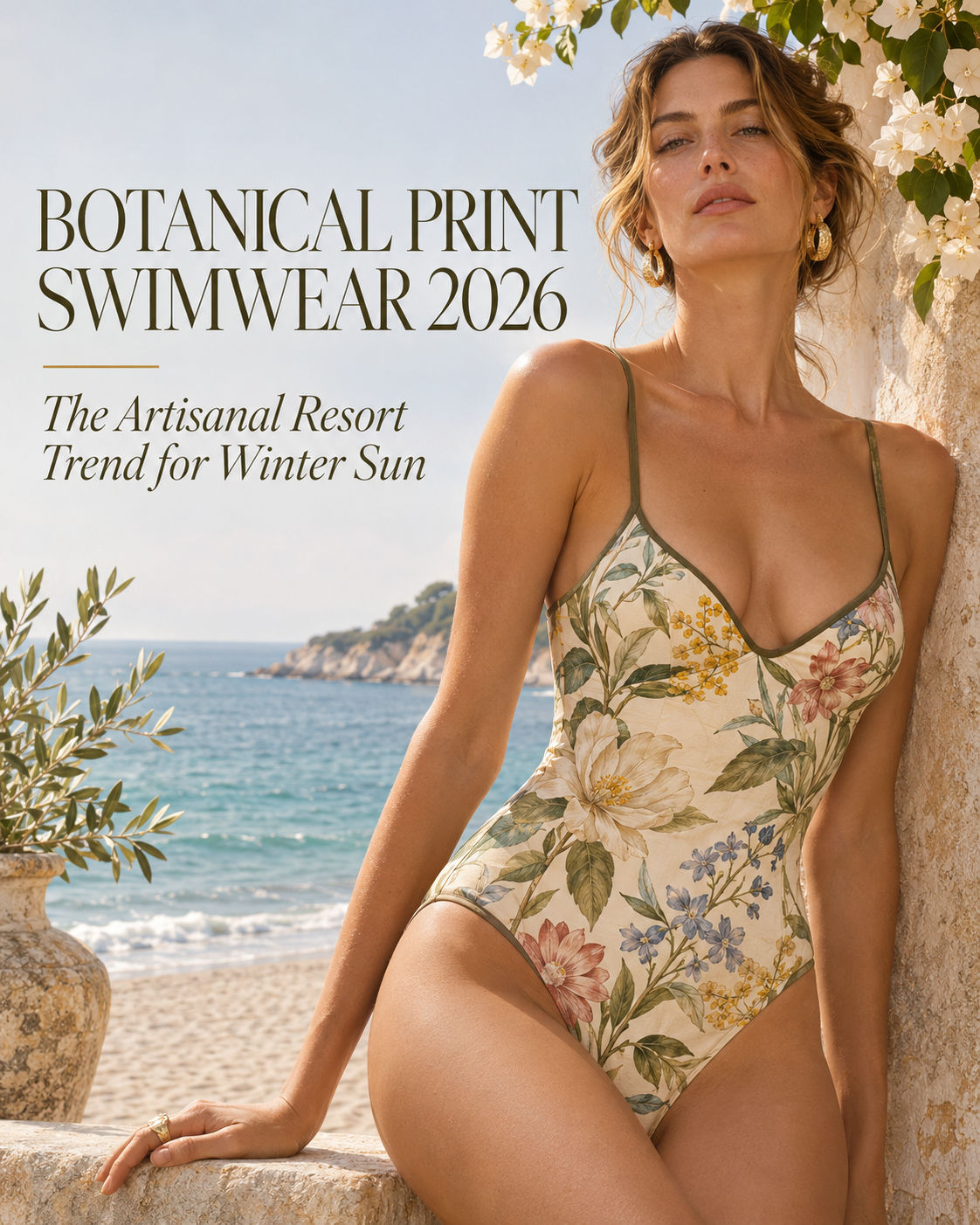
Botanical Print Swimwear 2026: When Nature Becomes Wearable Art
The distinction between an ordinary floral swimsuit and a botanical-inspired design often lies in the details.
Traditional tropical prints tend to emphasize immediate visual impact. Oversized hibiscus flowers, saturated palm leaves, and contrasting colors create a recognizable holiday aesthetic.
Botanical prints approach nature with a different sensibility.
Their imagery can resemble watercolor paintings, vintage botanical studies, or hand-illustrated garden scenes. Individual flowers may appear with delicate stems and leaves, while more expressive compositions allow petals and foliage to overlap in an almost abstract arrangement.
There is a greater emphasis on observation.
The shape of a leaf, the movement of a branch, or the irregular outline of a flower becomes part of the design's character.
That artistic quality is particularly important in the context of 2026 swimwear.
In its seasonal trend reporting, Vogue highlighted the return of retro florals alongside minimalist silhouettes and more decorative approaches to swim design. Who What Wear also identified abstract botanicals among the year's notable swimwear print directions, reflecting a broader interest in patterns that feel artistic rather than purely ornamental.
Together, these influences have created space for a more nuanced interpretation of nature-inspired beachwear.
A botanical swimsuit does not need an intensely colorful print to make an impression.
Fine green illustrations against warm cream fabric can feel as visually compelling as an elaborate arrangement of oversized flowers. Similarly, watercolor patterns in muted blue, dusty rose, and soft olive introduce depth without overwhelming the silhouette.
This is where the artisanal influence becomes noticeable.
The most interesting designs preserve the impression of a human hand, whether through visible brushstroke effects, irregular outlines, carefully arranged motifs, or embroidery that adds dimension to the printed surface.
Not every botanical print is handmade, of course. A hand-painted original may ultimately be reproduced through textile printing, while certain designs incorporate embroidery or other decorative techniques.
But the aesthetic celebrates the qualities associated with illustration and craftsmanship.
It brings an element of individuality to a category often defined by clean shapes and technical fabrics.
And for winter-sun dressing, that distinction feels particularly appealing.
The swimsuit becomes more than a functional garment intended for the water. It carries an atmosphere of its own, evoking lush gardens, sunlit terraces, and the quiet romance of tropical landscapes.

The Artisanal Influence: Agua by Agua Bendita and Peony's Botanical World
Few contemporary resortwear labels demonstrate the expressive potential of botanical illustration as clearly as Agua by Agua Bendita.
The Colombian brand has developed a distinctive design language rooted in Latin American nature, artistic illustration, and traditional craftsmanship.
Its swimwear frequently incorporates intricate floral compositions, tropical foliage, and delicate embroidery, allowing each garment to feel connected to a larger visual narrative.
For Spring/Summer 2026, the brand introduced its María collection, inspired by Jorge Isaacs' nineteenth-century novel and the landscapes of Colombia's Valle del Cauca region.
The collection's hand-drawn illustrations featured sun roses, orange blossoms, Miltoniopsis orchids, sugar cane, and butterflies. These elements translated the region's natural environment into prints and embroidery, connecting contemporary clothing with literary and cultural references.
What makes this approach compelling is its specificity.
The flowers are not simply anonymous decorative shapes. Their forms belong to an identifiable natural and cultural landscape, giving the artwork a sense of place.
The brand's emphasis on hand embroidery introduces another layer of craftsmanship.
Selected designs combine botanical illustrations with textured decorative details, creating a relationship between the printed image and the physical surface of the garment.
That combination gives swimwear a richer visual identity without requiring an elaborate silhouette.
An otherwise familiar one-piece becomes distinctive through the positioning of its illustrations. A structured bikini takes on a softer character when delicate botanical motifs follow its neckline or move across the fabric.
Australian label Peony offers a different interpretation of the same artistic sensibility.
Its Botanica collection explored early botanical illustrations through hand-drawn prints, warm neutrals, and subtle embroidery. The aesthetic drew on the intimate study of flowers, presenting nature through a softer, more nostalgic visual language.
For Spring/Summer 2026, Peony continued its interest in painterly florals through Clair de Lune.
The collection introduced hand-painted floral imagery in sunshine yellow, blue, and cream, accompanied by expressive brushstroke effects and embroidered resortwear.
Where Agua by Agua Bendita often draws on richly detailed natural storytelling, Peony's interpretation leans toward delicacy, nostalgic color, and relaxed romanticism.
Both approaches demonstrate why botanical swimwear feels particularly relevant to the artisanal resort trend.
The attraction is not simply the presence of flowers.
It is the sense that the artwork has been considered as carefully as the garment itself.
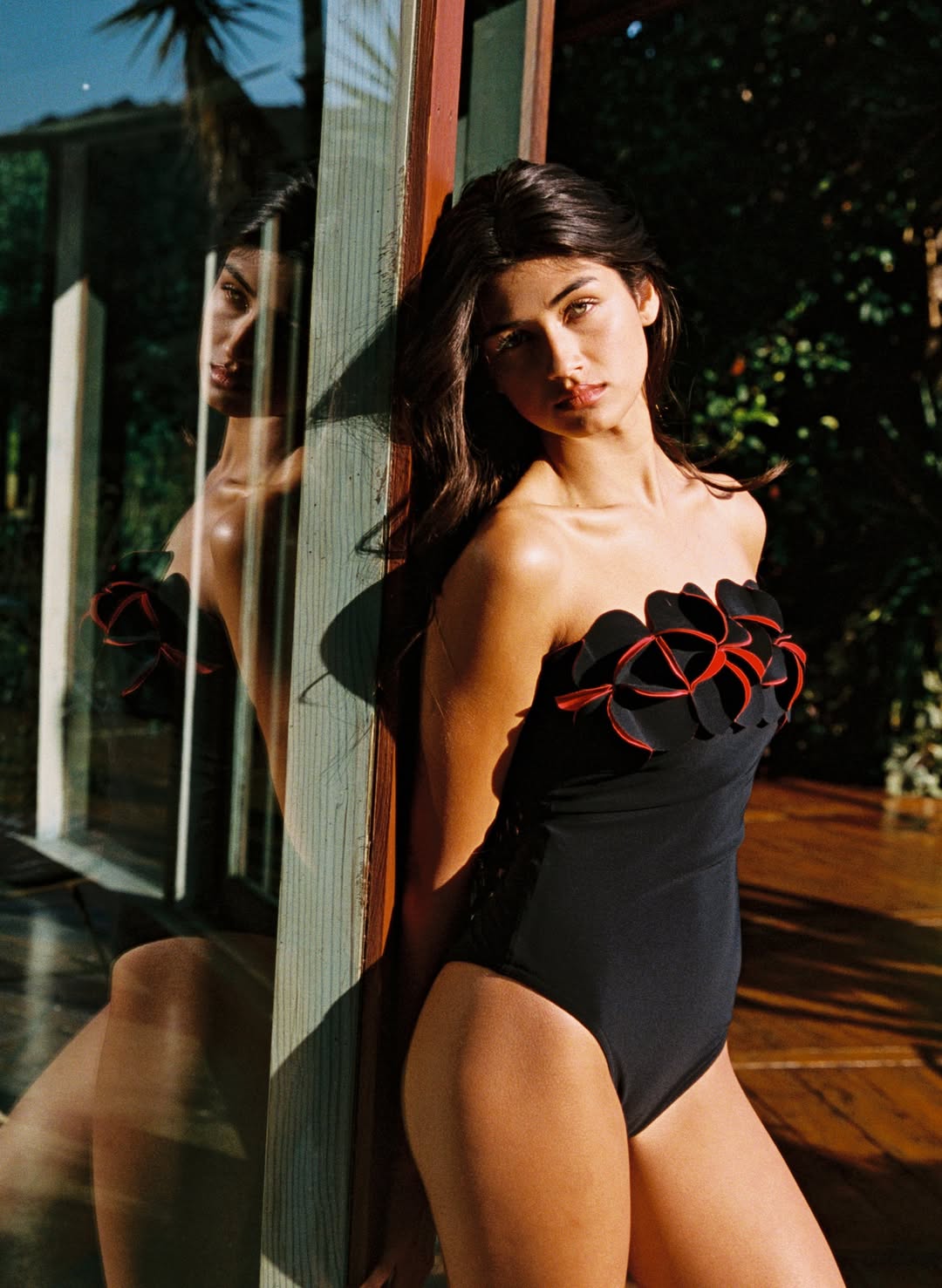
The New Botanical Palette: Vintage Cream, Olive Green, and Watercolor Florals
Color plays an essential role in defining the atmosphere of botanical print swimwear.
While tropical beachwear has traditionally embraced saturated shades, the more artisanal interpretations appearing in contemporary resort collections often favor softened, nature-inspired palettes.
Vintage cream provides one of the most effective foundations.
Its warmth creates a gentle background for illustrated flowers and foliage, allowing individual details to remain visible without making the overall design feel overly busy.
Against cream, deep botanical greens appear richer, while muted pinks and soft yellows develop a delicate, almost antique quality.
Olive green offers another compelling direction.
Less vivid than traditional tropical green, olive introduces an earthy sophistication that works especially well with botanical drawings. Paired with ivory, sand, or pale blue, it evokes the understated beauty of vintage garden prints.
Blue also has an important place within this aesthetic.
Dusty blue, faded indigo, and watercolor-inspired shades bring a cooler quality to botanical motifs, particularly when combined with cream or muted green.
Peony's use of pastel blue, olive green, and soft cream in its floral collections demonstrates how these colors can create a unified resortwear story.
The appeal comes from their relationship rather than their intensity.
A pale blue flower against an ivory background creates softness. Olive foliage introduces a more grounded element, while occasional touches of yellow or pink add warmth.
The resulting palette feels carefully composed without becoming overly coordinated.
There is also room for more expressive color.
Botanical prints featuring deep burgundy flowers, rich green leaves, or warm terracotta details can bring drama to a swimsuit while retaining the artistic character of the trend.
The difference lies in how those shades are distributed.
Rather than covering every surface in equally intense color, the strongest botanical compositions often allow quieter areas of fabric to balance more elaborate illustrations.
This approach is particularly effective on one-piece swimsuits, where larger uninterrupted surfaces provide space for the artwork to unfold.
The overall effect feels more considered than a conventional all-over tropical print.
It allows the swimsuit to possess visual interest while remaining versatile enough to sit comfortably alongside neutral resortwear.
For winter-sun wardrobes, that flexibility is a significant part of the appeal.

Why Botanical One-Pieces and Romantic Bikinis Feel So Timeless
A beautiful print can establish the personality of a swimsuit, but silhouette determines how that artwork is experienced.
This is particularly true of botanical designs.
Because the imagery often contains delicate lines, flowers, and natural forms, the cut of the garment influences how clearly those details can be seen.
A classic one-piece provides an expansive canvas.
Square necklines, softly curved scoop necks, and gently structured bodices allow botanical illustrations to remain the focus without competing with excessive design details.
There is something especially elegant about a cream one-piece covered in finely illustrated green foliage.
The simplicity of the silhouette allows the artwork to create movement across the body, giving the garment an understated, almost architectural character.
Strapless and bandeau designs offer a different expression.
Their clean upper lines place emphasis on the shoulders and neckline, creating a contemporary contrast against romantic floral imagery.
When paired with botanical prints, these streamlined shapes prevent the overall appearance from feeling overly nostalgic.
Bikinis introduce greater opportunities for variation.
A structured balconette top can bring a vintage influence to a delicate floral print, while a simple triangle bikini allows an elaborate botanical composition to feel lighter and more relaxed.
High-waisted bottoms complement heritage-inspired illustrations, recalling the measured elegance of earlier resortwear silhouettes.
Meanwhile, contemporary high-cut styles introduce a sharper contrast, giving traditional floral imagery a more modern presence.
The relationship between print scale and garment shape is equally important.
Smaller botanical motifs can create an intricate, continuous surface across a bikini, while larger illustrations benefit from enough uninterrupted fabric to retain their visual detail.
Placement matters, too.
A single illustrated flower positioned near the waist creates a different effect from a repeating pattern of leaves. An asymmetric arrangement can make an otherwise simple swimsuit feel distinctive without changing its basic construction.
This is one reason botanical swimwear lends itself so naturally to artisanal design.
The imagery can interact with the shape of the garment rather than existing independently of it.
The most memorable combinations feel intentional, with the print and silhouette contributing equally to the finished appearance.
And although certain cuts may reflect current trends, the essential appeal remains enduring.
A beautifully proportioned swimsuit with carefully considered botanical artwork rarely depends on novelty alone.

How to Style Botanical Swimwear for a Winter-Sun Escape
Perhaps the most appealing quality of botanical print swimwear is its ability to move beyond the immediate setting of the beach.
Its illustrated surfaces often resemble patterns associated with resort dresses, decorative scarves, and lightweight summer separates.
That connection makes botanical swimwear particularly adaptable to a broader vacation wardrobe.
A cream botanical one-piece worn beneath relaxed linen trousers creates a composed look that feels appropriate for a seaside lunch or an afternoon away from the water.
The swimsuit provides the visual interest, while the linen introduces softness and movement.
An open cotton shirt offers another understated combination.
In crisp ivory or pale sand, it allows the botanical pattern to remain visible without creating unnecessary competition between fabrics.
The contrast between the structured swim fabric and the relaxed cotton also introduces a more casual element.
For a romantic interpretation, a softly draped sarong can echo the fluidity of the illustrations.
A solid-colored wrap in cream, olive, or faded blue provides a quiet foundation for a detailed botanical bikini.
Matching prints can create a more immersive aesthetic, particularly when a coordinating pareo or skirt continues the same botanical composition beyond the swimsuit.
The effect is closer to a complete resort ensemble than a conventional swimsuit-and-cover-up combination.
This approach reflects the increasingly fluid relationship between swimwear and resort fashion.
Rather than treating beach clothing as entirely separate from the rest of a vacation wardrobe, contemporary styling often allows individual pieces to move between different moments of the day.
A carefully designed one-piece can serve as the foundation of a daytime outfit. A lightweight printed wrap can function as both a beach cover-up and an additional layer for a relaxed afternoon.
Accessories can reinforce that versatility without becoming the focus.
Natural woven textures complement the organic character of botanical prints, while simple leather sandals introduce a more polished contrast.
Gold jewelry can add warmth to cream and olive palettes, although elaborate botanical patterns often need little additional decoration.
The strongest styling maintains a clear visual hierarchy.
When the swimsuit carries intricate artwork, surrounding garments can remain relatively restrained. When the botanical print is delicate, textured accessories or softly draped layers can introduce further interest.
The objective is not to reproduce a perfectly coordinated resort look.
It is to create an appearance that feels connected, comfortable, and expressive of the setting.
That sense of ease is particularly important for winter-sun travel, where the wardrobe often needs to move between warm afternoons, shaded terraces, and cooler evenings.

Winter Sun and the Romance of the Artisanal Resort Wardrobe
Resort fashion occupies an interesting position within the seasonal calendar.
While much of the fashion world turns toward coats, knitwear, and cold-weather dressing, resort collections continue to explore lighter fabrics, warm-weather silhouettes, and clothing intended for travel.
That contrast becomes especially noticeable during the winter months.
For those spending time in warmer climates, swimwear remains an essential part of dressing even as the surrounding fashion conversation shifts toward autumn and winter.
Yet winter-sun style often carries a slightly different mood from high-summer beachwear.
The atmosphere can feel quieter, the color palette more restrained, and the approach to packing more deliberate.
Botanical print swimwear fits naturally into that sensibility.
Its references to garden illustrations, painterly landscapes, and traditional craftsmanship lend themselves to a slower, more considered interpretation of resort style.
There is a particular visual harmony between these designs and the environments associated with warm-weather escapes.
Against pale stone, cream botanical fabrics appear luminous. Surrounded by greenery, olive and floral prints echo the natural landscape. Near the water, faded blue illustrations take on a softness that complements the changing light.
The effect is atmospheric without requiring an elaborate outfit.
This is also where the artisanal influence acquires greater meaning.
A swimsuit featuring carefully illustrated flowers or intricate embroidery offers something beyond an immediately recognizable seasonal pattern.
The design contains details that reward closer attention.
That quality aligns with a broader appreciation for garments distinguished by craftsmanship, textile design, and individual character.
It does not mean that every botanical swimsuit is produced through traditional handcrafting techniques. The methods vary considerably between designers and collections.
Rather, the trend highlights a visual language that values the appearance and, in some cases, the practice of artistic making.
A hand-drawn print can preserve the character of its original illustration. Embroidered flowers can introduce a tactile quality that printed fabric alone cannot achieve.
These details give swimwear a more personal, expressive presence.
For a winter-sun wardrobe, that can be more compelling than an overtly trend-driven design.
The swimsuit feels connected to the destination, the surrounding landscape, and the wider collection of clothing worn throughout the trip.
It becomes part of the atmosphere rather than simply something worn within it.

Beyond the Floral Trend: Why Botanical Swimwear Has Lasting Appeal
Fashion has returned to floral patterns countless times, interpreting them through different colors, silhouettes, and cultural references.
Some seasons favor oversized tropical blooms. Others embrace delicate vintage patterns, abstract illustrations, or highly decorative embellishment.
The renewed interest in botanical print swimwear for 2026 sits comfortably within that history, but its artisanal emphasis gives the familiar motif greater depth.
The most compelling designs do not rely solely on the romantic associations of flowers.
They explore the relationship between nature and illustration, between decorative artwork and functional clothing, and between traditional craftsmanship and contemporary resort silhouettes.
That is what makes the work of labels such as Agua by Agua Bendita and Peony particularly relevant.
Their approaches differ, but both demonstrate how botanical imagery can shape the identity of a garment rather than simply decorate its surface.
One explores richly detailed illustrations connected to natural and cultural landscapes. The other embraces softly painted flowers, nostalgic palettes, and delicate textile details.
Each offers a distinctive expression of modern resortwear.
For winter-sun dressing, the appeal is equally clear.
Botanical swimsuits introduce color without demanding brightness, romance without excessive ornamentation, and visual complexity without sacrificing the simplicity of classic swimwear.
They also offer an alternative to the idea that vacation style must always be bold or immediately attention-grabbing.
Sometimes, the most evocative design is the one that asks for a closer look.
A beautifully drawn flower, a delicate arrangement of leaves, or a watercolor pattern fading gently into fabric can create a lasting impression through detail alone.
And while botanical prints may be enjoying renewed attention in 2026, their connection to nature gives them an aesthetic life beyond the season.
The flowers may change. The colors may become richer or softer. Silhouettes will inevitably evolve.
But the appeal of translating the natural world into something beautiful enough to wear remains remarkably constant.
For the winter-sun wardrobe, that is the quiet luxury of botanical print swimwear: an expression of warmth, artistry, and effortless elegance that feels as timeless as the landscapes inspiring it.

Recommended
Pink Halter Beach Cover-Ups: Coquette-Inspired Resortwear to Shop Now
Fringed Beach Cover-Ups: How to Translate Runway Fringe to Vacation Outfits
Aubergine Swimwear Trend 2026: Deep Purple Bikinis and One-Pieces to Shop
Velvet Swimwear Trend: How to Wear Luxury Textures on Tropical Vacations
Plaid Beachwear Trend: How to Wear the Professor Aesthetic on Vacation
Leather-Trimmed Raffia Bags: The Hybrid Beach Bag You Can Wear All Autumn
More from BEACH
ALL BEACH
Yellow Resortwear Trend 2026: Bright Vacation Dresses for Winter Sun Escapes

Sheer Lingerie Beach Dresses: Translating Red Carpet Peekaboo Trends to Resortwear
