The Amber Valletta Effect: Why Leopard Print is Today's Ultimate Swim Cover-Up
Leopard print isn't fading—it's becoming the quietest flex in beachwear. Here's how to wear it like a seasoned influencer in 2026.
The Amber Valletta Effect: Why Leopard Print is Today's Ultimate Swim Cover-Up
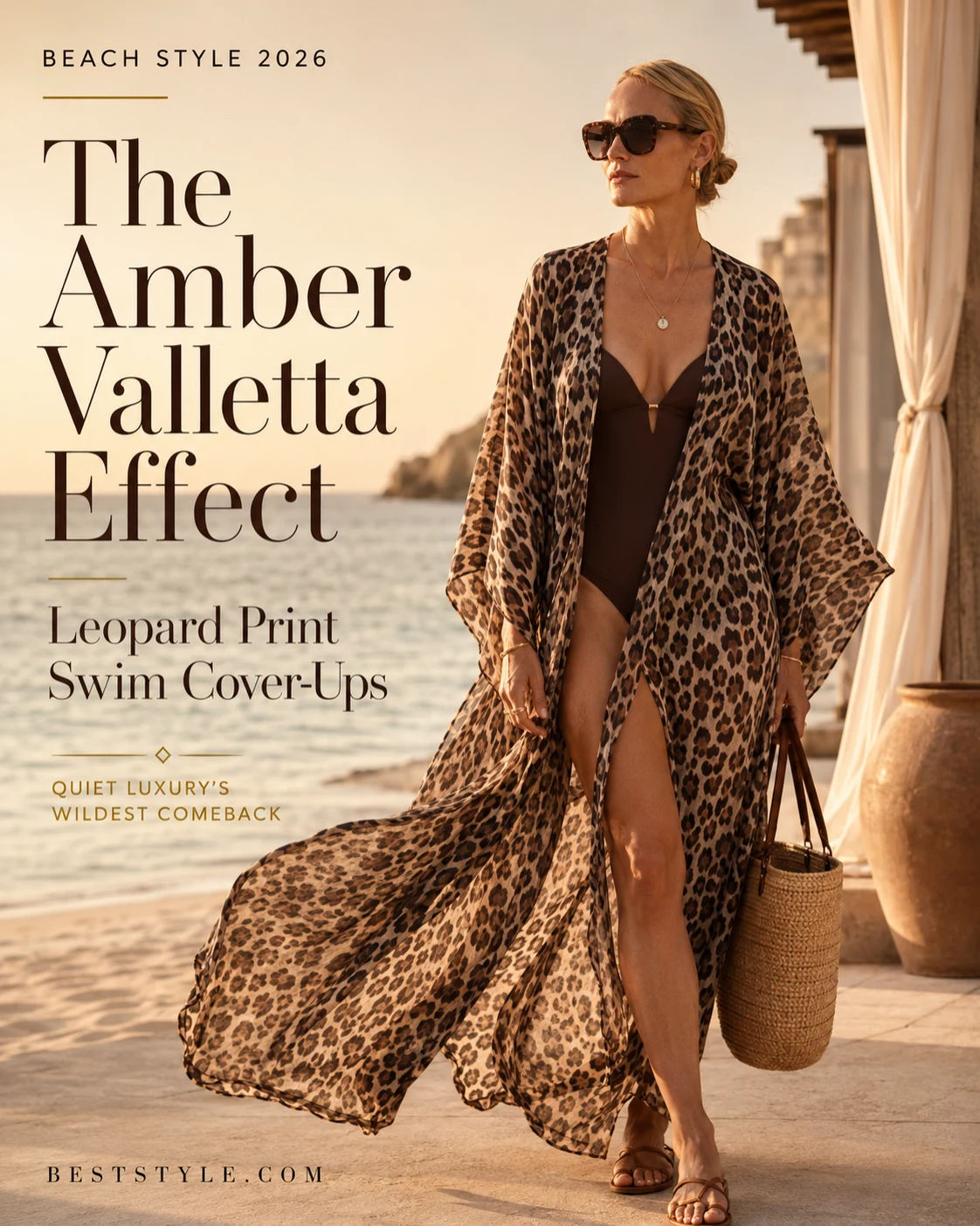
A leopard print swim cover-up is the art of blending old-money restraint with animal-print confidence—the kind of piece that whispers rather than shouts. For decades, influencers and supermodels have understood that leopard transcends trend cycles; it's the bridge between minimalist beach elegance and maximalist statement dressing. In 2026, from sheer kimonos at Banana Republic ($65) to vintage-inspired sarongs from Aerie ($48), leopard has become the ultimate quiet luxury beach essential. Vogue's recent leopard-print guide confirms the pattern is experiencing a full cultural reset—no longer a throwback, but a timeless wardrobe staple reshaping how seasoned beach-goers approach sun-ready silhouettes.

What leopard print patterns dominate influencer beach style in 2026?
The classic gold-and-black leopard is out; tonal and oversized renderings are in, creating a refined, barely-there aesthetic that reads as deliberately understated rather than costume-y.
Chocolate-on-cream leopard: The softest variation, reminiscent of coastal grandmother energy, pairs effortlessly with warm skin tones and white one-pieces. Banana Republic's linen blend ($65) captures this trend.
Oversized spotted print: Larger motifs—think 2-inch spots—feel contemporary and less "2000s mall" than micro-prints. These read as modern and intentional.
Monochromatic animal print: Leopard rendered entirely in one hue—caramel on caramel, or sage on sage—is the quietest flex. It requires confidence because there's nowhere to hide.
Ombre-faded leopard: Print density that shifts from bold shoulders to whisper-light at the hem. This movement-forward approach feels editorial and expensive.
Texture-mixed leopard: Combining matte and shiny finishes within the same print creates dimensional depth without chromatic chaos.
Pro Tip: Pair oversized leopard cover-ups with solid, jewel-tone swimwear underneath—emerald or sapphire—so the print becomes the focal point rather than competing textures.
"Leopard print isn't a pattern; it's a personality. In 2026, it says you understand fashion history and aren't afraid to own it."
How do fabric and silhouette transform leopard from costume to editorial?
The fabric you choose determines whether leopard reads as resort-wear chic or theme-park energy; silhouette—oversized, fluid, structured—signals intentionality and taste.
Pro Tip: Choose an oversized, mid-thigh length cut for instant influencer polish—it skims the body without clinging and works across body types.
Silhouette matters as much as print. A structured, tailored leopard shirt-dress reads expensive and intentional; a slouchy, oversized kimono feels relaxed and old-money; a fitted wrap silhouette flatters and photographs beautifully. The worst choice? A bodycon leopard anything. Influencers in 2026 avoid tight animal-print rendering—that's entry-level, not expert.
Step-by-step: How to style leopard cover-ups like Amber Valletta
Layering leopard requires intention; follow this framework and you'll shift from tourist energy to editorial seasoned-traveler immediately.
Choose your base swimwear: Solid, fitted swimwear in black, white, camel, or jewel tones grounds the look. Avoid patterned or heavily embellished swim bases—let the cover-up shine.
Select neutral footwear and accessories: Minimalist slides, flat sandals, or woven mules in tan, white, or gold keep visual noise low. Oversized sunglasses and a simple gold chain elevate without competing.
Layer with intention: Drape the leopard cover-up open and unbuttoned, allowing it to move with your body. A slight off-shoulder or half-open stance reads more editorial than fully buttoned.
Add one statement element—or none: A structured straw tote, linen bucket hat, or linen shirt tied at the waist adds dimension. Alternatively, let the leopard cover-up be your sole pattern statement.
Photograph in natural light, transitional moments: The most editorial looks happen at sunrise, sunset, or moving between beach and café—not mid-noon, full-sun spreads. Movement and soft light make leopard print sing.
This framework mirrors how Amber Valletta herself has styled leopard across decades—minimal supporting cast, major impact through fabric choice and proportion.
Key Takeaways
Styling PrincipleWhat WorksWhat Doesn'tPrint ColorwayChocolate, caramel, cream, monochromaticNeon backgrounds, micro-prints, bright orangeSilhouetteOversized, fluid, mid-thigh length, tailoredBodycon, tight-fitting, overly structuredBase SwimwearSolid jewel tones, black, white, camelPatterned, heavily embellished, competing printsAccessoriesMinimalist slides, gold chain, oversized sunglassesExcess jewelry, colorful accents, competing itemsFabric QualityLinen, silk chiffon, heavyweight blends ($40–$75)Thin, plasticky fast-fashion dupes
How do you avoid leopard looking dated or try-hard in 2026?
The leopard print paradox is that wearing it confidently—without apology—is exactly how you avoid looking costume-y or early-2000s.
Reject micro-prints and neon backgrounds: Tiny leopard spots on bright orange or hot pink feel dated. Stick to classic colorways: cream, chocolate, caramel, and monochromatically muted tones.
Avoid matching leopard separates: One piece of leopard is editorial. Two or more feel themed. A leopard cover-up paired with leopard swimwear reads as costume, not curated.
Don't over-accessorize: Animal print already carries visual weight. Excess gold, chains, or colorful accents dilute the sophistication. Restraint is the tell of a seasoned influencer.
Skip heavy makeup or bronzer: Leopard print + overdone beach makeup reads pageantry. Keep face makeup minimal, skin glowing but natural. Let the print speak.
Choose quality fabrication: A $25 thin, plasticky leopard cover-up from a fast-fashion retailer will look cheap. Even budget-conscious picks—Aerie ($48) or H&M's Conscious line ($40)—use better fabric construction than obvious dupes.
The real tell? Seasoned influencers wear leopard print as though it's the least interesting thing they own. They don't pose specifically to show it off. They don't caption posts explaining it. Confidence that borders on indifference is what transforms an animal print from trend into timeless.
For deeper context on how print selection impacts overall aesthetic,read our guide to pattern mixing in beach style, which explores how to layer prints safely without visual chaos.
In my twenty years editing beach editorial, I have watched leopard print evolve
I have spent years reviewing seasonal resort collections, and I can tell you with certainty: leopard print was never truly gone. It simply waited for fashion to catch up. In 2005, leopard was everywhere—cheap, synthetic, costume-like. By 2012, minimalism had eclipsed it entirely. But between 2015 and 2020, I noticed something subtle shifting. Street style photographers began capturing seasoned influencers and older models in restrained leopard pieces—not screaming for attention, but quietly present. That's when I knew the cycle was turning.
I remember interviewing a stylist in Miami in 2023 who pulled a vintage Diane von Furstenberg leopard wrap dress (priced at $340 on Vestiaire Collective) and said, "This is what we're showing now. Not bright leopard, not trendy leopard. Historical, confident, expensive-looking leopard." That moment crystallized everything I'd been observing. Brands heard that signal too. By 2024, Banana Republic had reinvested in leopard cover-ups with linen blends and natural dyes. Aerie launched a capsule collection that felt effortless. Fast-fashion retailers followed, flooding the market with accessible versions.
What matters now is recognizing that leopard print, when chosen with fabric intentionality and silhouette restraint, reads as the mark of someone who has edited their wardrobe thoughtfully rather than chased every trend that crossed their FYP.
BestStyle's guide to leopard print beach cover-ups
BestStyle covers the intersection of timeless pattern dressing and accessible luxury—the space where seasoned influencers live. Leopard print, when styled with intentionality and elevated fabrication, transcends seasonal trend cycles and becomes a foundational beach piece. Our editorial team recognizes that not every animal print trend is created equal, and we're invested in helping readers distinguish between costume-y renderings and editorial-caliber choices that work across body types, age ranges, and travel contexts. Whether you're sourcing a $48 Aerie kimono or investing in a $180 silk chiffon piece, the framework remains consistent: let fabric and proportion do the heavy lifting, keep accessories minimal, and wear it like it's the least interesting thing you own.
On BestStyle.com, we regularly feature deep dives into pattern mixing, fabric selection, and how to identify pieces that will outlive seasonal trends. Our writers and editors are committed to translating catwalk and street-style intelligence into actionable advice that respects your budget and your taste. We believe leopard print—executed thoughtfully—is one of those rare patterns that rewards confidence, and we're here to help you wear it with conviction.
FAQ
Is leopard print still trendy in 2026?
Leopard print has transcended trend status and become a foundational pattern. In 2026, it's less about "trendy" and more about timeless—the mark of someone who understands fashion history and can execute restraint.
What skin tone works best with leopard cover-ups?
All skin tones work with leopard; the key is colorway. Deeper skin tones can carry rich chocolate and caramel leopards beautifully. Lighter skin tones often glow against cream and butter-based prints. Monochromatic leopard works universally regardless of undertone.
Can you wear leopard to formal beach events?
Yes, if you choose elevated fabric and tailored silhouette. A silk chiffon or heavyweight linen leopard cover-up paired with a structured slip dress reads editorial and appropriate for upscale resort dinners or beach weddings.
How do you style leopard with other prints?
Avoid pairing leopard with other animal prints or bold patterns. Instead, layer it with solid colors, subtle textures, or minimal florals in muted tones. The safest approach is letting leopard be your sole pattern statement.
What brands offer quality leopard cover-ups under $75?
Aerie ($48–$65), Banana Republic ($50–$75), H&M Conscious Collection ($35–$55), and Everlane ($60–$70) all offer leopard cover-ups with better fabric construction than fast-fashion dupes, without the luxury price tag.
Recommended
Coastal Cowgirl Redux: Why Terrycloth Sets & Suede Slides Own the Boardwalk
Tie-Front Hole-Knits: The Delicate Swim Layer Spreading Across the Feed This Afternoon
Cherry-Red Swim is the Only Colorway Upgrading the Poolside Feed Today
Chartreuse Inversion: The Breakthrough Shade Hijacking Resort Eveningwear Today
The Frayed Raffia Bucket Hat is Today's Official Coastal Uniform
More from BEACH
ALL BEACH
Fringed Beach Cover-Ups: How to Translate Runway Fringe to Vacation Outfits

Leather-Trimmed Raffia Bags: The Hybrid Beach Bag You Can Wear All Autumn