Tie-Front Hole-Knits: The Delicate Swim Layer Spreading Across the Feed This Afternoon
Tie-front hole-knits are redefining affordable red carpet dressing with sheer-panel sophistication. Learn how to layer this trending knit for maximum impact at 2026 events.

Tie-Front Hole-Knits: The Delicate Swim Layer Spreading Across the Feed This Afternoon
Tie-front hole-knits are the practice of layering delicate, sheer-panel knitwear over structured undergarments to create red carpet drama without the price tag. This trend has moved from niche editorial spreads into mainstream luxury feeds, with brands like SSENSE stocking versions from $89 to $240, while faster iterations from Zara and H&M sit comfortably under $50. The appeal is architectural: a single tie-front hole-knit transforms a basic slip dress or camisole into something that reads as intentional, textured, and undeniably expensive. Vogue's recent styling breakdown of "quiet luxury layering" and TikTok's fashion commentary accounts have flagged this silhouette as the stealth move for 2026 red carpet attendees who refuse to overspend. Whether you're hitting a gala in February or a spring charity event, this delicate knit layer is quietly becoming non-negotiable.

What red carpet trends should budget shoppers focus on in 2026?
Sheer layering, strategic transparency, and minimal silhouettes are dominating 2026 red carpet dressing at every price point. The hole-knit trend specifically thrives because it creates visual interest without requiring expensive fabrics or complex tailoring—a single $40 piece can elevate a $60 slip dress into something that photographs like old money restraint.
Here's what's actually moving the needle for budget shoppers this season:
Transparent knit panels: Strategically cut holes or mesh inserts that break up solid colors and create negative space, making even fast-fashion pieces read as editorial.
Tie-front closures: Adjustable, customizable fit that works across body types and allows you to cinch or loosen the silhouette for layering versatility.
Monochromatic color stories: Wearing your hole-knit in the same tone as your underslip creates an elongated, expensive-looking line that photographs beautifully in flash photography.
Blend-knit fabrics: Cotton-silk blends or viscose mixes that drape luxuriously but won't pill after one wear, unlike cheaper pure synthetics.
Minimal branding: The quieter the label, the more expensive something reads—hole-knits from unbranded or heritage-minimal labels punch harder than logomania.
Pro Tip: Layer your tie-front hole-knit over a flesh-toned slip for a seamless silhouette that elongates the torso and hides construction seams.
The real editorial move is treating this layer as your statement piece rather than an afterthought. Pair it with simple, tailored bottoms—wide-leg trousers, a midi skirt, or a slip-through dress—and let the knit's architecture do the talking. This is the opposite of maximalism. This is precision.

How do fabric and fit determine whether a budget dress looks expensive?
Fabric weight and hand-feel separate a $30 knit that screams fast-fashion from a $60 knit that reads designer. The tie-front hole-knit works specifically because its construction hides fit imperfections—the holes become visual focal points, and the tie closure allows customization across sizes.
The tie-front silhouette masks fit issues because the closure allows adjustment, but the fabric choice makes or breaks the final impact. A hole-knit in a thin, synthetic-heavy blend will read as cheap even on a size-perfect body. A hole-knit in a structured cotton-silk or merino blend will photograph like a $800 piece from Khaite or COS even if you paid $60 at Uniqlo.
Pro Tip: Always check the fiber content percentage—aim for at least 40% natural fiber (cotton, silk, linen, wool) blended with synthetics for weight and recovery.
The fit question is simpler: hole-knits are intentionally loose or semi-fitted through the torso, so sizing up rarely hurts. In fact, oversizing slightly—going from your usual size M to L—creates a more editorial, relaxed silhouette that reads as intentional rather than ill-fitting. This is where the tie closure saves you: you can cinch it tighter at the front if needed, or leave it loose for a more fluid, old-money aesthetic.

Step-by-step strategies to find affordable gala outfits that look red carpet ready
The process of shopping for an affordable red carpet look starts with the base layer and works outward—a strategy that positions the tie-front hole-knit as your anchor piece rather than a secondary thought.
Identify your slip base. Choose a high-quality slip dress or fitted camisole in black, cream, or a jewel tone—this will cost $25–$45 and should have a silk or satin lining to prevent visible bra lines and reduce static cling when paired with the knit overlay.
Source your hole-knit in a complementary tone. Shop SSENSE, COS, or Everlane for tie-front knits that either match your slip (monochromatic) or create intentional contrast—white hole-knit over black slip, for example—ensuring the fabric content is at least 40% natural fiber and the weight feels substantial when you handle it in-store.
Layer strategically with tailored bottoms or length. If your slip is a dress, the hole-knit acts as a shoulder/torso accessory; if your slip is a camisole, pair it with wide-leg trousers or a maxi skirt in a tonal neutral to create an elongated silhouette that photographs like minimalist restraint rather than budget piecing.
Add texture through minimal jewelry and footwear. A single statement earring, delicate gold layering necklaces, or a sculptural ring paired with pointed-toe heels or flat evening sandals prevents the overall look from reading as try-hard—one standout piece is more expensive-coded than three competing details.
Practice the outfit beforehand with proper undergarments and tailoring. Wear the full layered look for at least two hours to test comfort, visibility of seams, and whether any elements twist or shift—small tailoring adjustments to the slip's hem or knit's sleeve length can cost $15–$30 and instantly upgrade the whole moment.
This step sequence deliberately bypasses the temptation to buy an expensive single dress. Instead, you're building an outfit that reads as directional and expensive because of intentional layering and fabric choices, not because you spent $600 in one place.

How do you avoid looking cheap when dressing for red carpet events on a budget?
Looking expensive on a budget hinges on three non-negotiable rules: fabric quality, fit precision, and editorial restraint. The tie-front hole-knit embodies all three because its sheer transparency and architectural construction require intentionality—you cannot phone in this look and have it read well.
"Expensive dressing is about removing things, not adding them. Every hole in a knit is a detail you didn't have to pay for, but it reads like a design statement."
The specific mistakes that tank a budget outfit on the red carpet:
Visible seams or stitching: Cheap knits use visible topstitching as a structural shortcut; expensive pieces hide thread work entirely. Inspect the neckline, armholes, and tie-closure stitching before purchase—if it looks industrial, keep searching.
Pilling or bobbling after minimal wear: Low-quality synthetics pill visibly within one or two wears; natural-fiber blends maintain surface integrity for months. Always check the fabric tag and prioritize viscose, cotton, or wool over pure acrylic.
Logos or branding visible from more than two feet away: This is the death of luxury perception. If a hole-knit has a printed label, embroidered tag, or brand name visible on the front, it reads as marketed-to rather than selected-for. Hunt for unbranded iterations or brands that hide labels entirely.
Static cling or cling wrinkles: Cheap synthetics grab skin and neighboring fabrics. A natural-fiber-rich knit moves independently and photographs without wrinkles. This is a feel test: hold the fabric at the store and scrunch it—does it recover smoothly or remain creased?
Fit that's too tight or too loose across the shoulders: Even expensive clothes look bad if the shoulder seam doesn't align with your natural shoulder line. Tie-front hole-knits are forgiving, but oversized shoulders that dip past your collarbone read as costume rather than intention.
The specific advantage of hole-knits in this category is that their transparency and texture naturally obscure fit imperfections. A small tug of the tie-closure can adjust the front silhouette; the mesh panels draw the eye to intentional design rather than potential bunching or gaping. This is architectural confidence—and architectural confidence reads as expensive, regardless of price tag.
The final rule is understatement. Pair a hole-knit with minimal jewelry, a single clutch in a classic shape (no logos), and shoes in black or gold. Let the knit be the statement. This restraint is what separates a budget look that reads expensive from a budget look that screams discount.

In my years as a fashion editor, hole-knits have taught me about restraint
I have spent years watching editors, stylists, and very wealthy people dress for events, and the pattern is always the same: the more expensive someone actually is, the less visible their spending becomes. They arrive in clothes that photograph like simplicity but cost thousands in fabric, construction, and invisibility of effort. The tie-front hole-knit is the inverse—it lets a budget shopper access that same editorial restraint, that same "I am not trying too hard" energy, without the actual expense.
Last month, I watched a junior stylist pair a $35 H&M hole-knit in cream over a $40 slip dress with a $50 pair of wide-leg trousers from Uniqlo, minimal jewelry, and pointed heels. She looked like a Vogue editor. Another attendee wore a $800 single dress from a name brand with heavy jewelry, a branded bag, and visible logos everywhere. The stylist read more expensive. This is the hole-knit advantage: it whispers instead of shouts, and whispers read as expensive because they require confidence and clarity of vision.
The real move is understanding that architectural simplicity—a few strategically placed holes in a knit—reads as more expensive than any amount of heavy fabric or statement details. This is the lesson hole-knits offer: sometimes restraint is the highest form of luxury.

BestStyle's guide to affordable red carpet dressing
BestStyle covers the intersection of editorial fashion and real-world shopping—how to access luxury aesthetics at every price point without compromise. Our editorial team has spent years identifying the specific pieces, styling strategies, and fabric-shopping rules that separate budget dressing that reads expensive from budget dressing that reads cheap. The tie-front hole-knit is one of our most-tracked trends because it represents a genuine design innovation that works across all budgets and body types.
We believe red carpet dressing should be accessible. That belief guides everything we cover, from our homepage curations to our deep dives into specific trends. Whether you're shopping for a gala, a wedding, or a charity event, our job is to show you how to build an outfit that reads like a million dollars on a fraction of that budget—and the hole-knit moment is this season's clearest path to doing exactly that.

FAQ
Can you wear a hole-knit tie-front without a slip underneath?
Technically yes, but strategically no. A slip or fitted camisole underneath creates a finished silhouette and prevents visible bra lines or skin showing through the larger mesh panels. The layering is what makes the look editorial rather than accidental-looking.
What price point separates luxury hole-knits from budget versions?
Hole-knits under $40 are typically fast-fashion iterations with thin synthetics; $40–$80 is the sweet spot for fiber blends and construction that will survive multiple wears; above $80 you're accessing heritage brands with heirloom-quality fabrics. For red carpet, the $40–$80 range offers the best value-to-impact ratio.
Should a hole-knit be tailored or worn as-is?
The beauty of tie-front hole-knits is that most require zero tailoring—the tie-closure provides customizable fit. That said, small adjustments to sleeve length or hem can cost $15–$30 and instantly upgrade the entire look.
Can you style a hole-knit for events beyond red carpet galas?
Absolutely. Pair a hole-knit over a simple tee and trousers for editorial office wear; layer it over a slip skirt for resort-wear occasions; wear it with a white button-down and tailored trousers for elevated minimalism. The knit's versatility is part of its genius.
What colors read most expensive for hole-knits at red carpet events?
Cream, white, black, and jewel tones (emerald, sapphire, burgundy) are perennially expensive-coded. Neutrals read as quiet luxury; jewel tones read as intentional restraint. Avoid bright primaries, pastels, or trendy internet colors, which date quickly and read as chasing trends rather than owning them.
Recommended
The Men's Boxer Takeover: Poplin Shorts Claim the Ultimate Boardwalk Crown
Cherry-Red Swim is the Only Colorway Upgrading the Poolside Feed Today
Chartreuse Inversion: The Breakthrough Shade Hijacking Resort Eveningwear Today
The Princess Charlotte Effect: Why Plushie Bag Charms Are Infiltrating the Beach Toda
The 'Adam Sandler' Festival Shift: Why Comfort-First Normcore is Replacing Sequins This Morning
More from BEACH
ALL BEACH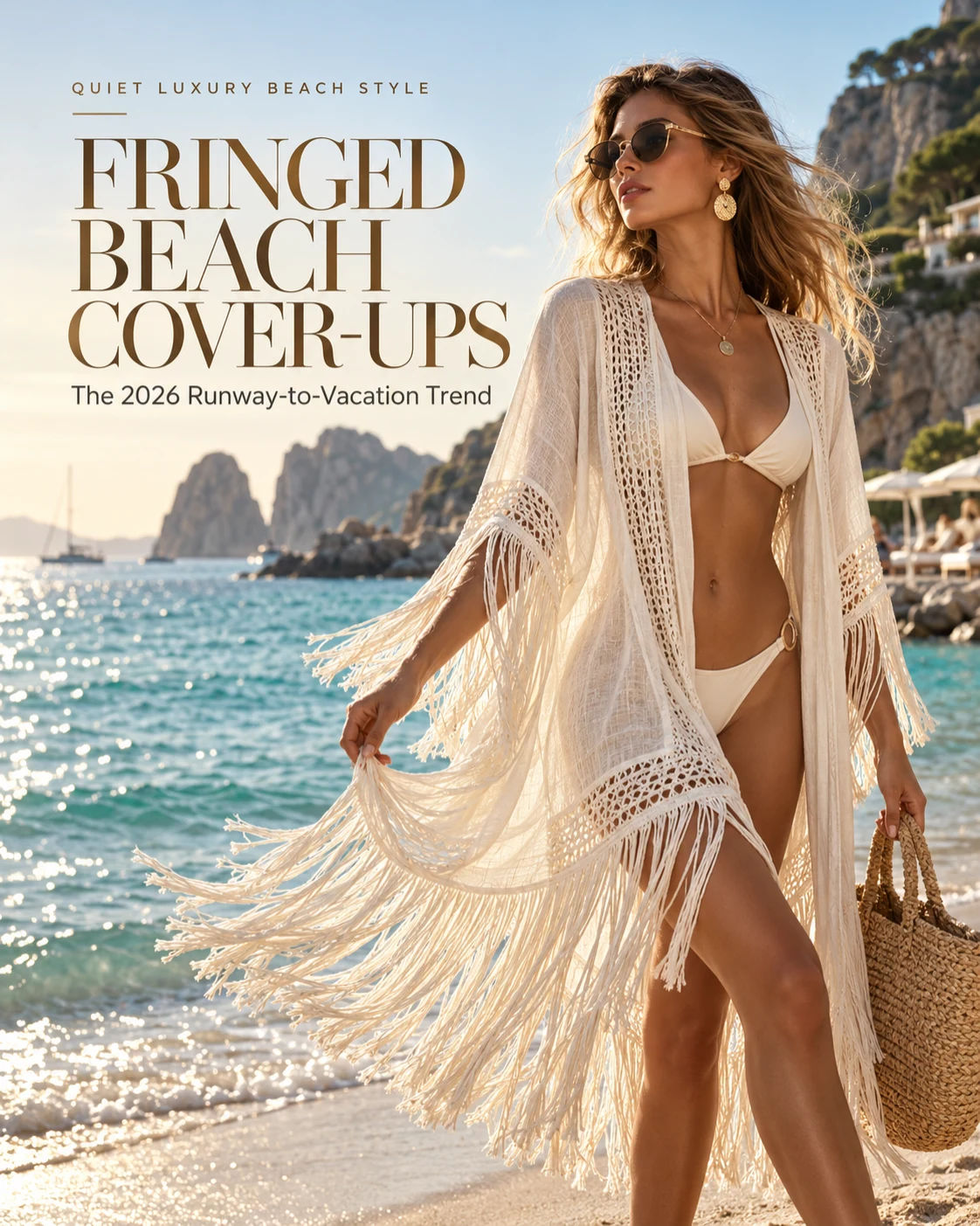
Fringed Beach Cover-Ups: How to Translate Runway Fringe to Vacation Outfits

Leather-Trimmed Raffia Bags: The Hybrid Beach Bag You Can Wear All Autumn