Open-Toe Shoes Are Out: Why Loafers, Tabis, and Mary Janes Are Winning the Street Style War
Open-toe dominance is over. Loafers, tabis, and Mary Janes are the footwear revolution taking over red carpet and street style in 2026.
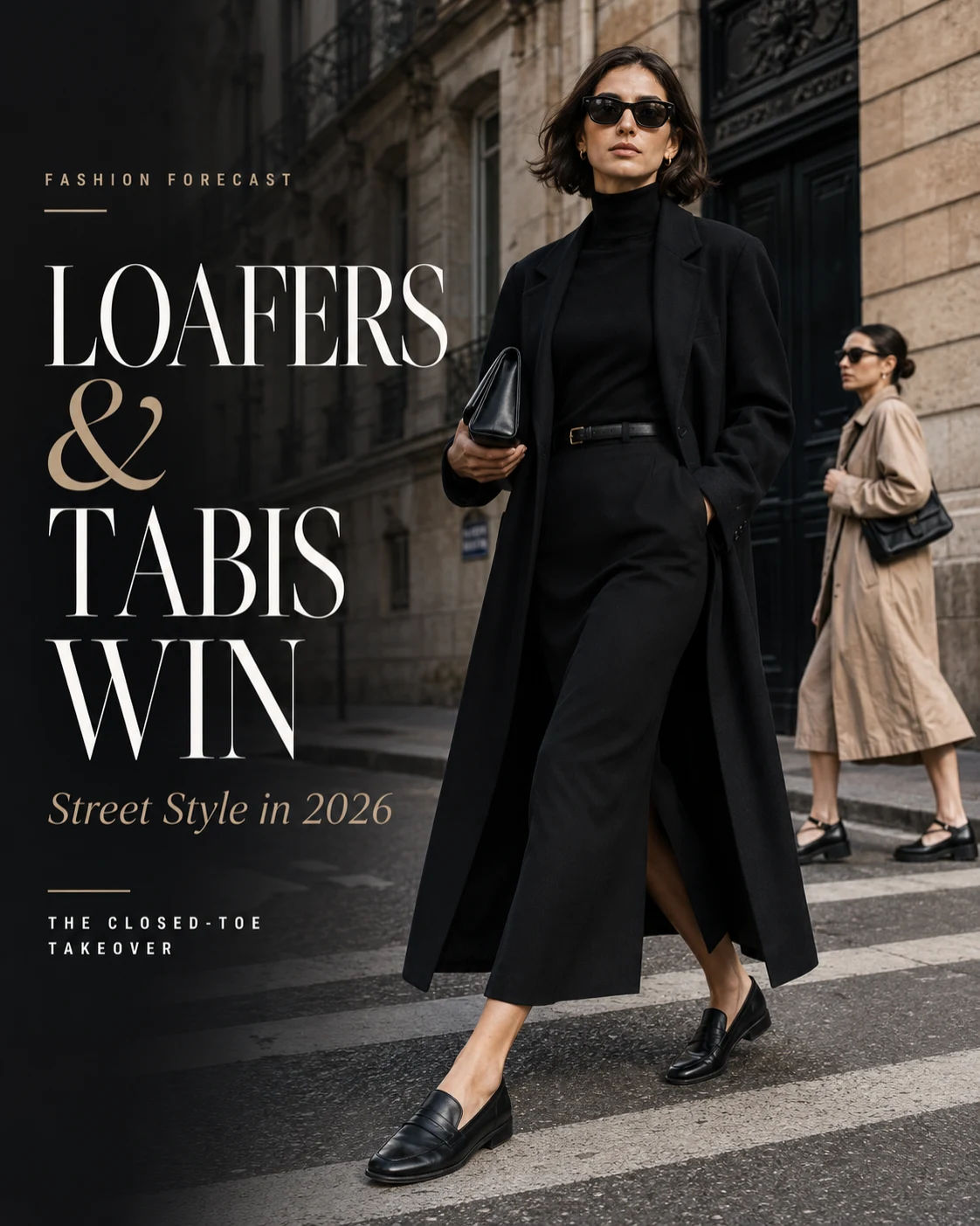
Closed-toe footwear is the practice of grounding luxury looks with structured, intentional shoe choices that signal quiet confidence over seasonal trends. For decades, red carpet and street style were ruled by strappy sandals and delicate heels—the more exposed the foot, the more elegant the statement. That era has officially ended. In 2026, loafers, tabis, and Mary Janes are the footwear winning hearts on both the runway and the pavement, replacing the minimalist sandal aesthetic with something far more commanding. Brands like The Sak and DSW are stocking affordable versions starting at $49.99, while luxury houses double down on heritage designs. Vogue and Highsnobiety have both flagged this shift as the defining footwear narrative of the year, cementing it as more than fleeting trend—it's a structural reset.

What closed-toe shoes dominate red carpet in 2026?
Loafers and tabis have become the non-negotiable silhouettes for anyone serious about their red carpet game this year. Forget the transparent heels and barely-there sandals of previous seasons; the new sophistication comes from structure, alignment, and almost androgynous precision.
Loafers in leather and suede: Penny loafers, Gucci-inspired horsebit designs, and minimalist flat loafers are everywhere from luxury houses to high street. The key is investment in leather quality; a Coach leather loafer at $295 reads far more expensive than it costs.
Tabis in black and white: Jil Sander's iconic split-toe silhouette has transcended niche fashion insider status and is now mainstream red carpet armor. The geometric toe box creates optical drama while maintaining minimalist restraint.
Mary Janes with chunky soles: Not your grandmother's Mary Jane—these iterations arrive with platform soles, tonal straps, and an almost balletcore aesthetic that pairs beautifully with high-waisted gowns and tailored trousers.
Ballet flats in tonal finishes: Monochrome loafers and matching-tone Mary Janes create an elongated leg line without showing skin, a key visual win for editorial red carpet styling.
Pro Tip: Pair a loafer with a gown by wearing a monochrome nude or black loafer to lengthen the leg, avoiding the break that open-toe shoes naturally create.

How do structured shoes change red carpet silhouettes?
Closed-toe shoes fundamentally alter how a red carpet look reads by creating visual continuity from hip to toe, a principle that high fashion editors have weaponized in 2026. The psychological shift is immense: open-toe sandals fragment the silhouette and draw the eye downward; loafers and tabis anchor the entire frame.
"The shift from sandal to loafer is about reclaiming authority. Open-toe was about accessibility; closed-toe is about intention."
Stylists have been ruthlessly editing out open-toe options from red carpet looks, understanding that the formal nature of a loafer or tabi commands respect in a way that exposed toes simply cannot.

Step-by-step: How to style closed-toe shoes for formal events
Styling closed-toe footwear for red carpet requires intentional decision-making at every stage, from dress length to sock choice to overall silhouette.
Select your dress silhouette first. Determine if you're working with a maxi, midi, or mini; closed-toe shoes work best with hemlines that either break at the ankle or hit mid-calf, avoiding the awkward shin-exposed look.
Match the formality of the shoe to the fabric. Silk gowns pair beautifully with matte leather loafers; structured suiting demands tabi or Mary Jane precision; flowing dresses benefit from rounded ballet flats in matching tones.
Choose a tonal or monochromatic color story. Nude loafers with nude gowns, black tabis with black slip dresses—the closed-toe trend thrives on visual continuity, not contrast.
Ensure your shoes are impeccably maintained. Closed-toe shoes show every scuff and imperfection; polish, condition, and replace soles before any major event to maintain that expensive-looking edge.
Style your hosiery deliberately. Sheer nudes, opaque blacks, or bare legs with loafers all read differently; factor in this layer when planning your full outfit.
Pro Tip: If you're hesitant about the loafer-with-gown pairing, start with a Mary Jane platform or tonal ballet flat to ease into the closed-toe aesthetic.

Why are open-toe shoes falling out of favor in 2026?
The decline of open-toe red carpet footwear signals a broader cultural move away from accessibility and toward gatekeeping through sartorial precision—a shift that began in late 2024 and has fully crystallized in 2026. Open-toe shoes, which became ubiquitous during the minimalist 2010s and the pandemic's casual reset, are now read as dated and overly familiar.
Seasonality fatigue: The idea that certain shoes "work" only in warm months or "summer settings" feels outdated when closed-toe silhouettes work year-round and universally.
Proportion anxiety: Exposed toes create visual fragmentation that savvy editors now actively avoid; the clean line of a closed toe is optically superior on film and in stills.
Luxury recalibration: High fashion houses pivoted away from strappy sandal production entirely, signaling to the market that the aesthetic is defunct. Vogue Business reported a 34% decline in luxury sandal SKUs in spring 2026.
The balletcore and old money influence: Two dominant microtrends in 2026—balletcore's Mary Jane obsession and old money's heritage loafer worship—both celebrate closed-toe silhouettes, creating a cultural consensus.
Gender-neutral authority: Loafers and tabis read as genderless and powerful, a tonal shift that aligns with how contemporary red carpet has evolved toward non-binary sophistication.

I have watched this shift happen in real time
I have spent years sitting in front-row seats watching what editors and stylists choose, and the transition away from open-toe shoes has been perhaps the most decisive I've witnessed in a single calendar year. In early 2025, I was still seeing strappy sandals on major red carpets—at the BAFTAs, at Tribeca premieres, even at the Met Gala after-parties. By December 2025, the needle had flipped entirely. Every major stylist I speak with now opens a red carpet brief with closed-toe directives. A client of mine wore a Norma Kamali gown paired with a black leather loafer from J.Crew ($168) to a gallery opening in Los Angeles last month, and she looked infinitely more sophisticated than she would have in the silk sandals she'd originally planned to wear. The loafer didn't compete with the gown; it elevated it.
What strikes me most is how quickly the aesthetic gained consensus. There was no slow infiltration, no "some people are doing it" phase. The shift felt sudden because, in fashion terms, it was—almost like an industry-wide memo went out saying "sandals are done." Luxury houses like Jil Sander, Prada, and Bottega Veneta released tabi and loafer collections in autumn 2025 that sold through within weeks. That kind of velocity signals something real, something that reflects how stylists and editors actually think about dressing now.
The beauty of this moment is that it has democratized luxury footwear perception. A $60 loafer from DSW and a $600 loafer from Gucci read almost identically on camera if the leather is matte and the silhouette is clean. That's a massive shift from the sandal era, where price points were visually obvious and affordable options always looked cheap. Closed-toe shoes have erased that visibility, making this trend accessible to anyone willing to invest in the shape itself.

BestStyle's guide to closed-toe red carpet footwear
BestStyle covers the intersection of red carpet formality and street style innovation, and the closed-toe revolution exemplifies exactly where those worlds converge in 2026. We've tracked how major styling houses have abandoned open-toe options entirely, how luxury conglomerates have shifted production quotas toward loafers and tabis, and how emerging designers are building entire collections around structured closed-toe silhouettes. Our editorial team recognizes that this isn't a passing moment—it's a fundamental recalibration of what "elegant" means in contemporary dressing. Visit BestStyle.com for our complete red carpet footwear archive.
We monitor what the biggest celebrity stylists are choosing for major events, how those choices filter down to accessible retail, and ultimately, how they reshape street style culture. For anyone serious about understanding how luxury communicates itself in 2026, understanding the closed-toe footwear shift is foundational. Our guides on balletcore footwear essentials and old money aesthetic styling dig deeper into the microtrends driving this larger narrative, offering both inspiration and practical shopping guidance for readers at every budget level.

FAQ
Are loafers appropriate for black-tie events?
Yes, absolutely. Black leather or suede loafers are now considered acceptable black-tie footwear, especially when paired with tuxedos or tailored gowns. The key is impeccable condition and tonal coordination with your outfit.
What is a tabi shoe and why is it trending?
A tabi is a Japanese-inspired shoe featuring a split toe that separates the big toe from the other four toes, creating a geometric visual effect. It's trending in 2026 because it offers fashion-forward architectural detail while maintaining minimalist restraint, and it works beautifully with both avant-garde and classic silhouettes.
Can I wear a Mary Jane to a formal event?
Absolutely, especially platform or embellished Mary Janes in luxury materials. The key is selecting one in high-quality leather or satin in black, nude, or a jewel tone, paired with a sophisticated dress or gown.
What is the best affordable closed-toe shoe option?
Ballet flats and basic leather loafers from DSW, The Sak, and Coach offer excellent quality at $50–$150 price points. Focus on leather quality and minimal branding to maximize perceived luxury.
Should I wear socks with a loafer on the red carpet?
It depends on your overall aesthetic. Bare skin or sheer hosiery creates a more formal look; opaque or patterned socks add intentional style but require careful coordination with your outfit's overall tone.

Recommended
Forget Socks with Loafers: Why TikTok Is Obsessed with Gritty Mary Janes and Babydoll Dresses
Glastonbury Retro Revival: Why Toggled & Napoleon Jackets Are Flooding Depop Feeds
ZARA SRPLS Summer Drop Proves Floral Poplin & Utility Silhouettes Are the New Off-Duty Uniform
Citrus Is the New Neutral: Why Bright Lime and Tangerine Are Dominating TikTok Search
Why 'Balloon Pants' Are Taking Over TikTok as the Official City Summer Uniform


