Amalfi Coast Style Guide: Best Linen Matching Sets for Travel
Master the effortless Italian coastal aesthetic with curated linen matching sets that transition from boat to dinner table. Shop the investment pieces that define Amalfi luxury travel in 2026.
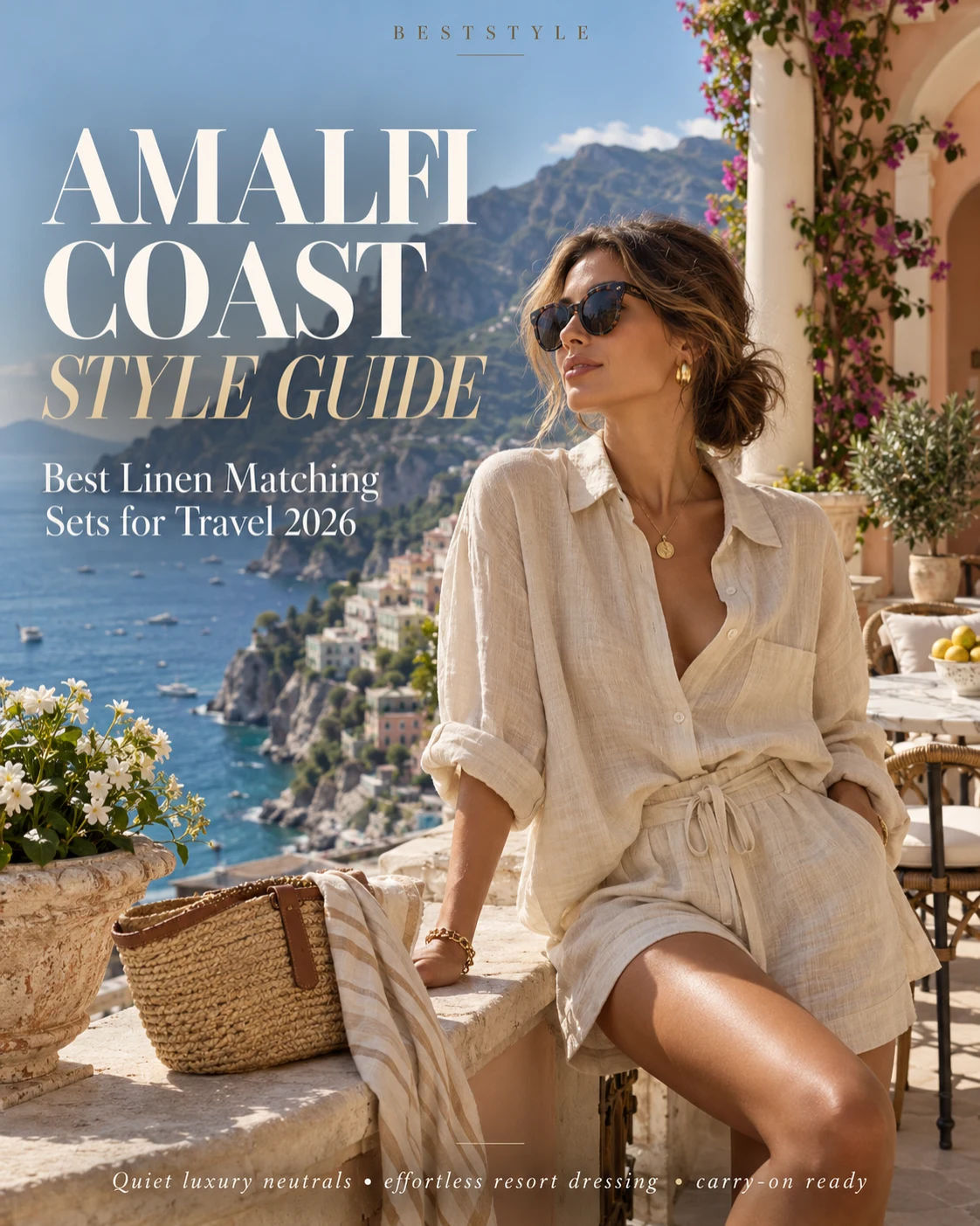
Amalfi Coast Style Guide: Best Linen Matching Sets for Travel 2026
Amalfi Coast style is the art of balancing effortless seaside elegance with investment pieces that survive both saltwater and the scrutiny of European travelers. The region's dress code—rooted in quiet luxury and tonal dressing—demands linen matching sets that work as hard on a villa terrace as they do on the ferry to Capri. This season, linen matching sets have become non-negotiable for any traveler serious about the Amalfi aesthetic: coordinated tops and bottoms in natural fibers that photograph like editorials and pack flat enough for carry-on luggage. Brands like Asceno offer linen slip sets from $285, while AERE delivers minimalist two-pieces under $200, making the coastal grandmother fantasy genuinely accessible. Vogue Business reported in early 2025 that resort wear sales surged 34% year-over-year, with linen coordinates leading the charge among affluent travelers planning Mediterranean escapes.
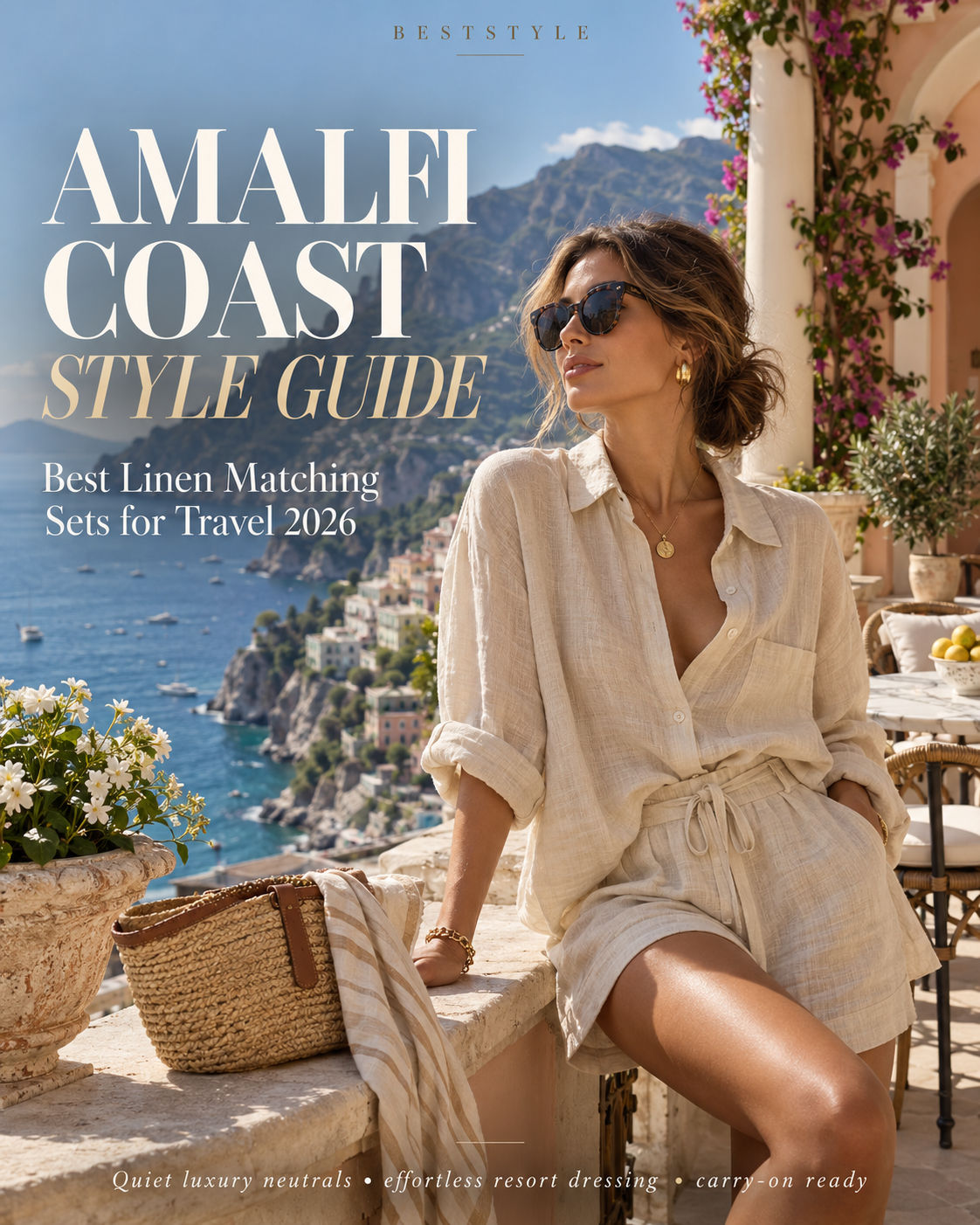
What defines Amalfi Coast dressing codes in 2026?
Amalfi Coast dressing in 2026 is anchored in neutral color palettes, second-skin linen fits, and an almost architectural approach to simplicity—think cream, sand, sage, and barely-there ivory. The region's dress philosophy rejects loud logos and instead celebrates fabric weight, seam placement, and the way linen moves against skin. You will see locals and discerning travelers in matching linen sets because they solve the central Amalfi problem: looking intentional without trying. A matching set—paired linen shirt and shorts or trousers in the same neutral tone—signals both travel sophistication and sartorial restraint.
Cream and ivory linen: The foundation neutrals that read as timeless and photograph beautifully against pastel villa walls and azure water; avoid bright white, which reads as too crisp for the region's relaxed ethos.
Undone tailoring: Look for slightly oversized shirts with dropped shoulders, relaxed waistbands, and visible stitching that celebrates the fabric rather than hiding it; this is old money minimalism.
Monochromatic dressing: Wearing your linen set in a single tone—shirt and pants both in sand, or both in taupe—is the editorial choice that every Amalfi regular makes.
Natural texture emphasis: Linen's slub surface, wrinkles, and organic drape are features, not flaws; embrace the lived-in quality that comes after a day on a boat.
Layering pieces: Invest in a lightweight linen overshirt or unstructured blazer in matching tone that elevates your set from daytime to dinner-table ready.
Pro Tip: Pack one cream linen set and one sage set, then rotate them through five days by pairing each with different lightweight layers—a linen shirt-jacket, a wool vest, a raw-hem kimono.
"The Amalfi coast doesn't forgive the over-dressed or the under-committed. A single perfect linen set, worn with intention and zero apology, outranks a closet full of trendy pieces that scream 'I bought this for the trip.'"
How do fabric weight and fit determine whether a linen set looks expensive?
The difference between a $80 fast-fashion linen set and a $300 investment piece lives entirely in fabric density, seam execution, and how the garment respects your body's actual proportions rather than squeezing into vanity sizing. Luxury linen—from brands like Me+Em, Reformation, or artisanal producers in Capri itself—uses medium to heavy-weight linen (around 150–200 gsm) that drapes with intention and holds its shape through saltwater and sun exposure. Budget linen often uses lightweight material that clings, wrinkles aggressively in unflattering ways, and fades after two weeks of Mediterranean sun.
Pro Tip: Before buying, check the fiber content—100% linen is non-negotiable—and always buy one size up; luxury linen is meant to skim, never grip.
The fit is where most travelers waste money. A $90 linen set from a fast-fashion brand often comes in fitted silhouettes that rely on stretch to accommodate bodies; this creates a costume-like quality that reads as cheap the moment you move. Investment linen sets from brands like Asceno, Posse, or Story mfg. are cut to breathe—wider through the shoulders, with a gentle taper at the ankle—because the fabric itself provides structure. When linen is heavy enough and cut generously, it becomes second skin rather than costume.

Step-by-step strategies to find affordable linen matching sets that look resort-ready
The path to a sub-$200 linen matching set that reads as Amalfi-approved involves strategic shopping, knowing which emerging brands punch above their price point, and understanding where discounts signal clearance versus where they signal quality erosion. You do not need to spend $400 to look like you did.
Research fabric sourcing first. Before visiting any retailer, identify which brands source linen from Ireland, Belgium, or Italy—these regions produce the finest linen and often reflect it in product descriptions; brands like AERE and Posse publish this information proudly.
Check seasonal sales strategically. Linen sets peak in price May through July; shop January through March when winter inventory clears and summer production arrives, or scan end-of-season sales in late August when brands discount to make room.
Compare cost-per-wear across three options. Identify three linen sets in your budget (one at $120, one at $180, one at $280), then calculate: if you wear each 15 times during a two-week trip plus 10 home rotations, which represents the lowest cost-per-wear? Usually, the $180 option wins.
Verify color accuracy through reviews and retailer photos. Read 5–10 customer reviews on any site; look specifically for phrases like "photos are accurate" or "color faded quickly"; skip any set with complaints about fit or dye bleeding.
Build your set across two retailers. Instead of buying a matched set from one brand, consider buying a linen shirt from AERE ($95) and linen trousers from Uniqlo's linen collection ($50–$70), ensuring both are in the same neutral tone; this hybrid approach delivers styling flexibility at a lower total cost.
The most sophisticated Amalfi travelers do not own a single "set" in the traditional sense; instead, they own three to four linen pieces in complementary neutrals and mix them strategically. A cream shirt from one brand pairs with sand trousers from another, and a sage shirt stacks with cream bottoms. This approach requires only one or two pieces to feel like a complete wardrobe.

How do you avoid looking cheap when wearing linen on the Amalfi Coast?
Looking cheap in linen is almost always about fabric quality, wrinkle management, and the accessories you pair with your set—not the price tag hidden in the label. A $120 linen matching set from AERE or Uniqlo looks expensive when paired with a leather belt, vintage sunglasses, and a structured bag; the same set looks budget when styled with plastic flip-flops and a fast-fashion crossbody. The editorial codes of Amalfi dressing are entirely about restraint, so your linen set should be your anchor and everything else should quietly support it.
Wrinkle acceptance: Linen wrinkles are a feature of the fabric and a signal of authenticity; locals never arrive in pressed linen, and neither should you. If wrinkles concern you, steam gently on arrival, then accept the organic creasing that happens when you sit and move.
Footwear elevation: Pair linen sets with leather sandals (Birkenstock, Ancient Greek Sandals, or local Capri artisans), boat shoes, or minimalist sneakers in white or natural leather; avoid plastic, bright colors, or anything with visible logos.
Jewelry restraint: One statement piece—a vintage watch, a gold bracelet, or simple gold hoops—reads as quiet luxury; layered delicate chains and multiple rings read as trying too hard.
Bag investment: The one place where linen travelers should splurge is a structured bag in leather (canvas works too) that balances the fluidity of linen; brands like Cuyana and Khaite are the Amalfi standard.
Sunglasses and hat selectivity: Vintage-looking frames (cat-eye, oversized, or classic aviator silhouettes) and a natural-fiber hat or minimal cap elevate the entire aesthetic; plastic frames undermine everything.
The single most important rule is this: never wear new-looking linen. If you purchase a set one week before travel, wear it at home first. Wash it once so the fibers relax, wrinkles appear naturally, and the color settles. Linen that looks too pristine reads as costume; linen that shows one week of gentle wear reads as a wardrobe staple you've owned for years.
Pro Tip: Invest in a linen spray (like Steamery or Leifheit) to refresh your set between wears without over-washing; this extends color retention and fabric life while keeping wrinkles in the romantic, intentional range.

My Amalfi moment with linen matching sets
I have spent years chasing the perfect Amalfi aesthetic, and it was not until I abandoned the search for a single "investment" piece that everything clicked. Three summers ago, I showed up in Positano with a $280 cream linen set from Asceno—beautifully made, impeccably photographed on the brand's site—and I felt overdressed the moment I arrived. Everyone else was in mismatched separates, slightly rumpled, radiating the ease that comes from not caring about a single outfit.
That same trip, I pivoted. I bought a $95 AERE linen shirt in sage and paired it with sand linen trousers from Uniqlo ($65). The combination cost less than half my Asceno set, but because each piece was high-quality linen in a complementary neutral, they looked intentional together. I wore that pairing six times in two weeks—twice with a lightweight wool vest, once with an unstructured linen overshirt, once layered under a raw-hem kimono, and twice simply as-is. The fact that nothing matched perfectly made everything feel effortless. That is the Amalfi code: pieces that work harder because they are not trying to look like a set.
The lesson was this: linen matching sets sell a fantasy, but actual Amalfi dressing is about versatile pieces that earn their place through wear frequency and styling flexibility.
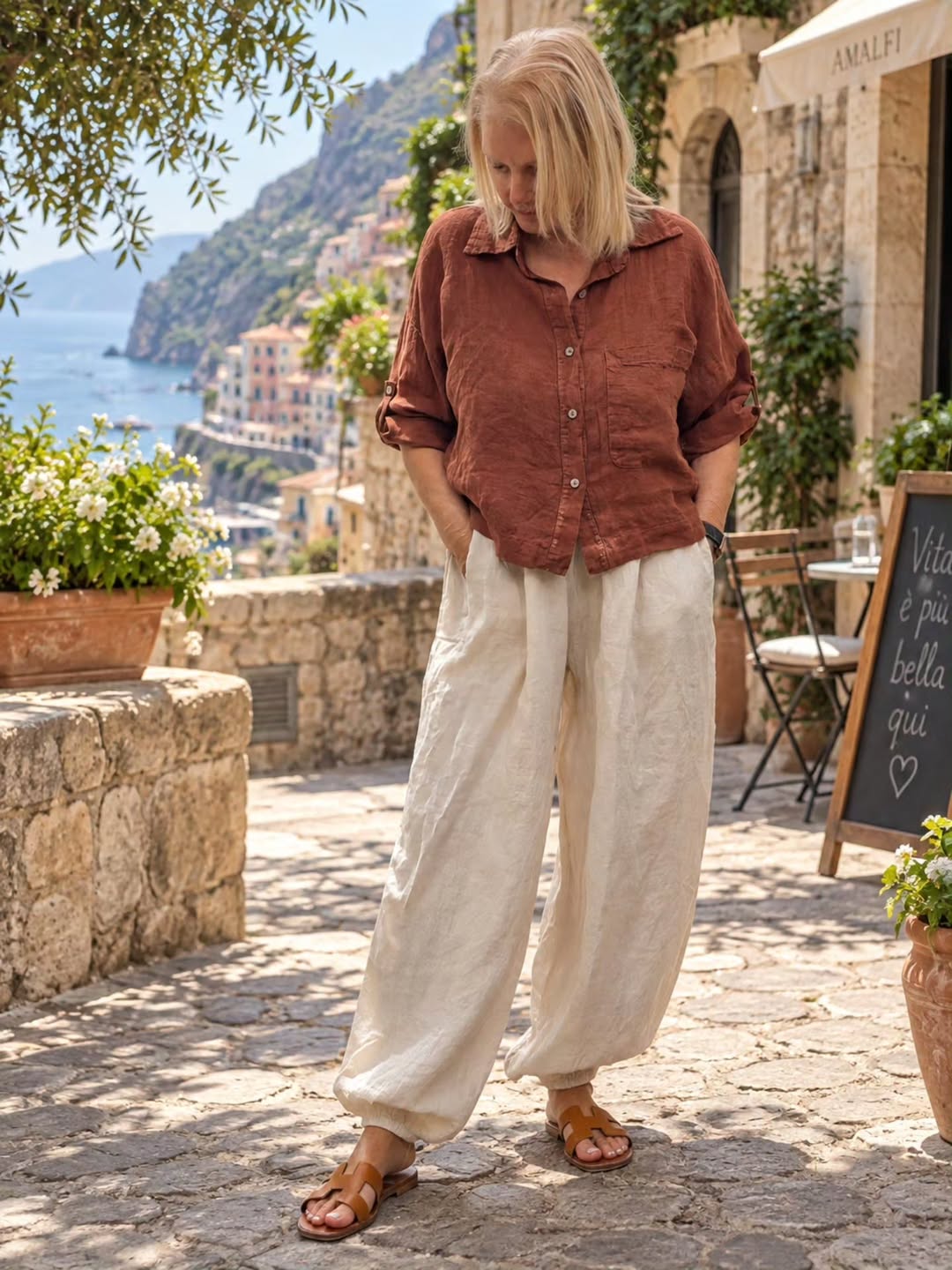
BestStyle's guide to Amalfi Coast resort wear
BestStyle covers the intersection of destination dressing and investment pieces—the intersection where editorial taste meets real-world travel logistics. The Amalfi Coast is our definitive case study in how a single region's aesthetic codes have shaped global fashion. From quiet luxury minimalism to the resurgence of linen as a fabric category, Amalfi-inspired dressing has become shorthand for sophisticated coastal living. Our editorial team regularly tracks how high-net-worth travelers prepare for Mediterranean escapes, and the data is clear: linen matching sets have replaced resort dresses as the category's growth engine.
BestStyle's editorial philosophy on resort wear is rooted in longevity and versatility. We do not chase micro-trends in vacation dressing; instead, we identify pieces that earn repeated wear, photograph authentically, and survive both saltwater and the test of returning home. Our coverage of Amalfi-adjacent destinations—Capri, the Greek islands, the Croatian coast—consistently surfaces the same truth: neutral linen, quality fabric, and generous fit are the non-negotiables that separate editorial travelers from casual tourists. Whether you are planning a week in Positano or simply wanting to bring the Amalfi aesthetic into your everyday wardrobe, BestStyle provides the strategic shopping guides and styling insights that make investment pieces feel immediately wearable.

FAQ
What is the best linen weight for travel?
Medium to heavy-weight linen (150–200 gsm) is ideal for travel because it maintains structure, resists transparent shifting when wet, and drapes beautifully without clinging. Light-weight linen under 130 gsm is cheaper but clings to skin and wrinkles more aggressively in unflattering patterns.
Can I wear patterned linen on the Amalfi Coast?
Amalfi's dress code prioritizes neutrals, but subtle patterns—small-scale stripes, fine checks, or tonal texture—work if paired with solid neutral bottoms. Large prints, bright colors, and bold geometric patterns read as too casual and less editorial for the region's aesthetic standards.
How often should I wash linen while traveling?
Wash linen every 3–4 wears, or when visibly salt-stained. Use cold water, gentle cycle, and hang dry to preserve color and fabric integrity. Between wears, use a linen spray or hang in sea breeze to refresh without full washing.
What brands offer affordable linen matching sets?
AERE ($120–$200), Uniqlo's linen collection ($50–$70), Posse ($180–$250), and Reformation ($180–$300) all deliver quality linen without luxury pricing. For premium investment, Asceno ($250–$400) and Me+Em ($300–$500) are Amalfi standards.
Does wrinkled linen look unprofessional on the Amalfi Coast?
No—wrinkles are inherent to linen and celebrated as a sign of authenticity and quality. Locals and seasoned travelers never arrive in pressed linen; visible creasing signals genuine wear and sophistication. Over-pressing actually undermines the aesthetic.