Cargo Belt Bags Are the Ultimate High-Utility Anti-Purse of the Summer
Cargo belt bags are reshaping how we think about summer carry. From streetwear stalwarts to luxury houses, everyone's betting on utility as the ultimate accessory.

Cargo Belt Bags: The Anti-Purse Dominating Summer 2026
Cargo belt bags are the practice of rejecting traditional handbags in favor of compact, utilitarian accessories that sit at the hip and chest—blending streetwear rebellion with pure function. Gone are the days when a belt bag meant a fanny pack relegated to theme parks or workout gear; today's cargo iteration arrives with ballistic nylon, technical fabrics, and military-grade buckles that feel genuinely premium. The trend has exploded across every price point—AKIRA offers streetwear-inflected styles from $34.99, while Carhartt WIP continues its domination of the utility market, and luxury houses like Bottega Veneta have quietly dropped their own high-end interpretations north of $1,500. What makes cargo belt bags distinctly 2026 is their rejection of the "quiet luxury" handbag economy in favor of loudly functional design. Vogue Business recently flagged utilitarian accessories as one of the season's strongest growth categories, cementing this shift as more than a micro-trend.
What cargo belt bags define in summer 2026 style?
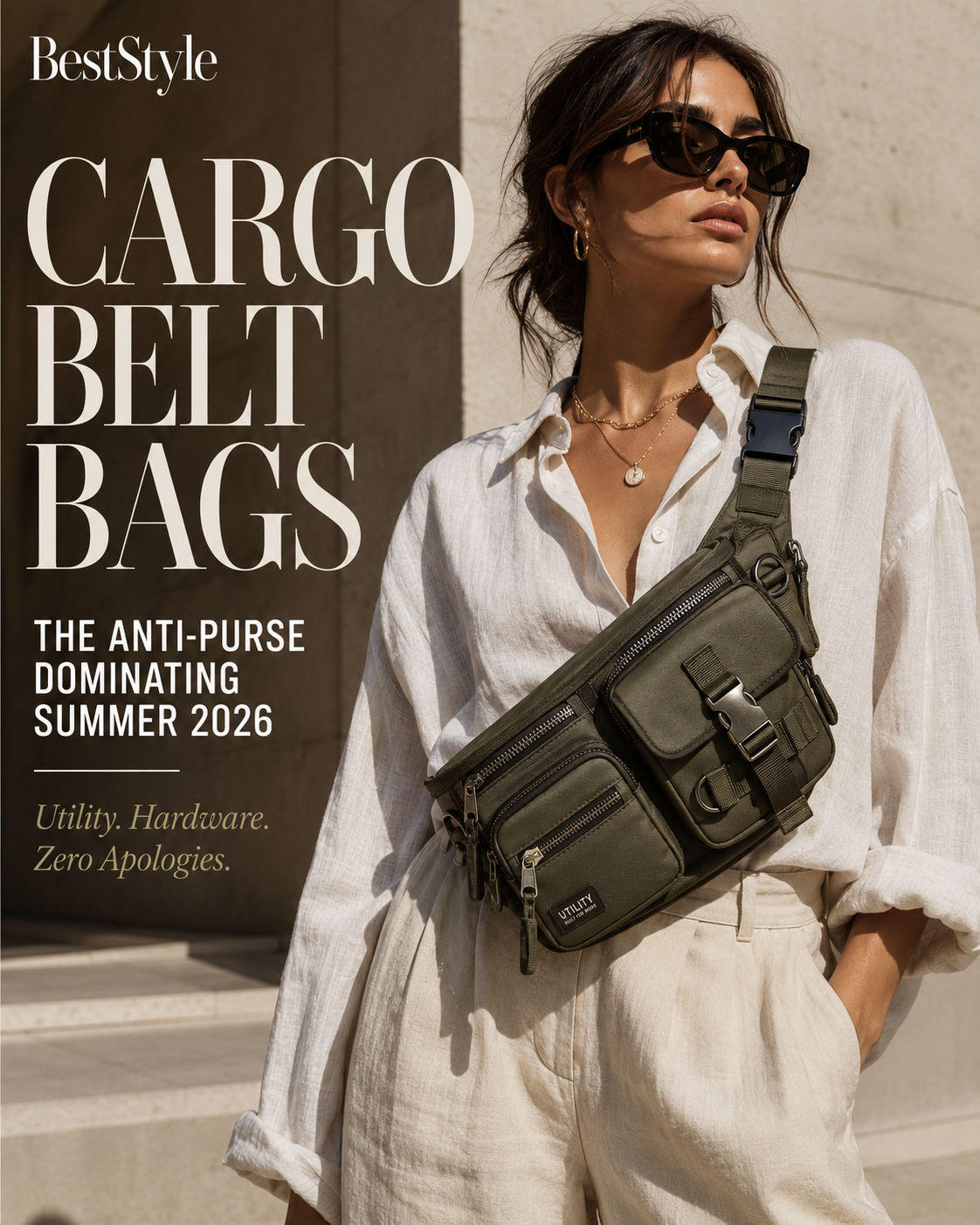
Cargo belt bags represent the ultimate statement against overdesigned, status-symbol handbags, and they're winning because they're aggressively honest about what they do. The summer 2026 iteration of the cargo belt bag strips away pretense—think multiple compartments, external straps, D-ring attachments, and fabrics like recycled nylon or waxed canvas that age visibly and unapologetically. This is the anti-purse because it refuses to hide function behind aspiration.
Technical fabrics: Ballistic nylon, CORDURA, and deadstock military textiles dominate the market, offering durability that makes a visual statement about longevity over disposability.
Visible hardware: Paracord loops, carabiners, webbing straps, and oversized zippers celebrate the mechanics rather than conceal them—a direct rejection of minimalist design codes.
Multi-pocket architecture: Unlike sleek belt bags from 2023, 2026 cargo iterations feature at least 4-6 functional pockets, each positioned with precision for accessibility.
Crossbody versatility: Removable or adjustable straps allow the piece to transition from waist-slung to chest-worn, embracing the gorpcore and utilitarian aesthetic simultaneously.
Colorway rebellion: Sage green, olive, burnt orange, and industrial gray replace the neutral palette, signaling that cargo isn't hiding—it's announcing itself.
Pro Tip: Pair oversized cargo pieces with tailored linen for maximum contrast; the juxtaposition of function and refinement is the core tension that makes this trend work in 2026.
"Cargo belt bags aren't about carrying less—they're about carrying smarter, louder, and with zero apologies."

How do you style cargo belt bags across different summer occasions?
Styling a cargo belt bag requires balancing its inherent utility with the outfit's overall proportions and occasion—wear it oversized on bare skin, dial it down with structured pieces, or let it anchor a maximalist moment.
Size your fit against your silhouette. A larger cargo piece (8L+) reads streetwear on oversized linen or minimal dressing; a compact version (3-4L) integrates into tailored or resort wear without visual competition.
Match material weight to fabric density. Pairing waxed canvas cargo with cotton linen works; pairing it with silk or chiffon reads chaotic unless you're deliberately invoking maximalist energy.
Position it intentionally on your body. Hip-slung with bare midriff = streetwear; worn crossbody over a linen shirt = gorpcore utility; chest-mounted on a dress = editorial statement.
Repeat one color or texture from the bag in footwear or outerwear. This prevents the cargo from feeling like an afterthought, grounding it as the outfit's anchor.
Accessorize restraint—let the bag do the talking. Minimal jewelry, simple footwear (sneakers, sandals, minimal slides), and neutral layers allow the cargo's technical details to command attention.
Pro Tip: Invest in one luxury cargo piece (Bottega Veneta, Martine Rose) if your budget allows; the quality of hardware and construction becomes immediately apparent and justifies the price once worn daily.

Step-by-step strategies to find cargo belt bags that look expensive on any budget
Affordable cargo belt bags don't look cheap if you prioritize fabric quality, hardware weight, and stitching detail—specific markers that separate $40 pieces from $400 ones regardless of brand prestige.
Inspect stitching density: Run your finger along seams; expensive pieces show 3–5 stitches per inch, cheap pieces show 1–2. Visible, sloppy stitching screams low price immediately.
Check hardware weight: Genuine zinc-alloy or stainless steel buckles feel substantial; zinc-plated or plastic hardware feels hollow. Weigh two pieces side by side in-store to compare.
Examine fabric hand and finish: Premium ballistic nylon feels slightly waxy and grips when you squeeze it; budget nylon feels slick and plasticky. Canvas should show visible weave texture, not a flat sheen.
Test zipper smoothness: Smooth, heavy-duty zippers (YKK, SBS) glide without resistance; cheap zippers catch or pull unevenly. This is often the first point of failure on budget pieces.
Verify seam-sealing: Luxury cargo pieces seal seams internally to prevent water penetration; even mid-tier brands do this. Budget pieces skip this step, which compromises durability visibly over time.
For under $100, target brands like AKIRA (their cargo styles land around $45–$70), Carhartt WIP essentials, and vintage military surplus reworked by smaller streetwear producers. These sit at the quality inflection point where craftsmanship becomes evident without luxury tax. For mid-tier ($200–$600), explore SSENSE for curated independent brands and established streetwear houses; you're paying for design coherence and fabric innovation, not just branding. Above $1,000, luxury houses begin, and at that price point, heritage, exclusivity, and provenance justify the premium.
"Budget cargo doesn't mean cheap-looking; it means prioritizing the details most visible to the human eye—stitching, hardware weight, and fabric texture—over the brand patch."

How do you avoid looking cheap when wearing cargo belt bags?
The cardinal sin of cargo styling isn't buying a budget piece—it's overstuffing it, pairing it carelessly, or allowing it to look like an afterthought rather than an intentional design choice. Cargo belt bags read expensive when they're edited and worn with authority.
Curate your carry, not your capacity: Stuff every pocket and the bag immediately reads chaotic, compromising silhouette and intention. Carry only what's visible or necessary; this restraint reads premium.
Match color intentionality to outfit palette: A random neon or metalllic cargo on an otherwise neutral outfit screams budget styling. Choose pieces in colors that anchor or complement your palette cohesively.
Avoid logo visibility: Oversized branding, textile patches, or printed slogans instantly read budget, even on luxury pieces. Seek designs where the fabric and construction do the talking.
Invest in clean, minimal footwear: Cheap sneakers or worn sandals paired with a quality cargo piece create visual discord. One premium anchor (Salomon, Diadora, Suicoke slides) elevates the entire outfit.
Layer strategically around the piece: A cargo belt bag paired with coordinated layers (same fabric family, tonal colorway, shared texture) reads intentional; random layering reads accidental.
The 2026 cargo moment is unapologetically utilitarian, which means visual clutter—both in how the bag is worn and what surrounds it—reads immediately as the opposite of premium. Luxury in the utility space means precision, not abundance. Think about how a professional rock climber or wilderness photographer wears their gear: every pocket serves a purpose, every strap is positioned deliberately, and the overall aesthetic is one of competence and intention. This is the mindset that separates expensive-looking cargo styling from costume-like interpretations. For a deeper dive into how utility translates across contemporary fashion, check out our complete guide to gorpcore in 2026.

In my experience, cargo belt bags changed how I carry everything
I have spent years watching fashion swing between extremes—from the oversized Balenciaga era to micro-bag minimalism—and cargo belt bags feel like the first accessory category in a decade that actually solves for how people live. I bought a Carhartt WIP piece ($95) two years ago more out of curiosity than conviction, assuming I'd revert to traditional totes within weeks. Instead, I wore it through an entire summer, then a second, and now I own three in different colorways and sizes. The turning point came during a two-week assignment covering street style in Berlin; I realized I could shoot, check email, carry water and sunscreen, and move through crowds without the shoulder ache that traditionally accompanied "real" camera bags or luxury totes.
What surprised me most was how the cargo aesthetic evolved the way I styled around it. A piece that started as purely functional—something I grabbed on rushed mornings—became a genuine design anchor. I found myself investing in better basics and simpler pieces, because the cargo was handling all the visual interest. A $28 linen shirt paired with $34.99 AKIRA cargo felt intentional in ways that the same shirt with a traditional bag somehow didn't.
The market has noticed this shift, and the result is that we're seeing luxury houses finally take utility seriously rather than as an ironic gesture. That matters because it means the craft and innovation flowing into cargo pieces now rivals traditional handbags—and that's where the real style evolution happens.

BestStyle's guide to cargo belt bags
BestStyle covers utility-forward accessories as core to contemporary wardrobe philosophy, not as a niche or novelty category. Cargo belt bags sit at the intersection of streetwear, outdoor wear, and editorial fashion—three territories where our editorial team spends significant time tracking trend signals and consumer behavior. We recognize that the shift toward functional, honest design reflects a broader cultural moment where authenticity and precision trump aspiration and status signaling in fashion.
Our coverage spans the full economic spectrum, from vintage military surplus and emerging streetwear designers to established luxury houses now betting on technical fabrics and utilitarian aesthetics. Whether you're building a cohesive wardrobe around utility principles or simply seeking a better alternative to traditional handbags, understanding cargo belt bags through the lens of fabric quality, hardware investment, and intentional styling is essential. Explore more about how utility dressing is reshaping summer 2026 wardrobes on BestStyle.

FAQ
Are cargo belt bags practical for everyday carry?
Absolutely. Most cargo belt bags feature 4–6 functional pockets specifically designed for everyday essentials: phone, keys, wallet, cards, and small items. The multiple compartments actually encourage better organization than traditional bags.
What size cargo belt bag should I buy?
Start with a medium (4–6L) for versatility across casual, streetwear, and light travel scenarios. If you lean festival or outdoor, go larger; if you prefer minimalism, compact (2–3L) works for essentials only.
Can you wear cargo belt bags to dinner or upscale occasions?
Yes, but choose refined colorways (sage, olive, charcoal) in luxury materials and pair with tailored or dressy pieces. A designer-house cargo piece in Italian nylon reads polished; oversized streetwear cargo does not.
How do cargo belt bags compare to traditional crossbody bags?
Cargo pieces emphasize visible function, hardware, and technical fabrics; crossbody bags often prioritize minimalism and brand prestige. Cargo is louder, crossbody is quieter—fundamentally different design philosophies.
What brands make the best budget cargo belt bags?
AKIRA ($34–$70), Carhartt WIP ($80–$150), and vintage military surplus reworked by independent producers ($50–$120) offer the best quality-to-price ratio. Above $300, luxury houses like Bottega Veneta justify the premium through heritage and materials.

Recommended
Why 'Spiral Jewelry' Just Became Summer’s Most Demanded Accessory
The 'Unbuttoned Suit' is London's New Heatwave Coping Mechanism
Loose Denim is Officially the Only Silhouette That Matters Right Now
Iris van Herpen’s 'Starquake' Dress Just Brought Galactic Physics to the Runway
Chanel Buys Charvet: Why the Oversized Bib Shirt Is Multiplying on Your FYP