Loose Denim is Officially the Only Silhouette That Matters Right Now
Forget skinny jeans forever. Loose denim has weaponized itself as the defining silhouette of 2026, and every fashion insider is ripping up their closet to match. Here's how to wear it without looking like you're borrowing your dad's Levi's.
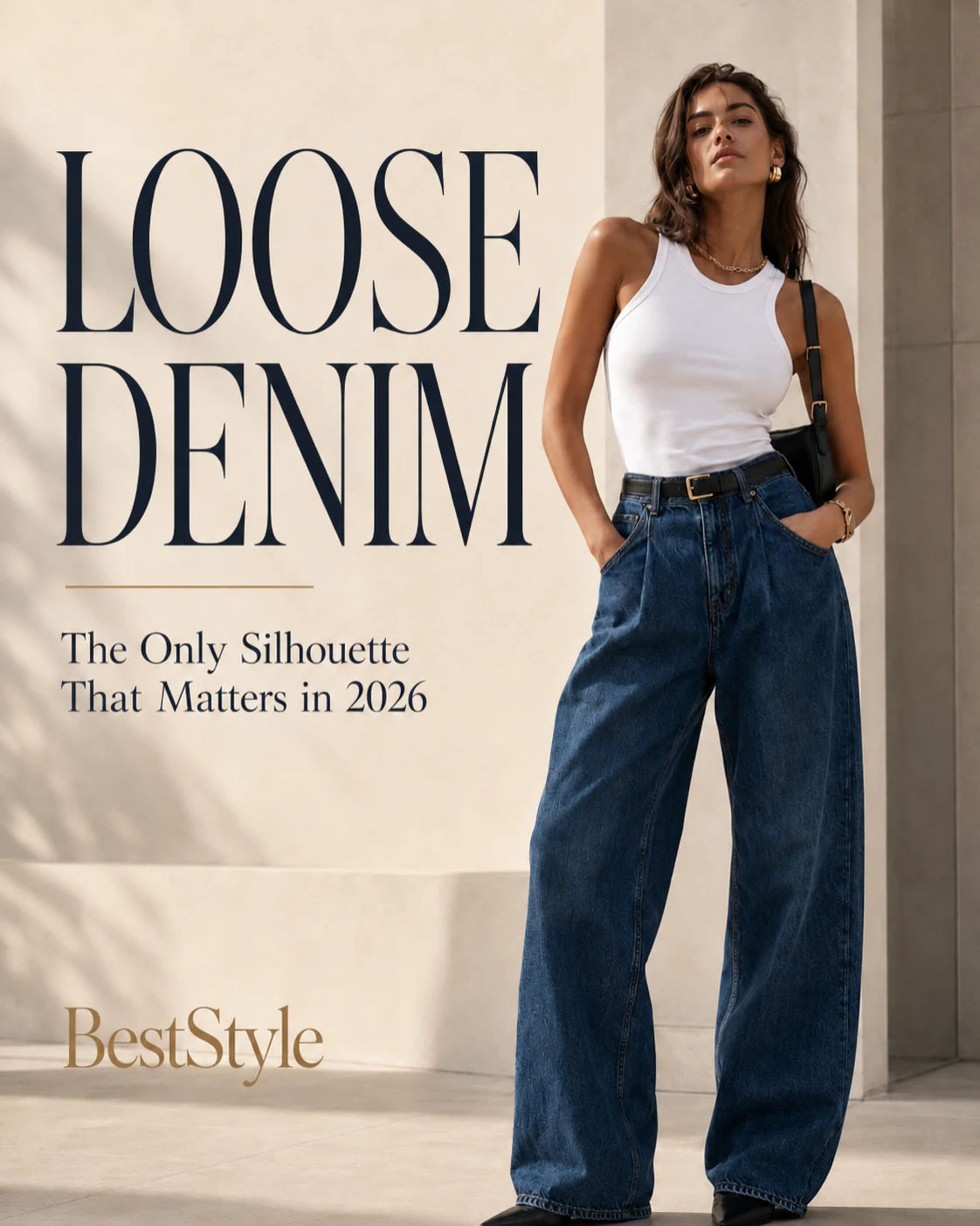
Loose Denim Is The Only Silhouette That Matters in 2026
Loose denim is the practice of embracing intentionally relaxed, high-volume denim cuts that prioritize proportion and ease over the body-hugging silhouettes that dominated the last decade. After years of skinny jeans' reign, loose denim has emerged as the definitive silhouette of 2026—a movement that's less about nostalgia and more about editorial authority. Brands like AGOLDE are releasing straight-leg and wide-leg options from $228, while Citizens of Humanity offers vintage-inspired loose fits starting at $198. The shift isn't subtle—major fashion publications have doubled down on loose denim as the cornerstone of cool-girl dressing, signaling that any other silhouette is now playing catch-up.
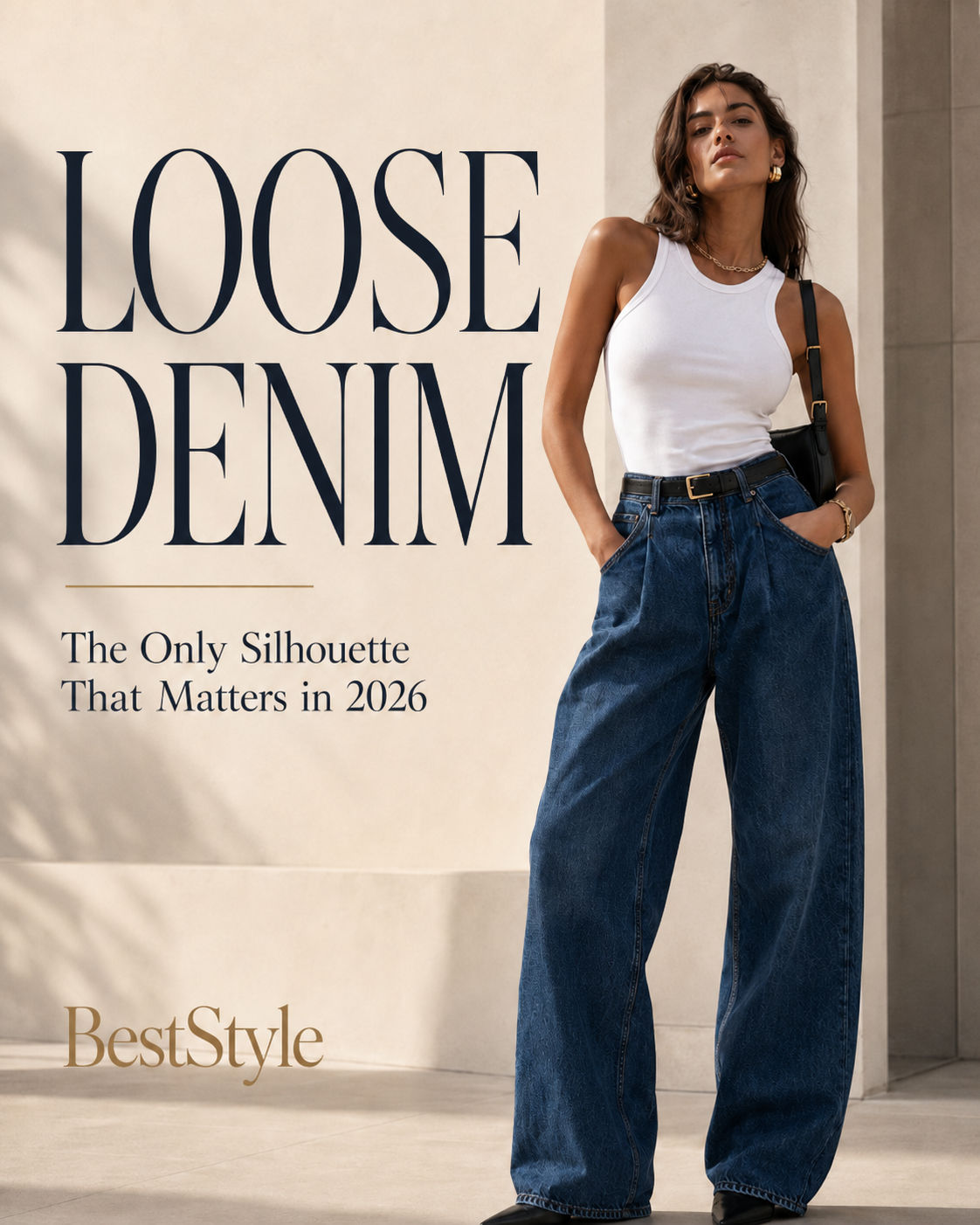
What loose denim trends define 2026 fashion authority?
The loose denim movement in 2026 centers on three non-negotiable trends: extreme volume in the hip and thigh, sky-high rises that sit at the natural waist, and a deliberately undone, lived-in finish that reads editorial rather than sloppy. Think Levi's 90s silhouettes reimagined for the clean-girl era, paired with balletcore ballet flats or chunky sneakers that anchor the proportion.
High-waisted placement: Loose denim in 2026 sits at or above the natural waist, creating vertical line elongation and a sophisticated, old-money silhouette that avoids the low-rise trap.
Volume distribution: The fullness concentrates in the hip and thigh, with a relaxed—not necessarily wide—leg opening that skims or breaks slightly on the shoe.
Fabric weight matters: Heavier 12-14 oz denim holds shape and drape better than lightweight versions, preventing the "borrowed from dad" appearance.
Wash and finish: Medium to dark indigo washes, vintage whiskers, and subtle fading signal editorial intention; stark black or over-distressed edges read costume rather than authority.
Inseam precision: Proper hemming is non-negotiable; loose denim requires exact break length to avoid pooling or looking unfitted.
Pro Tip: A single cuff at the ankle elongates the leg and transforms loose denim from relaxed to deliberate—it's the styling detail that separates editorial from oversized.
"Loose denim isn't a return to the '90s; it's the rejection of forced silhouettes altogether. This is what fashion feels like when it's finally breathing again."

How do fabric and fit determine whether loose denim looks expensive and editorial?
The difference between loose denim that looks intentional and loose denim that looks accidental is almost entirely about fabric density and construction detail, not about price point. A $120 pair of loose denim jeans from a solid contemporary brand will outperform a $400 pair from a heritage line if the former has superior weight and stitching. Fabric acts as the skeleton of silhouette; poor-quality denim will sag, bag, and lose shape within weeks, which immediately reads cheap and sloppy regardless of how well you style it.
Pro Tip: Touch the denim before buying—if it feels thin, papery, or stiff in a bad way (not the good rigidity of raw denim), the silhouette will collapse within three washes.
Construction details—yoke shape, pocket depth, inseam stitching, hardware finish—separate editorial from mediocre. A brand that uses high-quality copper rivets at stress points, a reinforced crotch seam, and a symmetrical yoke that doesn't twist when you wear it is signaling that this garment was built to last and to look intentional. These are the features that justify the price premium and that make loose denim feel expensive regardless of the actual cost. Look for brands like The Kooples, which offers loose-fit denim starting at $165 with impeccable construction standards that rival luxury lines.

Step-by-step strategies to find and style loose denim that reads expensive and editorial?
Finding affordable loose denim that doesn't scream budget requires a methodical approach: start with brand research, then prioritize fit and fabric over novelty details, then style it with pieces that anchor the proportion and signal intention. The strategy isn't about shopping sales; it's about understanding the architecture of silhouette so deeply that you can spot quality markers instantly.
Research the brand's heritage and construction standards. Spend 10 minutes reading reviews and brand bios on sites like The Outnet or Ssense to identify which contemporary and mid-tier brands invest in fabric weight and seam quality rather than marketing hype.
Examine fabric composition in detail. Filter for 98% cotton or 99% cotton with minimal elastane; avoid anything under 11 oz weight or over 15% synthetic content that will pill and fade unevenly.
Try on multiple sizes to understand rise and placement. Loose denim requires precise fit at the waist and hip; don't assume your usual size will work. The jeans should sit at your natural waist without gapping at the back or pulling at the front.
Commit to professional hemming or alterations. Budget $25–$50 for a quality tailor to achieve the exact break length on your shoe; this single step transforms loose denim from approximation to editorial intention.
Pair loose denim with tailored or minimal tops to create proportion balance. A fitted blazer, a tucked clean-girl tee, or a minimal sleeveless tank will anchor the volume and prevent the silhouette from reading as sloppy or over-casual.
The styling layer is equally crucial. Loose denim paired with an oversized hoodie and chunky sneakers reads costume; loose denim paired with a fitted white button-down, a quiet luxury cashmere crew, or a balletcore ballet flat reads editorial intention immediately. The volume of the denim demands that every other piece is either minimal, tailored, or anchoring—no competing silhouettes allowed. This is the visual language of old-money dressing and clean-girl aesthetics, both of which require supreme confidence in negative space and proportion.

How do you avoid looking cheap when wearing loose denim on any budget?
The most expensive-looking loose denim is always the denim that looks like it wasn't trying too hard—which is paradoxically the denim that required the most intention and research to acquire. Cheap-looking loose denim typically results from one of five mistakes: poor fit fundamentals, wrong wash choice, incorrect styling proportions, visible quality issues, or garment degradation over time.
The fit foundation: Loose denim must fit precisely at the waist, hip, and inseam; any gapping, pulling, or twisting will immediately read as poor fit, not loose silhouette intention. Invest in alteration if necessary.
Wash selection as editorial language: Medium to dark indigo, one-wash, or vintage finishes signal editorial authority; light blue, over-distressed, or heavily bleached finishes read mall-brand adjacent regardless of actual brand origin.
Proportion anchoring through styling: Pair loose denim exclusively with fitted, minimal, or tailored tops; oversized or volume-heavy tops create competing proportions that read chaotic rather than intentional.
Hardware and detail visibility: Check that all visible hardware—buttons, rivets, zippers—is finished, not raw or discolored; loose stitching, uneven seams, or cheap-looking hardware instantly downgrades the perception of the entire garment.
Care and maintenance as ongoing investment: Wash loose denim sparingly (every 8–10 wears), turn inside out, use cold water, and hang-dry to prevent shape loss and color fading that will age the denim prematurely and read cheap.
The psychology of expensive is actually about consistency. When every visible element of a garment—fiber, weight, construction, finish, fit, styling—communicates the same intentional message, the total perception becomes luxury, regardless of the actual price. A $140 pair of loose denim from a contemporary brand like Everlane (which offers transparent pricing and quality-focused construction) will read more expensive than a $350 pair from a heritage brand if the contemporary pair is fit correctly, styled with intention, and maintained properly. The inverse is also true: a $500 pair of luxury loose denim will read cheap if it's styled with conflicting proportions, worn with visible wear damage, or paired with pieces that signal low intention.

I have spent years watching the denim pendulum swing from skinny to straight to crop to loose
I have spent years watching the denim pendulum swing from skinny to straight to crop to loose, and I can tell you with absolute certainty that this moment—right now, in 2026—is the first time the fashion industry has achieved actual consensus on a single silhouette. There's no hedging, no "this works if you have this body type" caveat, no apology. Loose denim is the only conversation happening in the room, and everything else is background noise.
I remember standing in the AGOLDE showroom in Los Angeles about eight months ago, watching a buyer from a major retailer pick up a pair of their 90s loose-fit jeans in vintage indigo—the same pair that costs $228—and she just held it for a minute, feeling the weight, examining the seams. She turned to me and said, "This is the denim I'm buying for my entire team, my family, everyone I know." That moment crystallized something for me: loose denim had stopped being a trend and had become a value statement. It said, "I understand proportion, I invest in quality, I don't need to perform thinness or body anxiety through my clothing." Suddenly, wearing loose denim became shorthand for editorial sensibility and real confidence.
The shift from skinny to loose denim is actually the fashion industry finally admitting that constraint was the opposite of cool all along.

BestStyle's guide to loose denim in 2026
BestStyle covers the full ecosystem of denim culture—from heritage brand drops and sustainable production initiatives to the street-style intelligence that reveals what actual fashionable people are wearing right now. Our editorial team has spent the last eighteen months documenting the rise of loose denim across runways, editorial shoots, and the actual closets of style authorities, which is how we knew this shift was permanent rather than cyclical.
We publish weekly denim shopping guides, fabric deep-dives, and styling strategies that help you understand not just what to buy, but why that particular piece signals editorial intention. Our BestStyle Viral section tracks which denim moments are actually moving culture and which are just noise, so you can shop with confidence rather than anxiety. Whether you're building your first loose-denim foundation or refining an existing collection, BestStyle's editorial team is here to ensure you're making choices rooted in understanding rather than trend-panic.

FAQ
What's the minimum price for loose denim that actually looks expensive?
$120–$150 from a contemporary brand with transparent construction standards (like Everlane, Citizens of Humanity, or The Kooples). Below this price point, fabric weight and construction quality typically suffer, which reads immediately as cheap regardless of styling.
Can loose denim work for shorter or smaller-framed people?
Yes, absolutely—but only with precise alterations and careful styling. A petite person wearing loose denim must commit to professional hemming, pairing with fitted tops, and often wearing a heel or chunky platform to create visual elongation.
What's the best wash for loose denim in 2026?
Medium to dark indigo, one-wash, or vintage finishes are editorial gold; light blue and over-distressed finishes read dated and mall-brand adjacent.
How often should I wash loose denim to maintain shape?
Every 8–10 wears, inside-out, in cold water, and hang-dry. Frequent washing causes shape loss and fading that ages denim prematurely.
Does loose denim only look good on certain body types?
Loose denim looks editorial on all body types when fit and styled correctly. The key is precise fit at the waist and hip, not body type; proportion anchoring through styling matters more than silhouette width.

Recommended
Elie Saab’s 'Dark Fairycore' Just Rewrote the Moodboard for Fall 2026
The Scarf-Tied Handle: The Quickest Bag Upgrade Trending in Paris Right Now
Under Armour’s Rebel Daughter Collab: Tech-Wear Meets the Haute Couture Runway
Heavy Metal Cinch: Why Chunky Silver Charm Belts Are Trending Over Low-Rise Minis
The Hooded Knit Takeover: Doechii’s Red Carpet Vibe Lands on Streetwear Feeds