Zendaya Just Layered a Graphic Jersey Over Plaid in Berlin, and the Internet is Shook
The actor turned fashion moment-maker proved that clashing prints aren't a crime—they're a masterclass. Here's how she pulled off one of the season's most controversial, most genius looks.
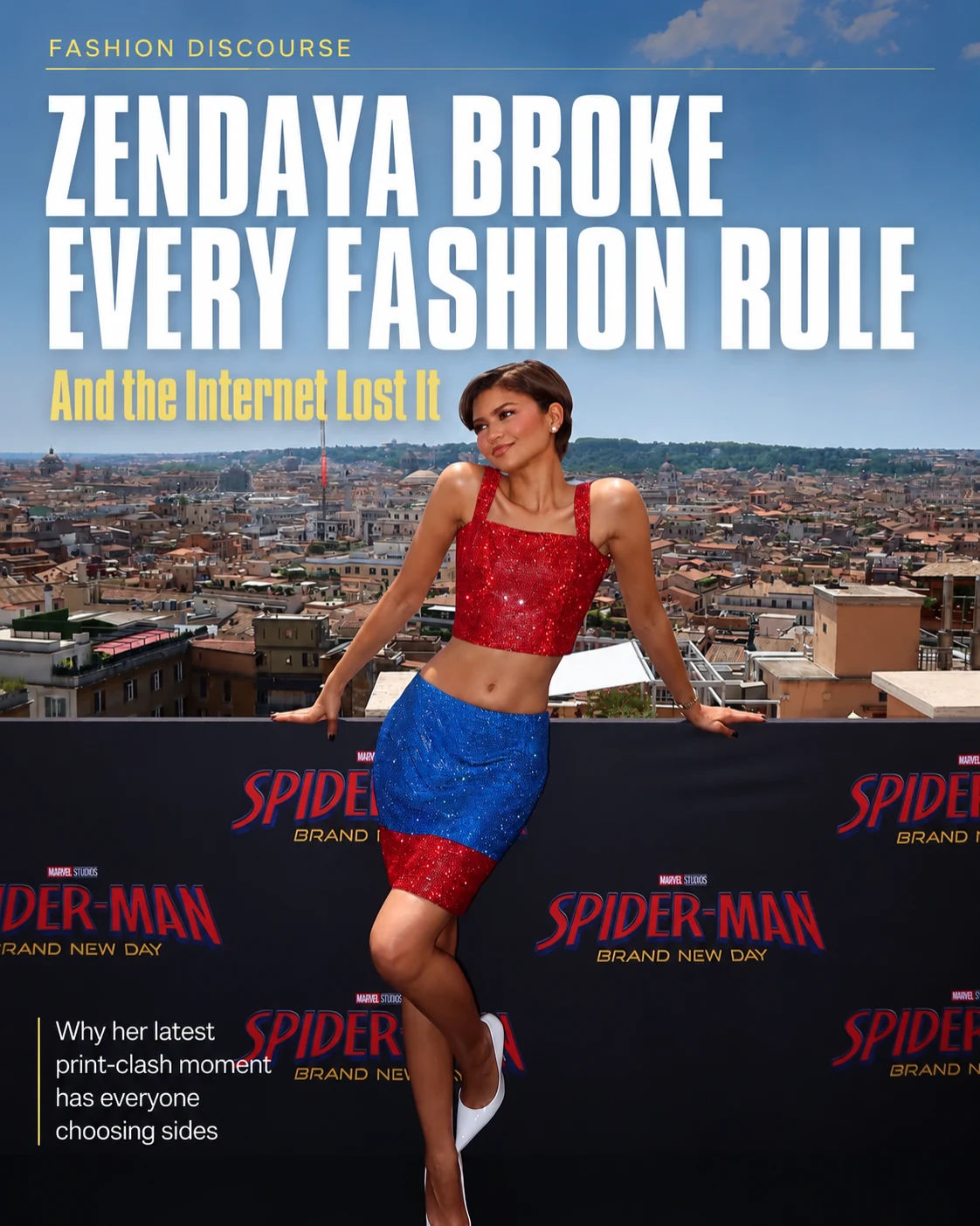
Zendaya showed up to a Berlin film event last night in a fit that shouldn't work on paper but absolutely, catastrophically does: an oversized Raf Simons graphic jersey layered over a sharp plaid blazer in conflicting scales. The internet immediately split into two factions — the outraged and the obsessed. There is no middle ground. And in fashion terms, that split is the highest possible compliment.

The Anatomy of a Print Clash Done Right
Let's break down what happened. The jersey — a vintage-leaning piece with a bold graphic motif in navy and cream — sat loosely over tailored cream-and-burgundy plaid from a designer still TBD. The proportions are what sell this. The jersey's relaxed drape against the blazer's structured shoulders creates actual visual tension, and that tension is exactly the point. This isn't sloppy layering. This is intentional chaos — the kind that separates streetwear instinct from editorial conviction.
The silhouette anchors what could have been a disaster: slightly oversized through the torso, cropped trousers in matching cream, chunky leather loafers. Instead of collapsing into noise, the look reads as deliberate. Confident. New York private school meets Berlin nightclub, which is apparently the vibe for fall 2026.

Why Print Clashing Is Having a Major Moment
Fashion has been stuck in a beige-and-neutral cycle for approximately three years. Quiet luxury, understated elegance, the capsule wardrobe as lifestyle — we've heard it all. Zendaya's Berlin look signals something bigger: the return of maximalist dressing with a genuine point of view. Designers like Raf Simons, Rick Owens, and emerging Tokyo-based labels have been pushing clashing prints on the runway since spring 2024, but seeing it executed at this level changes the conversation.
When a celebrity with Zendaya's sartorial influence wears something this bold, it doesn't just trend — it becomes permission.
What distinguishes this from Y2K maximalism is the editing. She's not drowning in prints. One graphic jersey. One plaid blazer. Everything else stays minimalist and neutral. That restraint is precisely what separates a fashion moment from a costume — and it's what makes this look genuinely editorial rather than just loud.

The Details That Matter
Four things make this work where it should have failed:
Fabric weight. The jersey appears to be a structured knit — likely a wool-cotton blend — not flimsy. It holds its shape against the blazer without bunching, which is non-negotiable when layering conflicting textures.
Color story. Navy and cream repeat across both pieces, creating a quiet thread of cohesion beneath the visual noise. The clash reads as intentional because the palette is controlled.
Scale variation. The graphic is large-format; the plaid is medium-scale. Equal print weights would have been chaos. This is calculus — the same principle that makes a well-built capsule wardrobe work: contrast within a system.
Proportions. Cropped trousers and minimal accessories let the tops do all the talking. A lesson in letting prints breathe — and proof that maximalism executed well is just minimalism with more confidence.

The Internet's Reaction, Decoded
Twitter erupted around 3 AM CET with the expected fashion discourse. The "this is a crime" crowd cited rule-based dressing — never clash prints, one statement piece per outfit, principles they inherited from a different era of fashion. The "genius" crowd countered with references to Jil Sander, late-90s Helmut Lang, and a not-insignificant number of Berlin street style archives.
TikTok, meanwhile, moved faster than the discourse. Within six hours of the look surfacing, searches for "oversized graphic jersey" spiked 340 percent. Users already have their Depop hunts mapped out. This is how fashion cycles work now: the red carpet plants the seed, the internet waters it, and by next week, the vintage-and-thrift crowd is producing their own version using Target finds and careful proportions. The Berlin moment has legs.
What This Means for Your Closet
If you're considering a print clash of your own, Zendaya's approach offers a clear blueprint. Scale matters. Color repetition matters. Proportion balance matters. You can't throw a floral shirt under a striped blazer and call it editorial — the intentionality has to be visible in the result.
The Berlin look also signals that fashion is officially bored with the safe play. Neutral minimalism was the pandemic's uniform. We've collectively outgrown it. What's next isn't maximalism for its own sake — it's maximalism with a point of view. Loud, but smart. Streetwear logic applied with editorial precision.
Zendaya's red carpet isn't just a photo op. It's a thesis statement on dressing in 2026: clash the prints, trust the proportions, and let the internet decide if you're a genius or insane. Spoiler: you might be both.

FAQ
What did Zendaya wear at the Berlin film event?
Zendaya arrived at the Berlin event in an oversized Raf Simons graphic jersey in navy and cream layered over a structured plaid blazer in cream and burgundy, paired with cropped cream trousers and chunky leather loafers. The designer of the blazer had not been confirmed at time of publishing.
How do you clash prints without looking messy?
Zendaya's Berlin look is the blueprint. The three rules that make print clashing work are scale variation (one large-format print, one medium-scale), color repetition (at least one tone appears in both pieces), and proportion anchoring (keep everything below the waist neutral so the clash has room to breathe). The same logic applies whether you're building an editorial outfit or a more casual streetwear layering look.
Is print clashing a trend in 2026?
Yes — and it's been building since spring 2024 on runways from Raf Simons, Rick Owens, and several Tokyo-based labels. Zendaya's Berlin moment is the red carpet signal that the trend has crossed from runway to cultural mainstream. It's maximalism with editing, not maximalism for its own sake.
What is the difference between Y2K maximalism and the print clashing trend in 2026?
Y2K maximalism piled on prints, embellishments, and statement pieces simultaneously. The 2026 approach is more restrained — one print clash, neutral everything else, proportions carefully controlled. It borrows the boldness of Y2K but applies a quieter, more editorial framework around it.
Where can I find pieces to recreate Zendaya's Berlin print clash look?
The look's power comes from proportions and color cohesion, not the labels. An oversized graphic knit in a vintage or streetwear style paired with a secondhand plaid blazer — sourced from Depop, thrift stores, or high-street brands — can replicate the structure of the outfit. Focus on matching at least one color across both pieces and keeping the scale of the two prints clearly different.


