Michelle Obama’s Custom 'Heirloom Skirt' Just Set a New Standard for Emotional Dressing
The former First Lady's latest red carpet appearance proves that fashion's most powerful moments aren't about trends—they're about legacy. Here's why her designer collaboration is the blueprint everyone's copying.
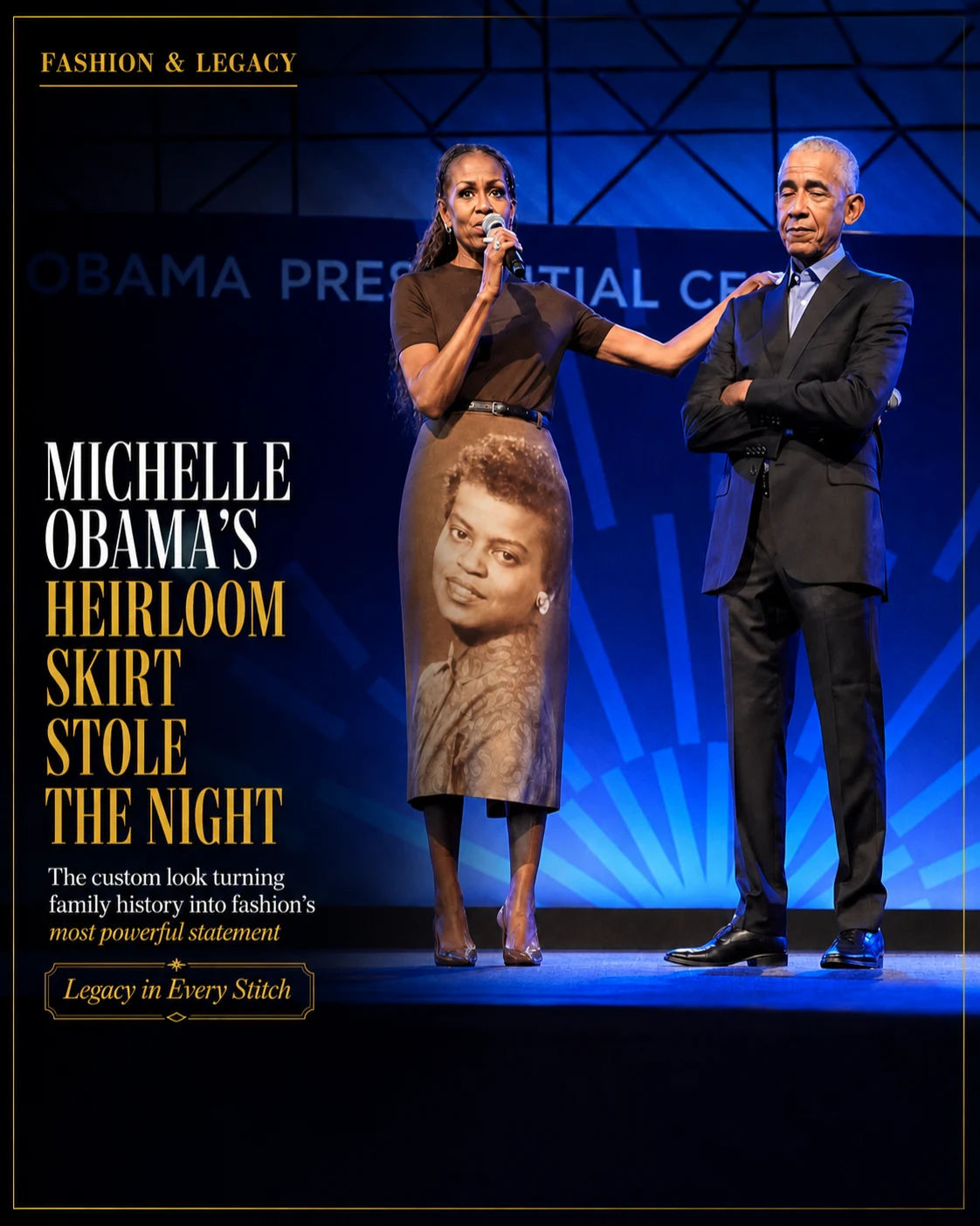
Michelle Obama just reminded the fashion world why she remains the gold standard of purposeful dressing. At a recent high-profile gala, the former First Lady wore a custom skirt that wasn't just beautiful—it was a statement about lineage, craft, and the quiet power of clothing as memoir. The piece, a collaboration with a renowned atelier, featured hand-embroidered details referencing her family's history, transforming a single garment into wearable storytelling that transcended the typical red carpet moment.

When Fashion Becomes Family Archive
This wasn't a designer dress dropped two seasons ago. This was bespoke narrative. The skirt's construction borrowed techniques from traditional West African weaving patterns—a direct nod to ancestral craftsmanship—combined with contemporary silhouetting that felt both timeless and urgently now. The color palette moved between deep indigo and gold thread work, materials chosen specifically for their resonance with Obama's personal story.
What made this moment land differently than typical celebrity custom pieces is the intentionality behind the invisible labor. The atelier spent weeks with Obama discussing not just measurements and mood boards, but the emotional architecture of the design. How many celebrities actually sit with their designers and talk about what their grandmother wore? How many demand that level of meaning-making from their wardrobe?
"Fashion's most powerful moments aren't about trends—they're about legacy."

The Emotional Dressing Moment We Needed
In an era where celebrity styling feels increasingly algorithmic and focus-grouped, Obama's approach is almost radical. She's positioned her red carpet presence as a form of cultural documentation. Every choice—from the specific embroidery technique to the fabric weight—carries biographical weight.
This matters because it sets a template for what luxury fashion can actually be. Not an Instagram flex or a brand collaboration announcement, but genuine creative partnership rooted in personal truth. Young dressers are already noticing. The demand for custom, heritage-informed pieces from emerging designers has spiked. Ateliers are suddenly fielding requests for family-story embroidery work. The Pinterest boards shifted overnight from "minimal luxury" to "storytelling through craft."

The Blueprint Everyone's Now Studying
Here's what made this red carpet moment so influential:
Specificity over celebrity—The design didn't reference Obama's "brand," it referenced her actual life. That authenticity reads louder than any logo.
Craft visibility—Hand-embroidery, visible seaming, and traditional techniques were featured, not hidden. The labor became the luxury.
Generational storytelling—By embedding family history into formal wear, Obama made it acceptable—even essential—to dress your identity, not just your body.
Refusal of trend cycles—This piece won't feel dated in six months. It's built to last generationally, quite literally designed as something her daughter might wear someday.

Why This Matters Beyond the Red Carpet
Obama's influence on fashion has always operated at a different frequency than typical celebrity styling. She doesn't dress to compete or to flex—she dresses to communicate. The heirloom skirt is the logical evolution of that philosophy. It's fashion as inheritance, as resistance to disposability, as a quiet insistence that what we wear can mean something.
Luxury brands are already scrambling to reposition around "heirloom value" and "generational design." But they're missing the point. What makes Obama's approach untouchable isn't a marketing strategy—it's the genuine belief that clothing should connect us to something larger than ourselves. That conviction can't be outsourced to a creative director or workshopped by committee.
The ripple effect is already visible. Emerging designers are suddenly prioritizing custom commissions over ready-to-wear. Fashion editors are asking harder questions about what pieces actually mean versus what they photograph well. Young women are investing in alteration and personalization rather than buying new. That's not trend behavior—that's a cultural shift.
Michelle Obama's custom skirt won't be on every red carpet next season. That's precisely why it matters. It's proved that the most influential fashion moments are the ones built on something real—family, memory, craft, and the refusal to treat clothing as disposable. In a world obsessed with the next drop, that's revolutionary.