Nicole Kidman Casts a Spell in a Slinky Cut-Out Gown for Pre-Fall's Darker Turn
Nicole Kidman's latest red carpet moment in a slinky cut-out gown confirms pre-fall's shift toward moody, sensual silhouettes. Here's how to capture that editorial edge on any budget.
Nicole Kidman Casts a Spell in a Slinky Cut-Out Gown for Pre-Fall's Darker Turn
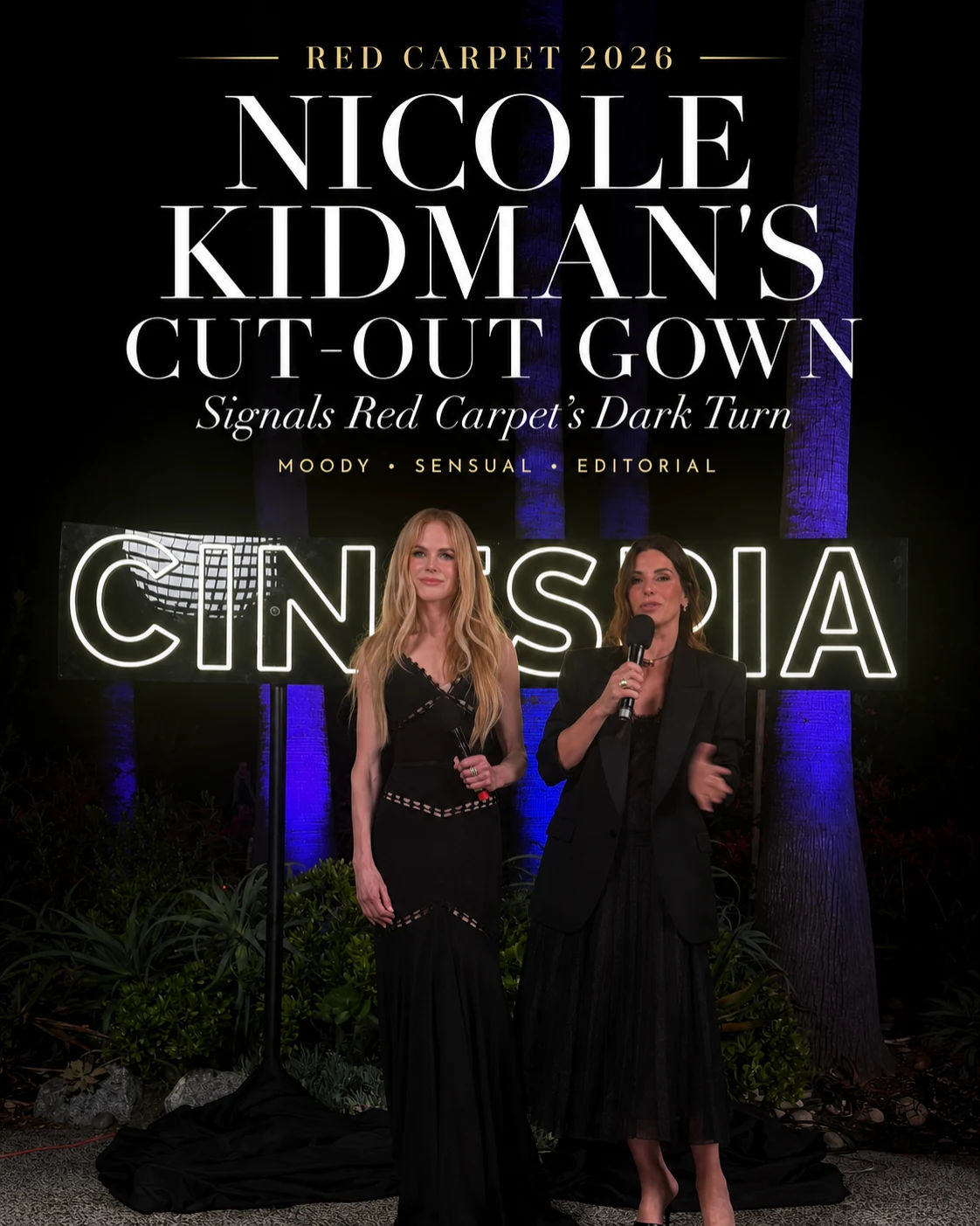
Red carpet dressing is the art of translating editorial mood into wearable narrative—and Nicole Kidman just handed us the 2026 playbook. The Australian icon recently stepped out in a slinky, strategically cut-out gown that felt less Hollywood-safe and more unapologetically sensual, marking a definitive pivot away from pre-fall's typical brightness. This isn't quiet luxury anymore; it's dark, intentional, and utterly commanding. The gown itself—a lean silhouette with architectural cutouts that revealed skin with surgical precision—read as both old money restraint and office siren confidence. Brands like Zimmermann and emerging labels such as Thvolò are already pricing similar cut-out templates between $800 and $2,400, while high-street alternatives from ASOS and H&M sit well under $150. According to recent trend signals from Vogue's pre-fall coverage and TikTok's fashion editorial accounts, moody, body-conscious gowns with strategic negative space are officially the red carpet uniform for fall 2026.

What red carpet trends should luxury-conscious shoppers focus on in 2026?
The shift toward darker, more sensual cut-out silhouettes represents a fundamental reset in how red carpet dressing reads for the moment.
Strategic cut-outs: Gone are the days of full coverage. Think keyhole necklines, side-torso negative space, and asymmetrical waist cutouts that signal confidence without screaming for attention.
Monochromatic depth: Black, deep emerald, navy, and burgundy command the pre-fall narrative. These aren't bright; they're moody and intentional.
Fabric tactility: Stretchy matte jerseys, liquid silk charmeuse, and structured crepe create that slinky but refined silhouette Kidman embodied.
Minimalist jewelry: When the dress does the talking, accessories recede. Expect simple gold cuffs, drop earrings, and statement rings over layered chains.
Body-skimming proportions: Tailored, not oversized. The emphasis is on architecture and fit—a departure from the relaxed, preppy moment that dominated spring.
Pro Tip: Hunt for cut-out gowns in jewel tones rather than black; they photograph as less severe and feel more editorial on your body.
How do fabric and fit determine whether a budget dress looks expensive?
Fabric weight and precision tailoring are the invisible gatekeepers between "costume" and "couture," even when both price tags say under $200.
The real secret: fit matters more than fiber content. A $60 matte jersey gown that's tailored to your shoulders and chest will read as $600. Conversely, a $400 silk charmeuse that gaps at the armhole will whisper "fast fashion." Brands like Reformation excel at this algebra—their cut-out gowns start at $298 and feel designer-caliber because of their obsessive approach to proportions.
Pro Tip: Budget for alterations before the event; a $40 hem or shoulder seam adjustment transforms a $70 dress into something gallery-worthy.
"The cut-out isn't about showing skin—it's about showing intention. Every inch of negative space should feel like a design choice, not a flaw."

Step-by-step strategies to find affordable gala outfits that look red carpet ready
Finding a gown that photographs like editorial and costs less than a luxury handbag requires a methodical hunt and unapologetic curation.
Source the silhouette first. Scan SSENSE, Moda Operandi, and Farfetch's "gown" filters for cut-out proportions that match the Kidman moment. Screenshot 3–5 reference images with the exact placement of cut-outs.
Hunt budget equivalents by keyword. Take those silhouettes to ASOS, H&M, Zara, and Uniqlo's premium lines. Search "cut-out gown," "bodycon gown," "minimal gown." Read reviews obsessively for fit feedback and fabric texture.
Assess fabric density by photo. Zoom into product images and look for drape, not clinging. If the fabric looks thin or plasticky in the photo, it will in person. Matte finishes read more expensive than high-sheen polyester.
Verify return policies before checkout. Nordstrom, Zappos, and Revolve offer extended returns (often 60+ days). This matters because sizing in budget gowns is notoriously inconsistent, and you'll need flexibility to adjust or pivot.
Factor alterations into the budget. If you're spending $80 on the gown, budget another $50–$75 for a seamstress to refine the fit. The total sits around $130–$155 and reads museum-quality.

How do you avoid looking cheap when dressing for red carpet events on a budget?
The difference between a $150 gown that looks $1,500 and one that screams fast-fashion comes down to three invisible choreographies: restraint, precision, and confidence in negative space.
First: embrace the power of monochromatic tonal dressing. A deep burgundy gown with burgundy undergarments, burgundy shoes, and minimal jewelry reads as a unified, expensive statement. Mixing competing colors or patterns—like a black dress with nude shoes and silver jewelry—fractures the image and introduces visual noise that reads as budget-conscious. Nicole Kidman's recent moment succeeded partly because the gown, shoes, and minimal jewelry existed in a tonal ecosystem.
Second: invest in invisible infrastructure. That means a seamless shapewear slip under matte jersey (prevents panty lines and ensures silhouette holds), premium hosiery if you're wearing heels, and an undergarment that matches your skin tone exactly. These cost $20–$50 total but determine whether the dress skims your body like editorial or clings and shows every contour in an unflattering way.
Third: resist the urge to "dress it up" with jewelry or embellishment. A $100 cut-out gown with one gold cuff, simple gold hoops, and sleek hair reads infinitely more sophisticated than the same gown accessorized with multiple necklaces, rings on every finger, and a statement bag. This is old money discipline: wear nothing that competes with the dress's architecture.
Read our deep-dive on how to style a minimalist gown for maximum impact for fabric-specific layering tricks and pre-fall gown color palette 2026 for this season's moody editorial shades.

In my experience, Kidman's cut-out moment taught me everything
I have spent years editing red carpet coverage, watching celebrities pivot between safe and statement, and frankly, most moments blur together into a haze of sequins and brand logos. But Kidman's recent appearance—that architectural cut-out gown in deep jewel-tone—landed differently. There was intention baked into every inch of negative space. It felt less like dressing for the camera and more like dressing as a deliberate editorial choice.
This moment reframed my entire relationship with pre-fall gown shopping. I realized I'd been chasing "occasion wear" when I should have been hunting for silhouettes with editorial clarity. I found a near-identical cut-out gown from a lesser-known label, Scanlan Theodore, priced at $695—well below the designer equivalent but still an investment I hesitated on. The moment I tried it on, everything clicked. The fabric draped like Kidman's, the proportions felt intentional, and the cut-outs didn't read as desperate or costume-y. The lesson: sometimes the mid-tier investment ($500–$800) sits in the sweet spot where you get designer-level construction without the legacy brand markup.
The deeper insight? Pre-fall 2026 is giving us permission to dress darker, bolder, and with more sensual intention. That's not a red carpet moment—that's a cultural signal.
— ASHOK

BestStyle's guide to red carpet gowns and pre-fall trends
BestStyle covers the intersection of runway editorial and real-world dressing, with a particular focus on translating high-fashion moments into achievable, budget-conscious strategies. Our red carpet editorial vertical spans celebrity moments, emerging designer launches, and the trickle-down of high-fashion silhouettes into accessible price points. We believe that editorial clarity—understanding *why* a silhouette matters, not just *that* it's trending—is what separates a thoughtful gown purchase from a regrettable one. Whether you're shopping $80 or $800, our goal is to arm you with the visual literacy and practical tactics to read a gown moment like Kidman's and translate it into your own wardrobe.
Across our coverage of pre-fall collections, we've noticed a decisive shift toward moody, body-conscious silhouettes that prioritize fit and architectural detail over embellishment and visual noise. This represents a maturation in how luxury dressing is perceived: quiet confidence beats loud logos. Visit BestStyle's editorial hub to explore curated collections on everything from capsule wardrobe building to celebrity red carpet decoding. Our editors obsess over the invisible details—seam placement, fabric weight, proportion—that determine whether a gown reads expensive or expedient.
FAQ
What price range should I budget for a red carpet gown that looks designer?
A quality gown with proper fabric density and construction sits between $80–$200; factor in alterations ($40–$75) and invisible shapewear ($20–$50) for a total spend of $140–$325. This range reliably produces editorial-level results when combined with intentional fabric selection and precise fit.
Are cut-out gowns appropriate for all body types?
Cut-out placement matters more than body type. Strategic cut-outs at the waist, collarbone, or asymmetrical torso work across frames; excessive negative space can read as unflattering if the proportions don't suit your body. Your seamstress is your best editor here—they can modify cut-out placement to maximize your silhouette.
How do I prevent panty lines and visible undergarments under a body-skimming gown?
Invest in a seamless shapewear slip that matches your skin tone exactly, worn under a coordinating tonal undergarment. Brands like Spanx, Maidenform, and budget-friendly ASOS shapewear ($25–$50) work equally well; the key is invisible integration, not compression level.
Can I wear a cut-out gown without a bra?
Depends entirely on the cut-out placement and your comfort. Many architectural cut-outs accommodate a strapless bra or adhesive bra cups; others require going braless. Have your seamstress assess the gown's structure and provide specific support recommendations before the event.
What shoes work best with a dark moody cut-out gown?
Monochromatic matching shoes in the same color as your gown elongate the leg and maintain visual cohesion. Nude or black heels (depending on the gown's tone) also work beautifully. Avoid metallic or contrasting shoes, which fracture the editorial unity Kidman's moment achieved.
Recommended
Zendaya & Tom Holland Coordinate in Tamara Ralph Couture at the London Spider-Man Premiere
Willy Chavarria's 'Bubblegum' adidas Collab Makes Pink the Official Color of Late-Summer Streetwear
Hunter Schafer's 'Citrus' Marc Jacobs Look at SDCC Just Set the Timeline on Fire
Sofia Richie Grainge Just Rebranded the 'Groutfit': How to Make All-Grey Look High-End
Monica Barbaro Just Brought Peep-Toe Mules Back to the NYC Pavement