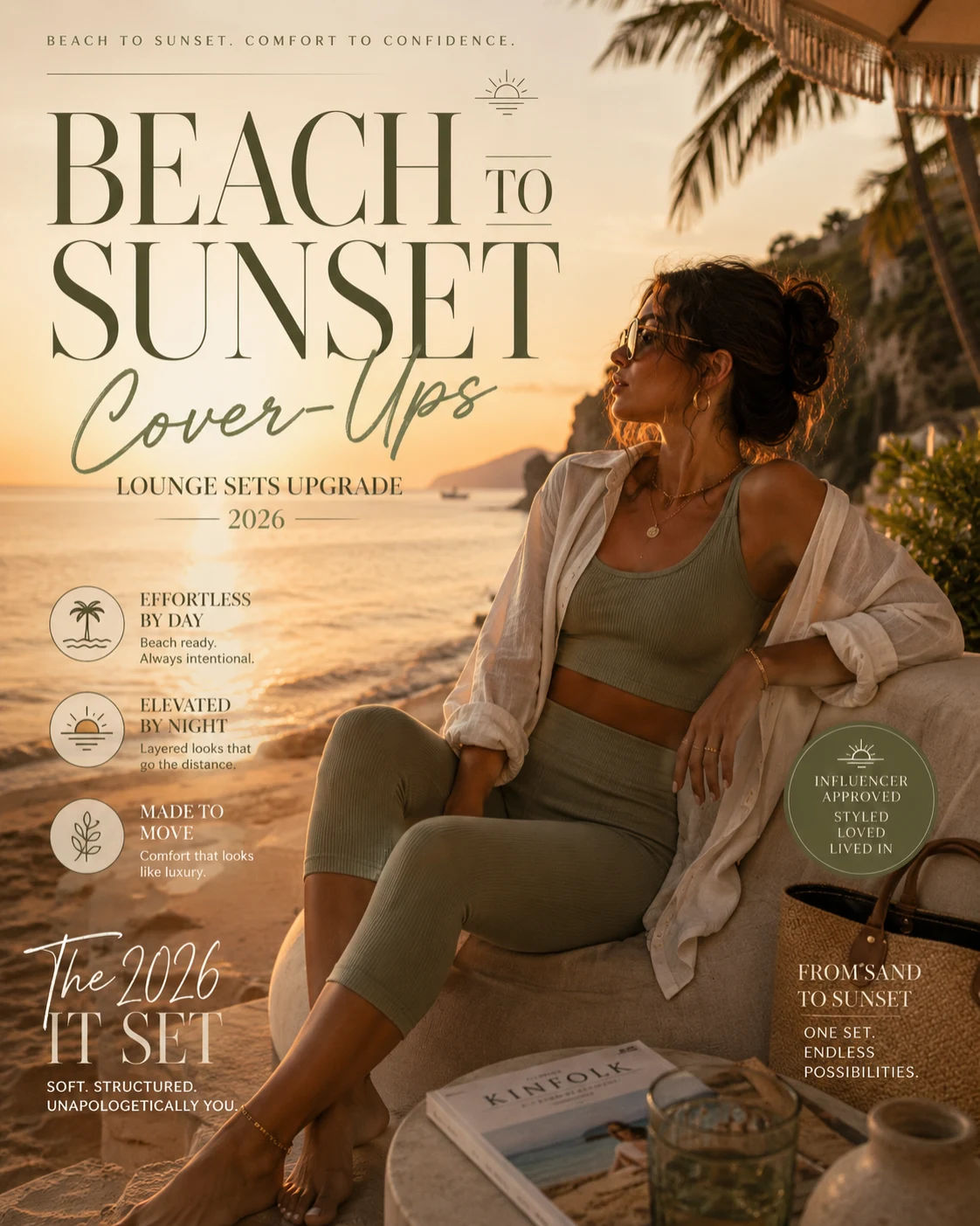
The Asymmetric Monokini: High-Cut Geometry Invades the Coastal Feed
Forget the bikini. High-cut geometry and daring cutouts are redefining luxury beachwear, and every cool girl with a coastal lifestyle feed is taking notes.

The monokini is having its most editorial moment in a decade, and it's nothing like the conservative one-piece your mother owned. Today's version arrives sliced at impossible angles, with strategic cutouts that read less poolside and more haute couture runway. It's asymmetrical. It's architectural. It's basically become the swimwear equivalent of a Rick Owens silhouette, and it's everywhere from Mykonos to Miami.

When Geometry Met Luxury Beach Culture
This isn't a return to the eighties. The modern asymmetric monokini draws its DNA from contemporary design obsessions: the deconstructed tailoring that defined early 2020s fashion, the maximalist approach to cutouts pioneered by brands like LaQuan Smith and Nensi Dojaka, and an almost architectural approach to the female form. What makes it feel urgent now is the collision between high-fashion minimalism and the maximalist visibility demands of social media.
The silhouette typically features one of three signatures: a dramatically high-cut leg paired with a covered shoulder, a single-strap configuration that creates asymmetrical tension, or bold negative space around the torso that requires serious confidence to wear. Colors skew toward sophisticated territory—black, deep navy, rich chocolate brown—though some luxury labels are playing with butter cream and sage for a more editorial flex.

The Designers Making Waves
Matériel and Eres have been quietly leading this charge, crafting monokinis that look expensive enough to double as evening wear. But the real cultural moment belongs to emerging swimwear designers who've absorbed lessons from the broader fashion conversation. Anemos, the Greek brand with a cult following among the coastal elite, released a collection of asymmetric cuts in nylon-spandex blends that move like liquid. The Italian house Peony Swim created a version with strategic mesh panels that reads both sporty and deeply sensual.
The asymmetric monokini isn't trying to be modest or minimal. It's declaring that swimwear is fashion, full stop.
What separates these pieces from basic swimwear is the attention to construction. High-quality examples feature:
Italian or German nylon with superior chlorine resistance
Asymmetrical seaming that requires precision pattern-making
Strategic negative space that demands body confidence
Tonal or contrasting hardware that reads designer
Hand-finished edges instead of standard binding

Why Now? Why This?
The asymmetric monokini arrives at a cultural moment when performance and authenticity are colliding online. Influencers are exhausted by the predictable bikini moment. Luxury consumers want pieces that signal insider knowledge. And visually, the high-cut geometry photographs like a dream—it elongates the leg, creates interesting negative space, and signals editorial sophistication in a way that feels intentional rather than trendy.
There's also something subversive about it. The monokini was historically coded as practical, almost athletic. This new version reclaims it as a statement piece, equally at home at a private villa pool as it is on the pages of a fashion magazine. It says: I'm not here to appeal to everyone. I'm here to appeal to people with taste.

The Coastal Edit Aesthetic
If you're building around an asymmetric monokini, the formula is almost austere in its simplicity: minimal jewelry (think delicate gold chains, not statement pieces), a vintage Hermès scarf loosely tied around the waist, oversized linen shirt unbuttoned, leather sandals. The monokini does the talking. Everything else exists to frame it.
The styling also matters for the photo. Influencers who understand this piece are shooting against neutral backgrounds—whitewashed villas, calm water, bleached wood—where the geometric cut becomes the focal point. It's not about showing off the body; it's about showing off the design.

Investment or Trend?
Here's where it gets real: a quality asymmetric monokini from a reputable label runs $280 to $650. That's not casual spending. But unlike trend-pieces that die with the season, this silhouette has serious longevity. It's editorial enough to feel current for at least two seasons, practical enough to actually wear, and distinctive enough that you won't see it on everyone at the beach.
The asymmetric monokini isn't for everyone, and that's precisely the point. It requires the kind of confidence that comes from understanding fashion deeply enough to know that sometimes the most luxurious statement is refusing to disappear into the crowd. This summer, the beach is where fashion happens.