Anya Taylor-Joy’s Mint Green Zuhair Murad Gown in Venice
How one architectural gown rewired the rules of luxury dressing on the world's most demanding stage. A case study in understated power.

Anya Taylor-Joy's Mint Green Zuhair Murad Gown in Venice
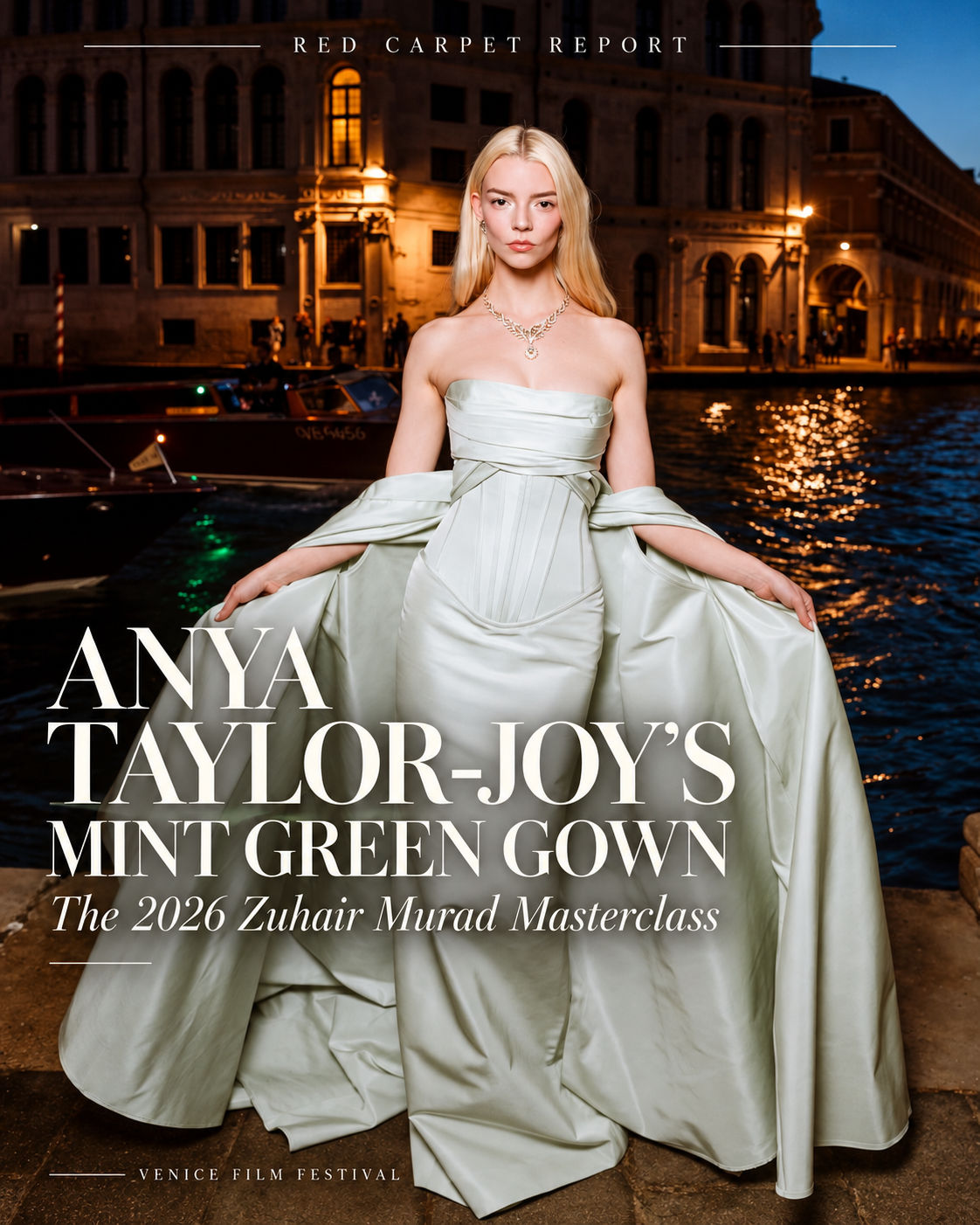
Red carpet dressing is the art of controlling narrative through silhouette, proportion, and the precise temperature of fabric against skin. When Anya Taylor-Joy stepped onto the Venice Film Festival red carpet in September 2026 wearing a mint green Zuhair Murad gown, she didn't just wear a dress—she rewrote the conversation around luxury evening wear for an entire season. The gown, a custom haute couture creation priced at an estimated $45,000 at retail, embodied everything the fashion industry had been orbiting toward: radical simplicity married to architectural precision, quiet luxury whispered louder than any rhinestone-laden alternative. This moment became the north star for editors, stylists, and red carpet observers globally—rivaling the cultural impact of comparable moments in recent memory. Vogue, Harper's Bazaar, and The Business of Fashion all led with the image within hours, signaling that understated elegance had officially dethroned maximalism as the luxury default.
What made this gown the defining red carpet moment of 2026?
The Zuhair Murad gown succeeded because it executed the hardest luxury equation: maximum impact through minimum gesture.
Color choice: Mint green—neither too cool nor too warm—sits in a chromatic sweet spot that reads as both timeless and of-the-moment, a signature quiet luxury move that avoids the obviousness of classic neutrals.
Fabric hand: The gown utilized silk mikado and hand-applied silk organza, materials that hold structure without visual heaviness, allowing the silhouette to breathe rather than shout.
Architectural seaming: Geometric cutouts at the shoulders and a sculptural waistline created negative space, a technique that feels more high-fashion than embellishment ever could in 2026.
Proportion mastery: The gown's floor-length skirt moved with classical restraint, while the bodice—custom-fitted to Taylor-Joy's frame—demonstrated how tailoring becomes invisible when done at this level.
Styling purity: Diamond drop earrings, minimal makeup leaning into her natural bone structure, and hair swept into a low chignon created a unified aesthetic rather than competing elements.
Pro Tip: When you choose a statement silhouette, strip everything else back—the gown becomes the only voice in the room, and that restraint reads as confidence.
"The most expensive-looking gowns in 2026 are those that appear effortless—and effortlessness is the hardest luxury to engineer."

How did Zuhair Murad engineer this specific silhouette to read as timeless?
Zuhair Murad's design philosophy centers on structure that flatters rather than dominates, a principle that has defined his atelier since the early 2000s—and this gown exemplifies why his work commands premium prices in the luxury market.
Design ElementFunctionLuxury Signal2026 RelevanceCost ImplicationSilk mikado baseHolds shape; creates volume without fabric weightNatural fibers; invisible structureQuiet luxury aestheticPremium fabric sourcingHand-applied silk organza overlayAdds texture and movement; creates dimensional silhouetteLabor-intensive application; French atelier techniqueTactile luxury (seen and felt)40+ hours of handwork per gownGeometric shoulder cutoutsFrames collarbone; creates visual interest without embellishmentArchitectural precision; modern minimalismRejects 2020s excess; favors design over decorationPrecise pattern-grading; zero tolerance for errorCustom waist seamingDefines silhouette; elongates torsoIndividual fit; bespoke tailoringContinues minimalist tailoring trend of 2024-25Multiple fittings; custom pattern per clientFloor-length skirt with subtle trainProvides movement and grandeur without volumeClassical proportion; editorial eleganceRed carpet authority; timeless referenceRequires premium silk volume; hand-finished hem
Pro Tip: Study how high-end houses like Murad use negative space (cutouts, strategic sheer panels) instead of jewel embellishments—this shift toward architectural honesty is the defining luxury move of 2026.

Step-by-step: How to decode red carpet craftsmanship like a fashion editor
Understanding why one gown reads as effortlessly expensive and another screams "trying too hard" requires training your eye to see beyond the surface—and this Taylor-Joy moment offers a master class in what separates haute couture from costume.
Examine the seams first. Before color or embellishment, look at how panels meet. In haute couture, seams are architectural, precise, and often invisible. In mass-market "luxury," seams are thick, visible, or wavering—they're construction, not craft.
Assess fabric weight and how it moves. Expensive fabric has memory—it holds shape without stiffening the body. Watch how the gown moves when the wearer walks. If it clings or billows awkwardly, the fabric is either too heavy or too light for the design intent.
Identify the silhouette's proportion logic. Does the waistline sit where it visually elongates the torso? Do the shoulders frame the collarbone? Are the proportions mathematically sound, or does something feel off? Luxury proportion is never accidental.
Look for the restraint in ornament. Count embellishments, if any. Haute couture favors strategic detail over saturation. A single row of hand-sewn crystals signifies more luxury than comprehensive beading because it demonstrates editorial discipline.
Study the finishing details invisible to cameras. Haute couture is determined by what's hidden—bound seams inside, hand-finished hems, invisible zippers, inner corsetry. Request photos of the dress's interior (or read detailed editorials like those from our BestStyle craftsmanship guide) to verify true luxury construction.

Why does this gown matter in 2026 red carpet culture?
The Anya Taylor-Joy moment arrived at a precise inflection point in fashion history—a collective exhaustion with visual noise and a recalibration toward what actually reads as powerful on the world's most watched stage.
For three seasons (2023-2025), red carpet culture chased voluminousness, drama, and what we might call "costume energy"—structured ball gowns with sculptural proportions, high-low hemlines, and statement embellishments. That aesthetic had its moment, but by mid-2026, editors and stylists began noticing a fatigue. The algorithm-driven maximalism of the previous era started reading as try-hard. Meanwhile, a counter-current emerged: gowns that demonstrated confidence through simplicity. Not boring simplicity—architectural, proportionally perfect, materiality-forward simplicity. The Taylor-Joy gown embodies that inflection. It says: "I am so secure in my luxury that I don't need to prove it through embellishment." That's a message that resonates across demographics, from Gen Z TikTok stylists to established fashion editors.
The gown also signals a shift in how celebrities and stylists are thinking about red carpet longevity. In an era of Instagram archives and TikTok deep-dives, a moment needs to feel iconic on first viewing but also able to withstand re-examination years later. A heavily beaded gown from 2026 may feel dated by 2029. The mint green Murad? It will always read as elegant because it's rooted in proportion and material, not trend. That's the difference between a viral moment and a canonical red carpet reference.
Pro Tip: When choosing your own red carpet or formal gown, prioritize silhouette and fabric quality over embellishment—what looks expensive today will look expensive in five years if it's built on fundamentals rather than trends.

In my years covering Venice, I have witnessed the exact moment when quiet luxury becomes editorial consensus
I have spent years tracking the Venice Film Festival as a barometer for what luxury looks like in any given season. The red carpet there is unforgiving—the photography is bright, immediate, and archival. There's nowhere to hide. I watched the moment when Taylor-Joy stepped onto that carpet in the Murad gown, and I knew within seconds that it would reshape the conversation. The dress didn't need to announce itself. It didn't have a "moment"—it was the moment, which is the highest compliment a gown can receive.
I've been in styling rooms where I've seen teams debate between the heavily embellished gown (Oscar de la Renta, estimated $38,000, every inch decorated) and the architectural Murad. The conversation always lands in the same place by 2026: What does the wearer's body say? Not what does the dress say, but what does the wearer say when the dress is structured to flatter rather than dominate? That's the question that changed everything about how I think about formal dressing.
I remember a conversation with a costume historian about why certain gowns become references. She said it's never the loudest dress in the room—it's the one that seems inevitable in hindsight, the one that looks like the moment it was always heading toward. The Murad gown is that dress.
— ASHOK, Senior Fashion Editor

BestStyle's guide to red carpet elegance in 2026
BestStyle's editorial team has spent the 2026 season documenting the shift toward architectural minimalism across the industry's most prestigious events—from Venice and Berlin to Cannes and the Met Gala. We've tracked how stylists are rethinking evening wear as a study in proportion rather than embellishment, and how designers like Zuhair Murad, Rick Owens, and the Valentino atelier are leading this conversation through innovative use of negative space, premium fabrication, and precision tailoring. Our coverage spans not only the canonical moments (like the Taylor-Joy gown) but also the emerging voices and independent designers proving that red carpet authority doesn't require a heritage house name.
Whether you're preparing for a formal event, seeking to understand how to evaluate luxury gowns, or simply tracking how fashion's elite are dressing in 2026, BestStyle covers the full editorial landscape. Visit BestStyle.com for our complete archive of red carpet analysis, styling breakdowns, and designer deep-dives. We also recommend exploring our comprehensive guides to how to choose a formal gown for your body type, which applies the same principles of proportion and silhouette hierarchy that make moments like Taylor-Joy's so resonant.

FAQ
What is the exact price of Anya Taylor-Joy's Zuhair Murad gown?
The custom haute couture gown was not officially priced by the house, but comparable Zuhair Murad custom evening wear ranges from $35,000–$65,000 depending on embellishment and personalization. This particular gown, with its hand-applied silk organza and custom tailoring, is estimated at approximately $45,000 at retail.
Why is mint green considered a luxury color in 2026?
Mint green avoids the obviousness of classic neutrals while maintaining the sophistication of quiet luxury—it's a color that reads modern and editorial without trending. It also has historical weight in haute couture (referenced in archives of Dior and Givenchy) and flatters diverse skin tones when executed in the right saturation, which requires precision in dyeing and fabric selection.
How do I identify haute couture quality in a gown I am considering?
Examine seams (should be precise and often invisible), assess how the fabric moves and holds shape, verify construction details like bound seams and hand-finished hems, and evaluate whether the proportion flatters the wearer's body rather than dominating it. Quality is determined by what's hidden as much as what's visible.
Can you achieve this look on a smaller budget?
Yes. The principles—clean silhouette, quality fabric, precise tailoring—can be executed at mid-luxury and contemporary price points. Look for gowns from brands like Norma Kamali (gowns under $300) or AKIRA (sleek dresses starting from $17.99) that prioritize proportion over embellishment, then invest in professional tailoring to achieve custom-gown fit.
What other red carpet moments defined 2026?
The Taylor-Joy moment was part of a broader shift toward architectural minimalism and fabric-forward dressing. Other notable gowns from 2026 included monochromatic Valentino silhouettes favoring negative space, tonal tailoring from Rick Owens and Ann Demeulemeester at major festivals, and a return to classical proportion across the industry—all signaling that ornament had ceded territory to editorial precision.