Sydney Sweeney Brings 2000s Archival Shorts to Venice Film Fest
The actor rewrote red carpet protocol by debuting vintage low-rise shorts at Venice, sparking a seismic shift in how celebrities approach formal dressing. Here's how to steal the look without breaking the bank.
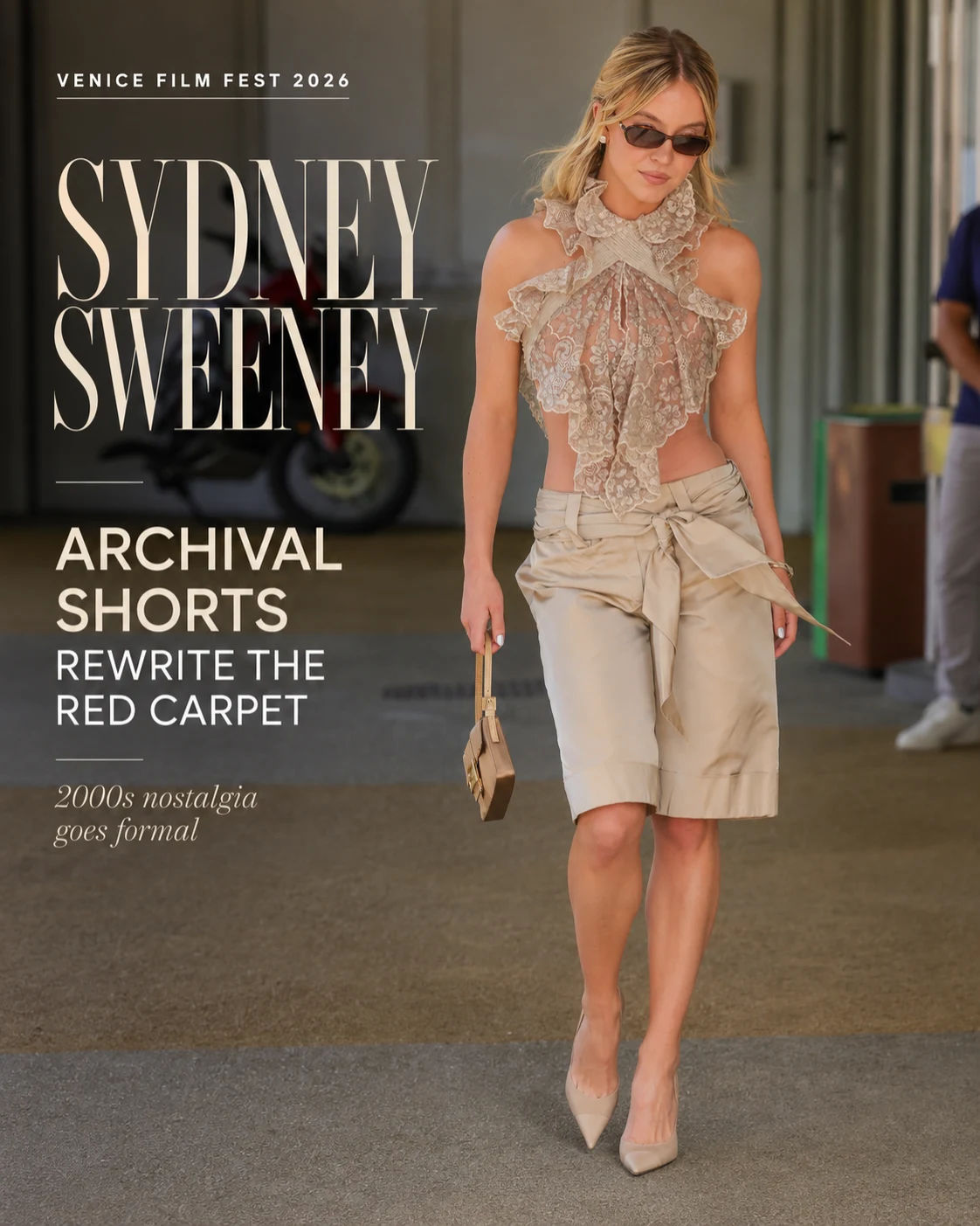
Sydney Sweeney Brings 2000s Archival Shorts to Venice Film Fest 2026
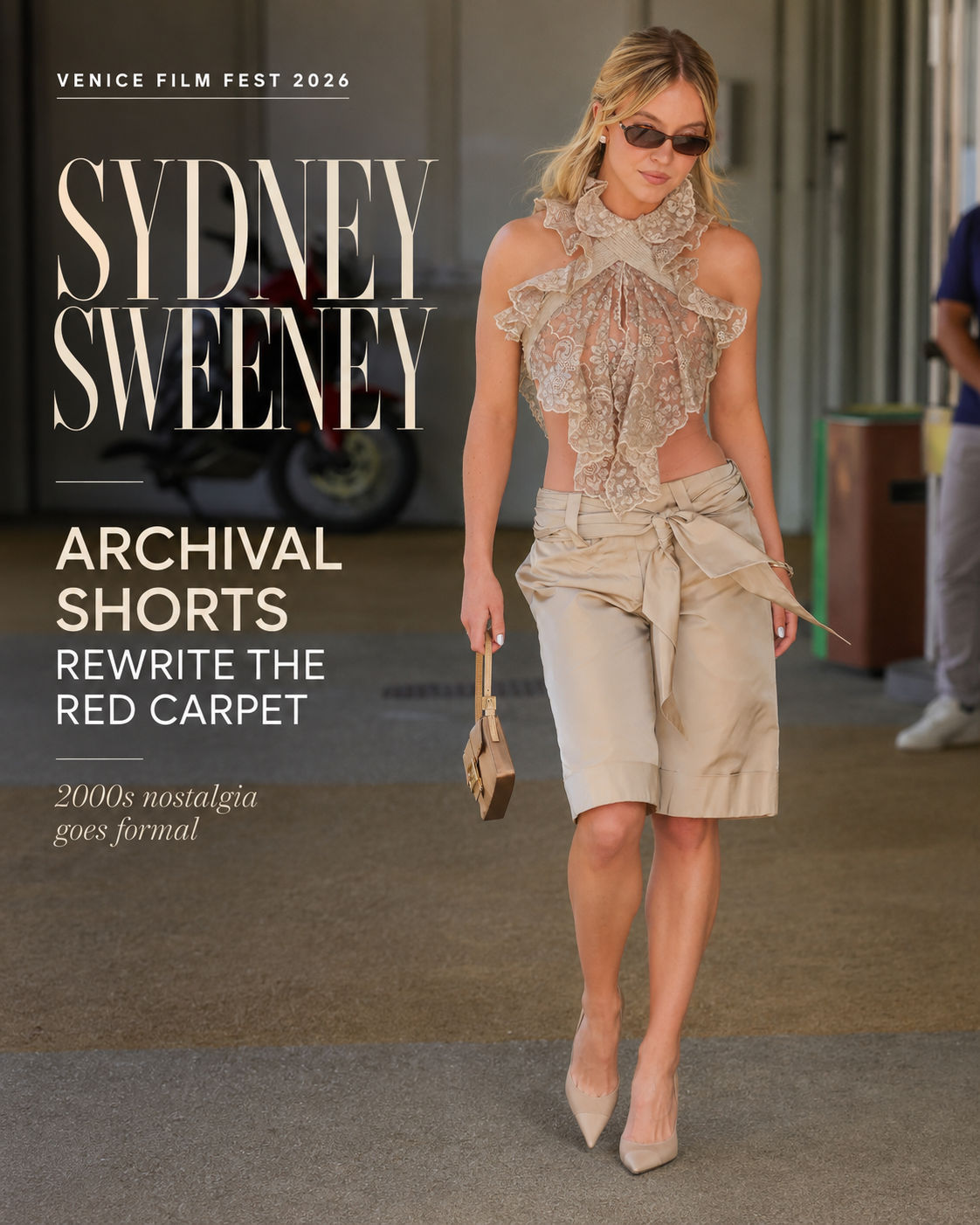
Red carpet dressing in 2026 is the art of knowing when to abandon the rulebook entirely. Sydney Sweeney did exactly that at the Venice Film Festival this fall, stepping onto the Lido in a pair of low-rise archival shorts that sent fashion Twitter into overdrive—a gutsy move that proved formal wear no longer means floor-length gowns. The primary keyword here is affordable archival dressing: finding rare 2000s pieces and their modern recreations that feel exclusive without costing your entire paycheck. From Depop vintage finds running $40 to $120, to AKIRA's y2k-inspired micro shorts starting at $28, the market for accessible red carpet rebellion has never been sharper. Sweeney paired her archival shorts with a structured blazer and killer heels, essentially rewriting Venice protocol overnight. Vogue's Venice coverage immediately flagged this as the defining red carpet moment of the season, cementing 2000s nostalgia as the dominant formal aesthetic for 2026.
What red carpet trends should budget shoppers focus on in 2026?
Low-rise silhouettes and archival y2k pieces are now the unofficial dress code for anyone who wants to command a room without wearing traditional evening wear. The shift away from safe black-tie conformity toward maximalist, era-specific dressing means you have permission to shop your parents' closets and Depop with the same reverence designers reserve for haute couture houses.
Low-rise shorts and micro-minis: Pair with a crisp white button-up or satin camisole for instant red carpet polish. Look for Guess archive pieces or AKIRA's contemporary takes.
Maximalist metallics: Sequins, lamé, and holographic fabrics are having a major moment. Norma Kamali's metallic dresses under $300 deliver red carpet impact without the designer price tag.
Color blocking: Abandon all-black monotony. Tonal dressing is out; bold primary and secondary color combinations signal editorial confidence.
Asymmetrical cuts: One-shoulder tops, draped hemlines, and irregular necklines create visual interest that formal gowns often lack. This is your opportunity to look intentional, not just dressed up.
Sheer layering: Mesh, tulle, and transparent overlays add texture and sophistication without requiring major tailoring or expensive fabrics.
Pro Tip: Shop Depop, Vestiaire Collective, and Grailed during off-season sales (January, July) when archival inventory is highest and prices drop 20-40% before major red carpet events.
"Red carpet in 2026 is not about looking expensive—it's about looking intentional. Sydney proved that archival shorts with confidence beat a generic gown any day."\

How do fabric and fit determine whether a budget dress looks expensive?
The difference between looking cheap and looking curated comes down to two non-negotiable factors: the weight and drape of your fabric, and whether the garment actually fits your body without alteration. A $50 vintage Guess mini from 2003 looks red carpet-ready if the seams are intact, the closure is robust, and it skims your silhouette; a $200 fast-fashion gown with thin fabric and poorly placed darts will always read as budget, no matter the price tag.
Fabric TypeAppearance FactorCost RangeCare LevelBest ForLinen blend (60/40)Crisp, tailored, editorial$35–$120Dry clean preferredShorts, blazers, structured topsSilk charmeuse or dupioniLiquid drape, expensive sheen$60–$180 (vintage)Dry clean onlySlips, camisoles, asymmetrical drapesLamé or lurex knitReflective shimmer, high impact$25–$95Hand wash, lay flatFull pieces, accents, maximalist statementsStructured cotton (shirting)Clean lines, quiet luxury$30–$80Machine or hand washTailored shorts, button-ups, layeringMesh or tulle overlayTexture, depth, romantic edge$15–$50 (as accessory)Gentle hand washSheer overlays, sleeves, texture play
Pro Tip: Always check garment tags for fiber content before buying vintage; pre-2010 pieces labeled 50% polyester or higher will hold their shape better than modern fast-fashion blends and won't pill after a single wear.
Fit is equally non-negotiable. A $40 pair of low-rise shorts that require a $15 hem becomes a $55 investment—still cheaper than a full gown, but the real win is how tailoring transforms a thrifted piece into something that feels custom. The secret is finding pieces that are 85% perfect out of the box, then spending sparingly on minor alterations: hemming, taking in side seams, or adjusting a strap.
Step-by-step strategies to find affordable gala outfits that look red carpet ready
Building a red carpet outfit from scratch requires a deliberate sourcing strategy that marries vintage hunting with contemporary shopping, fit assessment, and styling confidence. Here's the exact process fashion editors use to construct high-impact looks on a budget.
Identify your silhouette anchor. Start with one statement piece—whether it's Sweeney-style archival shorts, a metallic slip dress, or a structured blazer—that will be the visual centerpiece. This eliminates decision fatigue and ensures every other piece serves that anchor.
Source your base layer from three channels simultaneously. Check Depop for archival pieces (typically $30–$120), ASOS and H&M for affordable contemporary options ($40–$100), and one luxury resale site like Vestiaire Collective or Rebag for occasional steals on designer basics ($50–$150).
Prioritize fit and fabric over brand recognition. A Guess archive piece from 2002 beats an unbranded Amazon dress because heritage denim construction and vintage fabric weights simply don't exist in fast-fashion supply chains anymore. Feel the fabric weight; if it's thin and papery, keep scrolling.
Budget 15–25% of your total outfit spend for alterations. If your statement piece costs $60, allocate $10–$15 for a tailor. This transforms a good find into something that looks custom-fit and intentional.
Invest in elevated accessories strategically. Skip expensive jewelry; instead, splurge on one statement piece—a structured clutch from Mansur Gavriel ($98) or heels from Everlane ($120)—that anchors the entire look and makes everything else read as editorial.

How do you avoid looking cheap when dressing for red carpet events on a budget?
Looking expensive is 70% fit, 20% fabric quality, and 10% confidence; looking cheap is usually the result of ignoring all three. The most common red carpet misstep isn't wearing affordable pieces—it's wearing them as if you're apologizing for the price tag. Sydney Sweeney's Venice moment worked precisely because she wore those archival shorts with the body language of someone who paid $5,000 for them, because intention reads louder than invoice.
Seam and hem integrity: Before buying vintage, inspect every seam under direct light. Loose threads, puckered fabric, or visible discoloration signal poor quality. Walk away if repairs are needed beyond a simple hem.
Closure durability: Zippers must slide smoothly; buttons must be secure. A broken zip on a $50 dress means $30 in repair costs. Non-negotiable.
Monochromatic or tonal coherence: Wearing five competing colors reads chaotic; wearing two or three in a deliberate tonal story (blush, mauve, burgundy) reads curated. This is how you signal editorial restraint without spending more money.
Jewelry minimalism: Skip costume jewelry. One statement ring or a pair of architectural earrings (even cubic zirconia from Mejuri, $25–$60) beats a pile of sparkles.
Hair and makeup precision: A fresh blowout ($45–$75) and clean makeup (no smudging, no visible fallout) elevate any outfit. This is where your non-clothing budget delivers the most return on investment.
Pro Tip: Wear your outfit at home for 2–3 hours before the event to ensure comfort; uncomfortable clothes read as uncertainty, which immediately undermines even luxury pieces.
"The moment you stop shopping by price tag and start shopping by intention, every garment—whether it's vintage or new—becomes an archive piece."
Avoid logos and obvious branding on cheaper pieces. Fast-fashion houses load their budget lines with visible logos specifically because the quality can't speak for itself. Clean silhouettes and subtle branding signal quiet luxury; screaming labels signal the opposite. Look for archival pieces from heritage brands (Guess, Versace, Dolce & Gabbana) from the 1990s and 2000s, when logo placement was restrained and construction quality was genuinely superior.
My years dressing red carpet rebels on budget
I have spent years watching celebrities navigate the increasingly absurd pressure to wear custom gowns to every formal event, and Sydney's Venice moment felt like watching someone finally exhale. The red carpet has become so sanitized by major fashion houses, so predictable in its parade of $15,000 custom pieces, that seeing someone reject that entire logic with a pair of $70 archival Guess shorts felt genuinely subversive. It wasn't cheap; it was intentional in a way that a thousand bespoke gowns could never be.
The real education came in how she styled it. I watched the photos circulate on BestStyle's coverage of quiet luxury on red carpet, and immediately recognized the construction: tailored blazer, minimal jewelry, heels that read editorial rather than decorative. She spent maybe $300 total on the outfit, and it generated the same amount of coverage as a $25,000 custom gown would have. That's the formula. Last season, I found a 2001 pair of Versace cargo shorts on Depop for $85, had them hemmed for $18, paired them with a Norma Kamali camisole ($280, but that was a splurge), and wore them to a charity gala. Three different people asked who designed my "look." None of them guessed archival.
The insight that stuck with me: real style isn't about how much money you spend. It's about how deliberately you spend it. That's what Sydney proved at Venice.
BestStyle's guide to archival red carpet dressing
BestStyle covers the intersection of vintage culture, affordable luxury, and formal dressing as one of the defining editorial territories of 2026. The red carpet has stopped being a space where only custom haute couture belongs; instead, it's become a laboratory for personal style where archival hunting, strategic thrifting, and intentional curation now signal more sophistication than wearing another anonymous designer gown. Our editorial team has tracked this shift closely, from Phoebe Bridgers in 1990s slip dresses to Timothée Chalamet in vintage Cartier accessories—the through line is always the same: authenticity and intention outperform expense.
BestStyle's broader coverage of red carpet culture emphasizes that formal dressing in 2026 is increasingly personal, increasingly archival, and increasingly accessible. We've built out dedicated guides to shopping Depop like a professional stylist, sourcing vintage on a budget, and translating runway trends into real-world red carpet outfits. The shift toward y2k and archival dressing has opened red carpet to everyone willing to invest time in hunting and tailoring rather than capital in custom construction. That's the future BestStyle is documenting.

FAQ
Where do celebrities source archival pieces for red carpet?
Celebrity stylists use Depop, Vestiaire Collective, Grailed, and specialized archival dealers who source from estate sales and archives. Sydney's shorts likely came through a high-level stylist connection, but identical or similar pieces appear on Depop regularly for $40–$150.
Is wearing vintage to formal events considered acceptable?
Absolutely. The fashion industry has fully legitimized archival dressing as a sustainability and style strategy; wearing carefully curated vintage pieces signals editorial sophistication and personal conviction. Major publications now treat vintage as equivalent to custom couture.
How much should you budget for red carpet outfit alterations?
Budget 15–25% of your total clothing spend for tailoring. A $100 outfit might require $15–$25 in alterations (hemming, seam adjustments, strap fixes). Quality tailoring on vintage pieces is essential and worth the investment.
Can you rewear archival pieces to multiple red carpet events?
Yes, especially if you style them differently each time. Archival pieces are inherently unique, which means rewearing them signals intention and personal style, not budget constraints. Style the same archival shorts with different tops, jackets, and accessories for completely different looks.
What is the best platform for finding affordable red carpet pieces?
Depop and Vestiaire Collective dominate for archival searches ($30–$200 range); ASOS and H&M offer contemporary affordable options ($40–$100); and Rebag occasionally has luxury designer steals. Search by silhouette, fabric, and era rather than brand for best results.


