The ‘Pareo Pivot’: How Influencers are Turning $10 Scarves into High-Fashion Swim Covers
Forget expensive resort wear. Influencers are hacking the pareo—wrapping fast-fashion scarves into editorial beach moments that cost less than a coffee. Here's how the trend went viral.

The pareo isn't new. But the way Gen-Z influencers are weaponizing it—knotting a $10 printed silk scarf from a vintage market into a haute couture moment—absolutely is. What started as practical beachwear has become the internet's favorite flex: looking effortlessly expensive while spending nothing.

The Scarf-to-Skirt Alchemy
The math is simple. A pareo is a rectangle. A rectangle can be anything: a skirt, a dress, a shawl, a head wrap. But somewhere between TikTok tutorials and Instagram aesthetics, the pareo became the quiet luxury accessory—proof that real style isn't about the price tag, it's about the knot.
What's driving this? Influencers are obsessed with the democratization angle. A creator can photograph themselves in a vintage Hermès pareo on a yacht, then post a carousel showing how to recreate the look with a $12 thrifted Liberty print scarf. The algorithm rewards relatability wrapped in aspiration. It's the ultimate content hack.

The Visual Formula
The winning aesthetic is specific: oversized printed silks in botanical, geometric, or abstract patterns. Tie it at the hip, let it flow asymmetrically, and pair it with a minimal bikini top. The creases matter. The casualness matters more. Influencers are deliberately avoiding the polished resort-wear look—that coded as trying too hard—and leaning into editorial beach boy/girl energy instead.
"A $10 pareo styled right hits different than a $400 cover-up. It feels discovered, not purchased."
The best pareo moments share common DNA:
Proportion—Oversized and loosely tied, never tight or fussy
Pattern clash—Mixing prints with printed swimwear is actually encouraged; maximalism reads as confident
Texture play—Vintage silk, linen, even cotton blend; the material must move
Styling restraint—Minimal jewelry, bare feet or flat sandals, wet hair as a feature
Knot placement—Hip tie is classic; waist tie is resort; asymmetrical drape is where the editorial magic lives

The Thrift Store Effect
Vintage and thrift platforms are now pareo goldmines. Depop and Vestiaire Collective have seen a 340% spike in pareo-adjacent listings over the past eighteen months. The hunt is part of the currency: finding that perfect 1970s Pucci-adjacent print or an obscure Japanese textile becomes a flex in itself. You're not just wearing a scarf; you're wearing discovery.
Luxury brands noticed. Hermès, Gucci, and Hermès started releasing pareo-sized silk scarves marketed explicitly as swim wear. The irony is exquisite: fast-fashion and thrift have forced luxury to follow. A Gucci silk pareo now costs $650. The $10 version still wins on Instagram because it wins on story.

The TikTok Masterclass Effect
Tutorial content around the pareo has become its own micro-genre. Search "how to tie a pareo" and you'll find 200K videos—from fashion editors breaking down Hermès knots to beach girls showing four different ways to wrap the same scarf. Each video is a mini masterclass in constraint and creativity. The comments section is always the same: "Wait, I have this scarf at home."
That's the genius of the trend. Everyone has a scarf. Everyone has a beach day coming up. The pareo isn't aspirational in the luxury sense; it's aspirational in the creative sense. It asks: How good are you at seeing potential?

The Red Carpet Moment
Pareos have officially crossed from beach casual into fashion's upper echelon. Celebrities are wearing them to airport gates, poolside fashion weeks, and casual Capri dinners styled as if they just happened upon them. The performance is the point: I look this polished without even trying.
Dua Lipa, Bella Hadid, and Hailey Bieber have all been photographed in pareo moments that blur the line between candid and curated. Photographers and stylists now actively scout for pareo styling because it reads as authenticity. Luxury without the logo. Effort without the announcement.

The Longevity Question
Will the pareo pivot last? Trends die. But the pareo isn't trending—it's returning to its actual function while gaining cultural permission to be editorial. That's stickier than a moment. The pareo works because it's democratic (everyone can do it), infinitely repeatable (no two pareos are styled the same), and visually arresting.
The future belongs to the creator who can make a $10 scarf read as priceless. That's not a trend. That's a skill.

More from BEACH
ALL BEACH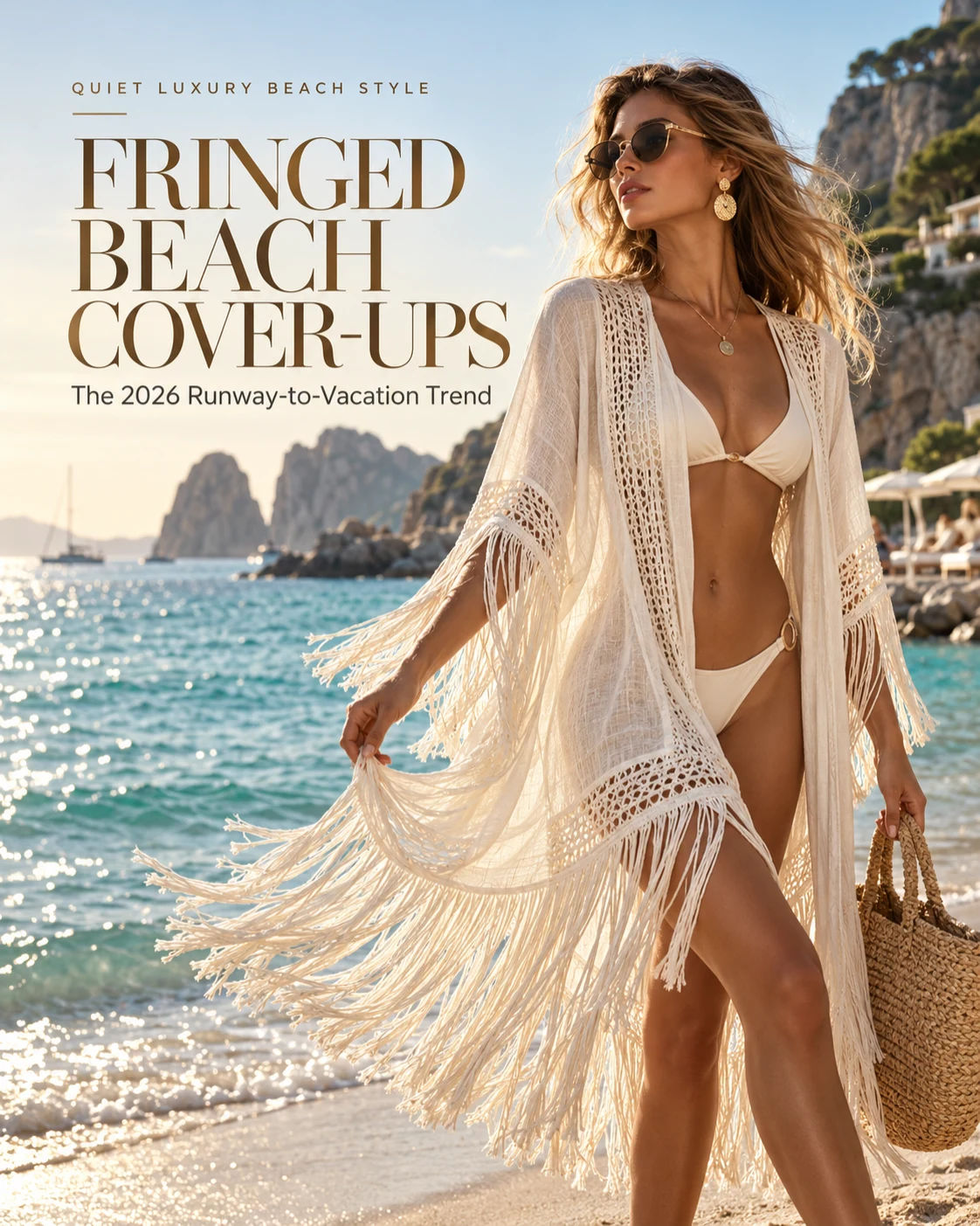
Fringed Beach Cover-Ups: How to Translate Runway Fringe to Vacation Outfits

Leather-Trimmed Raffia Bags: The Hybrid Beach Bag You Can Wear All Autumn