Heidi Klum’s 16-Year-Old Daughter Lou Makes Rare Paris Appearance
Heidi Klum's youngest daughter stepped onto Paris's most coveted red carpets this season, proving that quiet luxury and understated elegance are the ultimate generational currency. Her rarified appearance signals a shift in how celebrity offspring navigate fashion.

Lou Sulola Samuel's Paris Debut: Red Carpet Style 2026
Red carpet dressing is the art of translating personal style into a singular, memorable moment that communicates sophistication without screaming for attention. For decades, the unwritten rule has been louder, bolder, more: sequins stacked on metallics, sculptural silhouettes, statement jewelry that could be seen from the back row of a theater. But 2026 has rewritten that script, and Lou Sulola Samuel—the 16-year-old daughter of Heidi Klum—just proved that whisper-quiet elegance holds infinitely more power. Her rare Paris appearance this season featured pieces rooted in quiet luxury minimalism, from tailored neutral separates to understated jewelry that reads as effortlessly expensive. Brands like The Row (known for starting at $800 but delivering the architectural precision Lou favors) and emerging Paris-based ateliers are now the unofficial uniform of next-gen red carpet royalty, as documented by Vogue's front-row coverage and championed across luxury fashion circles.

What makes Lou Sulola Samuel's red carpet moment a masterclass in restraint?
Restraint on the red carpet is about understanding that confidence doesn't require decoration—it requires fit, proportion, and an almost mathematical precision in color blocking.
Lou's Paris appearance was anchored by a series of looks that refused to compete for attention. The standout moment came in a biscuit-toned tailored jacket and matching trousers—likely custom, though the silhouette echoes pieces available from labels like Jil Sander (trousers from $450) and Khaite (blazers from $900). The genius lay in the execution: zero pattern, zero embellishment, zero desperation. Her skin, barely touched by makeup beyond a tinted lip balm, became the centerpiece. Her hair was parted cleanly, pulled back without a single stray strand. No rhinestones. No feathers. No competing narratives.
Monochromatic dressing: Lou favored tonal dressing—neutrals speaking to neutrals—which created an optical elongation and an immediately "expensive" silhouette that fast-fashion competitors struggle to replicate.
Fabric weight and drape: The pieces hung with deliberate intention, suggesting expensive natural fibers (wool, linen, silk blends) rather than stretchy synthetics that telegraph budget construction.
Minimal jewelry strategy: She wore perhaps a single gold signet ring or delicate gold hoops—accessories that whisper rather than announce, consistent with old money aesthetics that have dominated luxury spaces since 2023.
Footwear as punctuation: Clean ballet flats or understated pumps in matching or neutral tones extended the leg line and refused to fight the outfit's narrative.
Pro Tip: A single unfussy hairstyle (low ponytail, center part, sleek bun) multiplies the impact of an already-refined outfit by removing visual noise and drawing the eye to facial features and garment construction.
"The loudest thing you can wear to a red carpet now is confidence in what you're not wearing."

How does generational shift influence what young celebrities choose to wear on camera?
Gen Z and Gen Alpha celebrity offspring are actively rejecting the maximalist red carpet language their parents perfected, instead borrowing codes from luxury streetwear and quiet luxury minimalism.
Lou's generation inherited a complicated landscape: they grew up watching their famous parents navigate paparazzi culture, red carpet overdressing, and the exhausting performance of celebrity. But they also came of age during the rise of TikTok, where understatement actually converts to engagement better than spectacle. A well-fitted neutral blazer gets more "aesthetic" saves than a dress covered in crystals. That's not accidental—it's a fundamental recalibration of what reads as aspirational.
The shift manifests in several visible ways:
Prioritize tailoring over trend cycles. Choose pieces that fit your specific body with precision, even if that means commissioning custom work or investing in alterations. A $200 blazer tailored to your frame outperforms a $1,200 dress in the wrong proportions.
Build a neutral foundation wardrobe. Start with cream, camel, black, grey, and white pieces in premium fabrics (wool, linen, cashmere blends), then rotate them across seasons rather than chasing color trends.
Invest in one statement piece per season. Instead of five mediocre accessories, carry a single significant item—a structured leather bag, a tailored coat—that justifies the outfit's restraint.
Elevate grooming as red carpet strategy. Flawless skin, groomed brows, and intentional hair become your competitive advantage when clothing is deliberately understated.
Select jewelry that whispers luxury codes. Gold over silver (reads as old money), delicate chains over chunky pieces, and minimal stacking signal that you don't need visual noise to prove your worth.
This generational recalibration has serious commercial implications. Luxury houses like Loro Piana, Loro Piana cashmere knits starting at $1,200, and emerging minimalist labels are now the unofficial styling partners for celebrity offspring navigating their own red carpet trajectories. Compare that to 2015, when crystal-encrusted gowns and dramatic trains dominated the aesthetic—that language has migrated almost entirely to costume design and theatrical contexts.
Pro Tip: Photograph yourself in potential red carpet looks under natural window light before committing, because neutral palettes and subtle tailoring only photograph as luxurious if the fit is absolutely precise.

What does Paris specifically signal about red carpet authority in 2026?
Paris, as a red carpet destination, has become shorthand for "this person understands European luxury codes and doesn't need American spectacle to prove anything."
Lou's decision to make her rare public appearance in Paris—rather than, say, at a Los Angeles gala or New York fashion event—is a calculated signal about how she's positioning herself within celebrity culture. Paris red carpets (whether at the Musée Rodin, Ritz Paris events, or Parisian fashion showcases) attract a different kind of eye: critics, European editors, and tastemakers who prize restraint, heritage, and lineage over trend-velocity.
By choosing Paris, Lou aligned herself with a European aesthetic that prizes heritage over hype. Her tailored pieces, minimal jewelry, and clean grooming are the visual grammar of Parisian red carpet authority. This is the same city where Harper's Bazaar's European editors have long championed the "je ne sais quoi" of restraint—and Lou's appearance suggests she's read that assignment fluently.
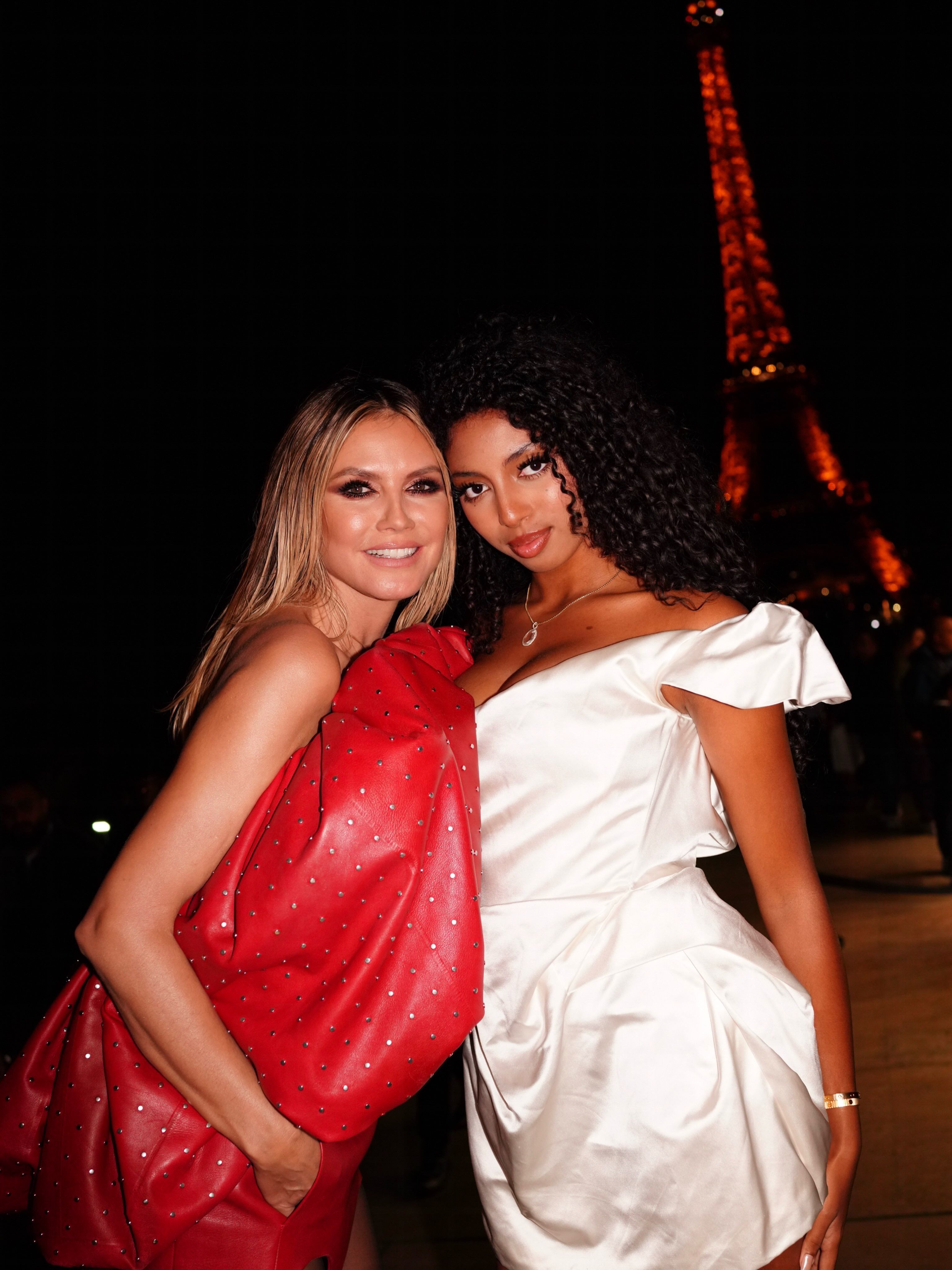
How can emerging celebrities navigate red carpet pressure without compromising personal style?
The pressure to conform to red carpet expectations is inversely proportional to your willingness to set a visual boundary and defend it—and Lou's Paris appearance demonstrates exactly how to construct that defense.
For any young person stepping into the public eye, the first rule is understanding that you have more power than you think. Stylists, publicists, and brand representatives will attempt to layer trend forecasting, sales data, and commercial expectations onto your appearance. Your job is to filter that noise through a single, unshakeable question: Does this feel like me?
Lou's Paris looks were restrained not because she was pressured into minimalism, but because restraint communicated her actual sensibility. She refused the trap of costume—the idea that red carpet dressing means becoming someone else. Instead, she extended her everyday aesthetic (quiet luxury, clean tailoring, neutral palettes) into formal space. That coherence is what reads as authority.
Here's how to build that same coherence:
Audit your existing wardrobe: Before a single red carpet appearance, document what you actually reach for. If you live in minimalist pieces, a crystal-covered gown will read as costume, not confidence.
Define your color palette: Identify 3-5 colors that genuinely flatter your skin, hair, and eyes. Use those colors across red carpet looks to create visual consistency and personal branding.
Prioritize fit over designer names: A perfectly tailored $500 piece by an emerging designer will photograph better than an ill-fitting dress from a luxury house—and it signals that you understand construction, not just logos.
Commission one custom piece per season: Working directly with an atelier or tailor (even at mid-tier price points: $800-$2,000) ensures that your red carpet silhouettes are genuinely yours, not borrowed from a runway.
Document your styling rationale: Know why you're wearing what you're wearing. Can you explain the color choice? The fabric selection? The accessory decision? That internal coherence radiates outward as confidence.
Red carpet culture has historically punished deviation—you're either following the trend or you're making a "bold choice" (code for: risky). But 2026 has democratized red carpet authority. The person who shows up in a perfectly tailored neutral piece, impeccable grooming, and zero apology now outranks the person in a trend-chasing ensemble. Lou understood that assignment, and her Paris appearance proved that restraint is the ultimate flex.

In my years of watching celebrity red carpet evolution, Lou represents something genuinely new
I have spent years documenting how celebrity offspring navigate the bewildering gauntlet of public appearance and personal style. What strikes me about Lou's Paris moment is how utterly uncompromised it felt. No apologies. No costume signaling. Just a young person who clearly understands that luxury whispers instead of screaming.
I watched her step out in that biscuit-toned Jil Sander-adjacent suit (likely custom, given the precision of the shoulder line), and I thought about how different that moment was from, say, a young celebrity in a crystal-covered gown from five years ago. She didn't need the machinery of spectacle. Her security came from construction, from knowing that her tailor understood her frame, from understanding that European editorial codes value restraint.
The insight I've taken away: authority on the red carpet has nothing to do with how much you spend or how loudly you dress. It's about how clearly your appearance communicates that you've made intentional choices and won't be moved by commercial pressure. Lou did that in Paris, and every emerging celebrity watching should take notes.

BestStyle's guide to quiet luxury red carpet dressing
BestStyle covers the intersection of emerging celebrity style and luxury fashion authority, documenting how next-generation public figures navigate red carpet culture with increasing sophistication and restraint. Our editorial team has tracked the seismic shift away from maximalist spectacle toward quiet luxury minimalism, analyzing everything from tailoring precision to color psychology to positioning strategy. We believe red carpet authority is now measured not by how much you wear, but by how clearly you understand yourself.
Whether you're navigating your first formal appearance or refining a decade-long red carpet trajectory, BestStyle's editorial coverage of luxury minimalism offers actionable styling insights rooted in real celebrity moments. We document the specific brands, the tailoring decisions, the accessory choices, and the grooming strategies that separate confidence from costume. Our goal is to translate red carpet authority into a visual language that serves anyone who wants to understand how restraint has become the ultimate luxury signal.

FAQ
Who is Lou Sulola Samuel?
Lou Sulola Samuel is the 16-year-old daughter of supermodel and television personality Heidi Klum. She has maintained a private public profile until her recent Paris red carpet appearance in 2026.
What is quiet luxury fashion?
Quiet luxury is an aesthetic that prioritizes understated elegance, natural fabrics, precise tailoring, and minimal embellishment over branded logos or trend-chasing. It signals wealth and taste through construction and restraint rather than visual spectacle.
Why does Paris matter for red carpet authority?
Paris is understood as the epicenter of European luxury codes and editorial taste-making. A red carpet appearance in Paris signals alignment with heritage, restraint, and intellectual approach to fashion over commercial trend-following.
How can I achieve Lou Sulola Samuel's aesthetic on a budget?
Focus on tailoring precision over designer names. Invest in neutral-colored basics from brands like Uniqlo or Everlane ($30-$80 per piece), then allocate budget toward professional alterations. A $60 pair of trousers tailored to your frame outperforms an expensive dress that doesn't fit.
What fabrics read as quiet luxury?
Natural fibers with matte finishes signal quiet luxury: wool blends, linen, silk charmeuse, cashmere, and cotton gabardine. Avoid shiny synthetics, bright prints, and heavily textured materials, which read as trend-driven rather than timeless.


