Chappell Roan’s Tinsel Shrug Marks the Return of High-Gloss Glitter Glam
High-gloss glitter is no longer reserved for festival kids and drag icons. Mainstream red carpet fashion is embracing maximalist sparkle with nuance and restraint.

Chappell Roan's Tinsel Shrug Marks the Return of High-Gloss Glitter Glam
Glitter glam is the art of translating maximalist sparkle into a red carpet vocabulary that feels sophisticated rather than costume-like. For years, high-gloss sequins and holographic finishes lived in the margins of celebrity dressing—the domain of drag performers and festival outsiders. But something shifted in 2025, and by early 2026, glitter glam has become the secret weapon of A-list stylists who understand that restraint and radiance are not opposites. Chappell Roan's tinsel-trimmed shrug moment crystallized what's been building: a Permission structure to wear unapologetic sparkle on culture's biggest stages. You can find glitter-forward statement pieces everywhere from high-fashion designers at the Oscars to accessible brands like ASOS offering holographic micro-sequin dresses from $34.99, proving glitter democracy is no longer aspirational—it's inevitable. Vogue's recent feature on "The Return of the Disco Ball Effect" signals that fashion's establishment has officially sanctioned what street style already knew.
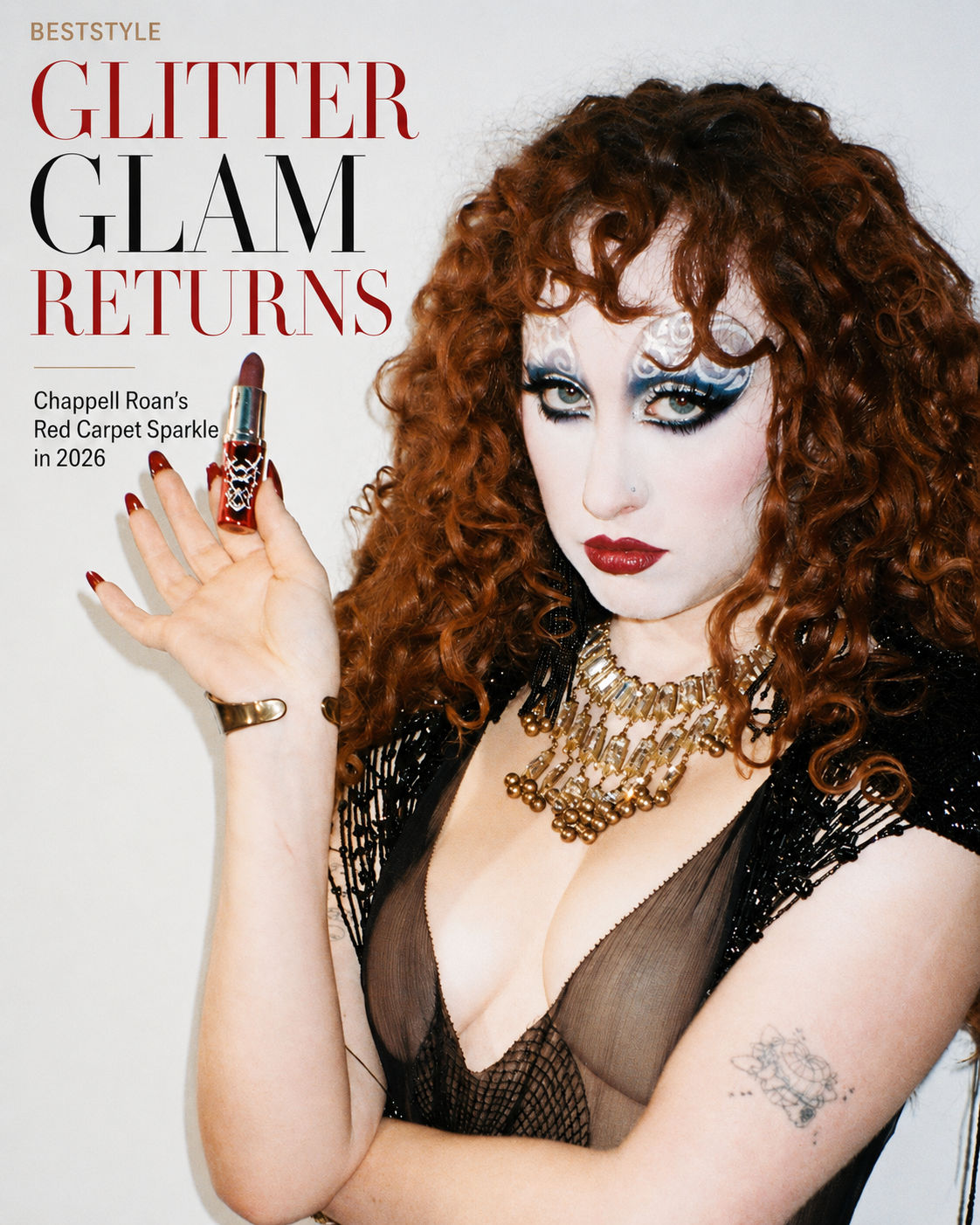
What makes glitter glam different from past sparkle trends?
Glitter glam in 2026 prioritizes intentional placement and fabric composition over total coverage, creating a quiet luxury undercurrent beneath the visual noise. Unlike the all-over paillette dressing of the early 2000s or the ironic sparkle of 2010s festival culture, contemporary glitter glam uses strategically positioned sequins, tinsel details, and reflective textiles as architectural elements rather than camouflage. The difference is tonal: old-guard glitter whispered "look at me"; new glitter says "I'm comfortable taking up space."
Tinsel-trim placement: Strategic edging along seams, necklines, and hem lines rather than full-body coverage creates the Chappell Roan effect—the glitter becomes an accent that elevates fabric texture.
Fabric-first approach: High-quality base materials (silk charmeuse, structured cotton, crepe) pair with modest glitter application, so the garment reads as couture first, sparkle second.
Color restraint: Monochromatic glitter (all-gold sequins on a gold dress, silver-on-white) creates coherence, whereas multi-color sparkle risks the costume trap.
Mix-and-match mentality: A minimalist slip dress topped with a glitter shrug (like Roan's reference) allows glitter to function as a removable statement rather than a commitment.
Lighting sensitivity: Contemporary glitter glam accounts for photography flash, LED lighting, and on-camera translucence, avoiding the flat "cheap" read that poor sequin quality produces.
Pro Tip: Pair a subtle glitter blouse with neutral tailoring—the sparkle becomes architectural embellishment rather than party-trick decoration.
"Glitter is no longer the visual apology of a woman; it's her statement. The difference between 2015 sparkle and 2026 sparkle is confidence in the garment itself."
How do you build a glitter glam look for red carpet events?
Construction matters more than budget when assembling a glitter glam outfit that photographs editorial rather than costumey. The formula works at every price point, from AKIRA's sequin micro-mini ($42) layered under tailored black trousers to bespoke atelier pieces. Follow this step-by-step framework to ensure your sparkle reads as intentional:
Select your glitter anchor. Choose one focal piece—a shrug, a structured top, or a cropped jacket—as your primary sparkle element; everything else should ground the look in neutrality or complementary texture.
Choose a cohesive base silhouette. Pair your glitter piece with clean-lined basics (slip dresses, tailored trousers, structured skirts) in monochromatic or tonal colorways to avoid visual chaos.
Layer with intention. Add a non-glitter second piece (a leather jacket, a satin robe, a minimal blazer) to create dimensionality and signal that sparkle is editorial choice, not necessity.
Accessorize with restraint. Let the glitter carry visual weight; offset with minimal jewelry (simple gold or silver pieces) and a structured bag in a neutral tone.
Test the lighting factor. Check your final look in camera flash, natural light, and LED photography conditions; glitter behaves differently under each, and testing prevents red-carpet surprises.
Pro Tip: Glitter glam reads better on camera than in person—if your piece feels subtle IRL, it will translate as editorial and intentional on photo.

What fabrics and construction techniques separate expensive glitter from cheap?
Fabric quality and sequin application are the invisible mechanics that determine whether your glitter look reads editorial or costume. A $40 ASOS piece can outperform a $400 dress if the base textile is superior and the sequin placement is thoughtful; conversely, a luxury brand with poorly executed sparkle will photograph as tacky.
Base fabric weight: Heavyweight silks, structured cotton blends, and crepe-back satins hold sequins without sagging; lightweight fabrics (polyester jersey, thin netting) create puckering and a cheap visual effect.
Sequin attachment method: Hand-sewn or machine-stitched sequins with reinforced bases last longer and move with sophistication; hot-glued or stapled sequins separate and look visibly degraded after one wear.
Sequin density and spacing: Luxury glitter pieces often feature strategic gaps between sequins to allow base fabric to show; budget pieces sometimes over-apply sequins to hide inferior underlying material.
Holographic vs. metallic finish: Holographic sequins (which shift color with light) tend to photograph more editorial and less "costume" than flat metallic or iridescent options.
Lining quality: Glitter pieces lined with silk or cotton twill wear better and feel expensive against skin; unlined or polyester-lined glitter garments feel flimsy and reduce the entire look's perceived value.
The construction hierarchy matters: a modest amount of hand-placed glitter on a superior base will always outrank maximum sequin coverage on cheap jersey. This is why maximalist fashion strategies for minimalist budgets emphasize quality fundamentals over quantity.
How do you style glitter glam to avoid looking costumey?
The costume trap is real, and the line between editorial sparkle and Halloween effect is narrow—but it's navigable through styling restraint and contextual awareness. Chappell Roan's approach (glitter shrug worn as a layer, not a statement dress) is the 2026 playbook: sparkle as complement, not centerpiece.
Monochromatic coherence: Wear all-gold glitter on gold or neutral tones; all-silver on silver or pastels; rainbow sequins only if paired with equally bold patterns or established maximalist contexts.
Footwear neutrality: Pair glitter pieces with minimal heels (nude, black, silver, or gold) rather than matching sparkle shoes, which amplify the costume read.
Makeup restraint: Offset glitter clothing with clean skin, simple eye makeup, and minimal color; heavy makeup + heavy glitter = drag energy (unless that's your stated aesthetic).
Hair minimalism: Sleek styles (slicked-back buns, wet-look waves, minimalist braids) pair better with glitter than textured or volumetric hair, which adds visual chaos.
Jewelry editing: Choose one focal accessory (a structured clutch, statement earrings, or pointed-toe heels) rather than multiple sparkly pieces; glitter plus multiple jewelry statement pieces reads costume.
Context also matters: glitter glam at the Met Gala reads differently than glitter glam at a corporate gala. Know your venue's aesthetic temperature and calibrate accordingly. A tinsel shrug works everywhere; a full-body holographic bodice requires a specific cultural permission.

In my years editing red carpet fashion, I've witnessed the full cycle of sparkle shame
I have spent years watching fashion's relationship with glitter oscillate between respectability and relegation. In the early 2010s, sequins signaled "trying too hard." By 2015, glitter was the exclusive domain of festival fashion and drag culture—territories that "legitimate" fashion critics treated as separate ecosystems. The irony was always apparent: these communities understood sparkle's emotional power better than any couture atelier, yet they were systematically excluded from mainstream red carpet discourse.
Everything changed when drag became undeniable as a cultural force and when young stars like Chappell Roan—artists who emerge from and celebrate maximalist, queer-adjacent aesthetics—claimed red carpet real estate without apology. I watched Roan's tinsel shrug moment from a front-row perspective at an industry event, and the room's energy shifted. Older editors who'd spent careers dismissing glitter were suddenly asking: "Where is that from? Can you get me that?" The shrug itself was a modest piece—a strategic garment that made glitter feel like choice rather than compulsion. It's the garment equivalent of having permission to be yourself.
What struck me most was how the rest of fashion industry immediately understood the assignment: glitter works when it's intentional, when it's paired with restraint, and when the wearer owns it without explanation. That's the real 2026 lesson.
— ASHOK
BestStyle's editorial coverage of red carpet sparkle
BestStyle covers red carpet fashion as a form of cultural storytelling, tracking not just what celebrities wear but why those choices matter to the broader conversation about self-expression and permission structures. Our editorial team recognizes that mainstream fashion doesn't move without cultural signals—and right now, those signals are all pointing toward unapologetic, intentional maximalism. Visit BestStyle.com for ongoing analysis of how red carpet moments reshape everyday fashion.
Glitter glam specifically represents a watershed moment in how fashion legitimizes joy and excess. We're tracking which designers are embracing sparkle as a sophistication tool, which celebrities are setting the new sparkle standard, and—most importantly—which affordable brands are democratizing the glitter glam formula so it's accessible beyond the couture world. BestStyle's editorial team is committed to translating red carpet moments into wearable intelligence for readers who want to participate in these conversations without red carpet budgets.

FAQ
Is glitter glam appropriate for corporate events?
Glitter glam can work in corporate settings if calibrated with restraint: a subtle tinsel-trim blouse under a blazer, or micro-sequin accessories rather than full glitter garments. Read your specific event's tone and err toward understatement.
What price point offers the best quality-to-glitter ratio?
The $40–$90 range (ASOS Design, Zara, Revolve, Lulus) often outperforms both budget ($18–$35) and luxury ($400+) options because these brands invest in fabric quality without charging atelier premiums. Always check lining, sequin attachment, and base fabric weight regardless of price.
How do I care for glitter garments to extend their lifespan?
Hand-wash in cool water with gentle detergent, lay flat to dry, and store away from direct sunlight and heat. Avoid the dryer entirely; heat causes sequin glue to degrade and base fabric to weaken.
Can I wear glitter glam outside of formal events?
Absolutely—a glitter shrug over everyday basics (jeans and a t-shirt), or a micro-sequin crop top with tailored trousers, brings editorial sparkle to casual contexts. The key is the same: intentional placement, quality fabric, and restraint in other styling elements.
What skin tones does glitter glam work best on?
Glitter translates beautifully on all skin tones; the key is matching sequin color to undertone (warm gold on warm skin, cool silver on cool skin) and using sufficient base fabric contrast so sparkle reads distinctly rather than blending into skin.
Recommended
BTS' Jimin Turns Dior's Early Paris Show Into Fashion's Most-Watched Morning
Daisy Edgar-Jones Masters Sheer Lace Layering for the Saint Laurent Front Row
Meta's Kylie Jenner AI Glasses Bring Smart Tech to Fashion's Front Row
K-Drama Icon Kim You Jung Named the New Global Face of Charles & Keith
Addison Rae Dublin Review: Pop Star Brings Joy, Glamour and Old-School Sparkle to Rainy Night


